La Fábrica
Inventiva
Join usES

FAUNA Guardianes / Cards / CRUM

The full deck · 80 cards

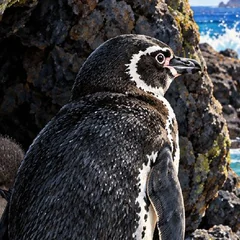
Illustrated portrait of CRUM

The 80 cards of CRUM, the Galápagos penguin

Territory: Galápagos Islands.

At the table they come up one at a time and are read aloud. Here is the whole deck, to read at your own pace.

Read them in

“Available” does not always mean “reviewed by specialists”: we explain this in Behind every card.

On this page

Trivia · 20 cards

CRUM Trivia

A question with three answers, at three levels of difficulty. Everyone thinks it through together.

TRI-PIN-01 · A PENGUIN ON THE EQUATOR

Beginner

Where does the Galápagos penguin live, odd for a penguin?

  1. In the Galápagos, right on the equator line
  2. In Antarctica, on the southern ice
  3. In the cold lakes of the high mountains
See the answer

A. In the Galápagos, right on the equator line

The Galápagos penguin lives on the islands, right on the equator line.

Intermediate

How can a penguin live on the equator, with such warm air?

  1. Because the equator's air is actually very cold
  2. Because a current brings cold water to the sea where it feeds
  3. Because the heat doesn't affect it at all
See the answer

B. Because a current brings cold water to the sea where it feeds

The air is warm, but a current brings cold water to the sea where it hunts. Its secret is underwater.

Advanced

Why not say it lives 'on the hottest line on the planet'?

  1. Because the equator is actually the coldest place on Earth
  2. Because penguins can only live in very hot places
  3. Because the equator is a geographic reference, not the hottest zone; and its sea is cooled by currents
See the answer

C. Because the equator is a geographic reference, not the hottest zone; and its sea is cooled by currents

The equator marks a place, not the maximum temperature; and there the sea is cooled by a current.

★ A penguin on the equator: the air is warm, but the sea is cold from the currents.

TRI-PIN-02 · HOW COMMON IS IT?

Beginner

How common is the Galápagos penguin in the world?

  1. It's one of the most common penguins there are
  2. It's very rare: very few remain
  3. There are millions spread all over the world
See the answer

B. It's very rare: very few remain

The Galápagos penguin is very rare: very few remain, on a handful of islands.

Intermediate

When a number of penguins is given, what's worth knowing?

  1. Nothing at all: whatever number someone says works just as well with no other detail
  2. Only the exact color of the feathers those penguins have at that time of year
  3. What year that figure is from and how that population was counted
See the answer

C. What year that figure is from and how that population was counted

A number with no year or method misleads. It's worth knowing when it's from and how that population was estimated.

Advanced

They're estimated on the order of a few thousand. How to take that figure?

  1. As an estimate with its year and its source, not a fixed number forever
  2. As a completely exact count that never ever changes no matter how many years pass
  3. As clear, definitive proof that those penguins are actually already in the millions today
See the answer

A. As an estimate with its year and its source, not a fixed number forever

Population figures are estimates with their date and source; they change from one count to another.

★ The Galápagos penguin is extremely rare: very few remain, on a handful of islands.

TRI-PIN-03 · LIVING WHERE IT'S HOT

Beginner

How can a penguin live where it's so hot?

  1. Because an underground river brings it big fish already formed straight from the seabed
  2. Because it goes into caves with cool air during all the hot hours of the day
  3. Because a current raises cold water rich in nutrients to its sea
See the answer

C. Because a current raises cold water rich in nutrients to its sea

A current raises cold water with nutrients; from there the penguin's food is born.

Intermediate

That cold water that rises from the bottom — what does it bring?

  1. Nutrients that feed the web of life: plankton, fish and the penguin
  2. Big fish already fully ready to eat that the current drags straight to the coast
  3. Only cold water, with no food or nutrient of any kind for the sea's living things
See the answer

A. Nutrients that feed the web of life: plankton, fish and the penguin

The upwelling water brings nutrients; with them the plankton grows, then the fish, and from there the penguin eats.

Advanced

Why not say 'a bottom current brings it all its food already formed'?

  1. Because the bottom current brings it big fish fully ready to eat with no effort
  2. Because the upwelling brings water and nutrients; the food forms in that web, it doesn't arrive made
  3. Because the Galápagos penguin actually doesn't need to eat fish at all to live well
See the answer

B. Because the upwelling brings water and nutrients; the food forms in that web, it doesn't arrive made

The current doesn't deliver ready food: it raises nutrients, and in that web of the sea the food forms.

★ The cold water that rises brings nutrients: with them the penguin's food grows.

TRI-PIN-04 · THE NEST IN THE CRACK

Beginner

Where does the Galápagos penguin make its nest?

  1. In shaded lava cracks
  2. At the very top of the trees
  3. On open sand, in direct sun
See the answer

A. In shaded lava cracks

The penguin nests in shaded lava cracks, which protect the eggs from the sun.

Intermediate

Why does it look for a shaded crack for the nest?

  1. Because the cracks have food hidden inside
  2. To protect the eggs from the heat of the direct sun
  3. Because inside the crack it's always extremely cold
See the answer

B. To protect the eggs from the heat of the direct sun

In the equator's direct sun the eggs overheat; the shaded crack protects them.

Advanced

What problem appears if shaded cracks grow scarce?

  1. That the penguins stop needing shade entirely
  2. That the eggs hatch much earlier than usual
  3. That safe nesting sites are lacking, and the risks for eggs and chicks rise
See the answer

C. That safe nesting sites are lacking, and the risks for eggs and chicks rise

If there are no shaded cracks, good nests are lacking, and eggs and chicks are left more exposed.

★ The penguin nests in shaded lava cracks: they protect the eggs from the sun.

TRI-PIN-05 · WHY THEY LET YOU NEAR

Beginner

Why do many Galápagos animals let you come near, without fleeing?

  1. Because over the years the islands' people gradually taught them to trust people
  2. Because they evolved without cats or other hunters brought by humans
  3. Because they're animals too slow and heavy to flee in time from whoever comes near
See the answer

B. Because they evolved without cats or other hunters brought by humans

They evolved without cats or introduced predators, so they don't fear people.

Intermediate

That they don't flee people — does it mean nothing ever hunted on land?

  1. Yes, completely: on land it never hunted any animal at all in its whole history
  2. Yes, entirely: they always lived with no danger of any kind from land or air
  3. No: there were native predators; what was missing were the introduced ones like the cat
See the answer

C. No: there were native predators; what was missing were the introduced ones like the cat

There were native hunters, like raptors; what was new were the introduced ones like the cat. It's not that nothing hunted.

Advanced

Why did these animals' little caution become a risk?

  1. Because faced with introduced hunters their defenses may not be enough
  2. Because they have no defense of any kind
  3. Because people chase them absolutely always
See the answer

A. Because faced with introduced hunters their defenses may not be enough

It's not that they have no defenses: it's that they didn't evolve against a cat, and against one they may not be enough.

★ They don't flee people because they evolved without cats; today, that exposes them.

TRI-PIN-06 · THE LACK OF FEAR

Beginner

That very special lack of fear — why is it a danger today?

  1. Because the fear they feel toward people, when they feel it, gradually sickens them
  2. Because as soon as they see a hunter they freeze and don't move from the spot again
  3. Because faced with a hunter brought from outside, they don't react in time
See the answer

C. Because faced with a hunter brought from outside, they don't react in time

They didn't evolve against cats; so, faced with one, they often don't react in time.

Intermediate

Faced with an introduced cat, what happens to the penguin's defenses?

  1. They may not be enough: it didn't evolve against that hunter
  2. They always beat it with no problem at all
  3. It has no defense of any kind
See the answer

A. They may not be enough: it didn't evolve against that hunter

It can try something, but its responses, meant for other risks, may not be enough against a cat.

Advanced

Why not say it 'doesn't know how to flee and stays still' always?

  1. Because it never does absolutely anything in the face of a danger
  2. Because it can have responses, but insufficient ones against a new predator; it's not total inability
  3. Because it actually always escapes any hunter
See the answer

B. Because it can have responses, but insufficient ones against a new predator; it's not total inability

It's not absolute inability: it has behaviors, but they may not be enough against a hunter that never existed here.

★ Its little caution isn't having no defense: it's that it isn't enough against a new hunter.

TRI-PIN-07 · THE ONES THAT COME OFF THE BOATS

Beginner

What animals brought by the boats are the greatest danger on land?

  1. Introduced cats and rats
  2. The islands' giant tortoises
  3. The coast's marine iguanas
See the answer

A. Introduced cats and rats

The greatest danger on land is the cats and rats introduced by humans.

Intermediate

Cats and rats — do they attack the penguin the same way?

  1. Yes, exactly the same: both the cat and the rat carry off adult penguins alike
  2. No: the cat can attack different ages; the rats, above all eggs and chicks
  3. No, not at all: neither the cat nor the rat ever does any harm to the island's penguin
See the answer

B. No: the cat can attack different ages; the rats, above all eggs and chicks

The cat can hunt different ages; the rats affect above all eggs and chicks.

Advanced

Why not say 'any rat carries off an adult penguin'?

  1. Because the island's rats hunt and carry off adult penguins practically every day of the year
  2. Because rats actually never go near a nest or ever touch a single penguin egg
  3. Because rats affect above all eggs and chicks, they don't usually hunt an adult
See the answer

C. Because rats affect above all eggs and chicks, they don't usually hunt an adult

Rats are a real danger to eggs and chicks; they don't usually hunt an adult penguin.

★ Introduced cats and rats are the great danger on land: the cat hunts; the rat, eggs and chicks.

TRI-PIN-08 · AN EL NIÑO YEAR

Beginner

What does an El Niño year do, when the sea turns warmer?

  1. It fills the sea with more fish than ever
  2. The food drops, because the cold current weakens
  3. Nothing changes for the penguin
See the answer

B. The food drops, because the cold current weakens

With El Niño the sea warms, the cold current weakens and the penguin's food drops.

Intermediate

Why does El Niño leave less food for the penguin?

  1. Because the warm water draws far more fish than usual right to the coast where it hunts
  2. Because in those years the penguin simply stops being hungry and no longer needs to eat
  3. Because the upwelling weakens, productivity drops and there are fewer fish
See the answer

C. Because the upwelling weakens, productivity drops and there are fewer fish

As the rising cold water weakens, the plankton and fish drop, and the penguin finds less.

Advanced

In an El Niño year, what does the penguin get?

  1. More effort to get less food
  2. Plenty of food without having to make an effort
  3. The same food as always, with no change
See the answer

A. More effort to get less food

The sea gives less, so it dives and searches more to bring back less: more effort for less food.

★ In El Niño, the sea warms, the food drops, and the penguin works harder for less.

TRI-PIN-09 · A YEAR WITHOUT BREEDING

Beginner

In a very bad year of hunger, what can a pair of penguins do?

  1. Breed twice as many chicks to make up for it
  2. Go off to live on the southern ice
  3. Not breed that year and save their strength
See the answer

C. Not breed that year and save their strength

If the sea doesn't give food, the pair sometimes doesn't breed that year and saves its strength.

Intermediate

Not breeding in a bad year — what is it?

  1. A possible response to the lack of food, not a thought-out decision
  2. A fully conscious plan the pair makes thinking about how next year will go for it
  3. Something absolutely all pairs of penguins do alike, without any exception
See the answer

A. A possible response to the lack of food, not a thought-out decision

It's not that they plan it like us: it's a response to the lack of food, and not all pairs the same.

Advanced

Why not say 'the pair plans not to breed for next year'?

  1. Because penguins plan their year just like people
  2. Because it's a response to the conditions, not a conscious plan, and not all do the same
  3. Because all pairs always breed, no matter what
See the answer

B. Because it's a response to the conditions, not a conscious plan, and not all do the same

Responding to a bad year isn't planning: it depends on the conditions and varies between pairs.

★ If the sea doesn't provide, sometimes the pair doesn't breed: it saves its strength, without planning it like us.

TRI-PIN-10 · STONE HOUSES

Beginner

To help the penguins, the scientists build…

  1. Totally closed cages, proof against absolutely every danger that could come from outside
  2. Shaded stone nests, where the eggs don't overheat
  3. Houses with air conditioning to take the equator's sun heat off them
See the answer

B. Shaded stone nests, where the eggs don't overheat

They build shaded stone nests: they give more sites where the eggs don't overheat.

Intermediate

Those artificial nests — what do they mainly achieve?

  1. Make it completely impossible for any cat to get into the nest, whatever happens outside it
  2. Feed the penguins directly so they never have to go out to hunt fish again
  3. Give more shaded sites to nest, where cracks are lacking
See the answer

C. Give more shaded sites to nest, where cracks are lacking

They expand the chances to nest in shade, above all where natural cracks are scarce.

Advanced

Why not say an artificial nest 'keeps the cats out' for sure?

  1. Because it improves the nesting sites and the shade, but doesn't guarantee excluding a cat
  2. Because no narrow entrance or stone nest is ever any use against a hungry cat
  3. Because the stone nest completely replaces controlling the island's cats and rats
See the answer

A. Because it improves the nesting sites and the shade, but doesn't guarantee excluding a cat

They help with shade and nest sites, but don't guarantee keeping a cat out: that's why introduced ones are also controlled.

★ The stone nests give shade and more nesting sites; they don't guarantee keeping the cat out.

TRI-PIN-11 · HOW THEY COME BACK SAFELY

Beginner

How have the penguins been helped to come back on some islands?

  1. By controlling the introduced predators and tending their nests
  2. By taking them all to live inside big aquariums, away from the cats and rats
  3. By feeding them fish every day, by hand, so they don't have to go out to hunt
See the answer

A. By controlling the introduced predators and tending their nests

Controlling the introduced cats and rats and tending the nest sites helped.

Intermediate

When it's said an island 'recovered,' what's worth verifying?

  1. Nothing: it's enough for someone to say so around
  2. Which island, when, what was done and with what result
  3. Only how many pretty photos were taken
See the answer

B. Which island, when, what was done and with what result

Before taking a recovery for granted, it's worth checking the island, the date, the intervention and its result.

Advanced

Why not take for granted 'the recovery from removing all the introduced ones'?

  1. Because removing a single cat from an island always, without fail, recovers the whole island at once
  2. Because the penguins actually recover all on their own, with no human help needed
  3. Because you have to verify the specific case; not all control achieves a total eradication
See the answer

C. Because you have to verify the specific case; not all control achieves a total eradication

Controlling helps, but not all control eradicates completely: each case is verified with its data.

★ On some islands, controlling predators and tending nests helped; each case is verified.

TRI-PIN-12 · FLYING UNDERWATER

Beginner

Can the Galápagos penguin fly through the air from one island to another?

  1. Yes: it flies low, just above the water
  2. Yes, if a very strong wind pushes it
  3. No: its wings are for swimming, not for flying
See the answer

C. No: its wings are for swimming, not for flying

The penguin doesn't fly through the air: its wings are made for swimming.

Intermediate

If it doesn't fly through the air, what are its wings for?

  1. For swimming: it's as if it 'flew' underwater
  2. To glide long distances across the sky
  3. For nothing: it actually never uses them
See the answer

A. For swimming: it's as if it 'flew' underwater

It uses its wings like oars underwater: it swims so well it looks like it's 'flying' submerged.

Advanced

Why is it said the penguin 'flies underwater'?

  1. Because it really takes off and flies over the open sea
  2. Because it uses its wings to push itself swimming, like a flight but submerged
  3. Because it floats without moving on the water's surface
See the answer

B. Because it uses its wings to push itself swimming, like a flight but submerged

It's an image: it beats its wings underwater and pushes itself as if flying, but swimming.

★ The penguin doesn't fly through the air: with its wings it 'flies' underwater.

TRI-PIN-13 · PANTING IN THE SUN

Beginner

A penguin standing in the sun, flippers held out and panting — what's it doing?

  1. It's about to attack someone
  2. It's trying to cool off from the heat
  3. It's dancing for its mate
See the answer

B. It's trying to cool off from the heat

It pants and holds its flippers out to cool off: that's how it bears the equator's heat.

Intermediate

How does a penguin on the equator bring its heat down?

  1. It sweats all over its skin, like people
  2. It tucks snow between its feathers
  3. It pants, holds its flippers out and seeks shade
See the answer

C. It pants, holds its flippers out and seeks shade

It pants, opens its flippers and goes to the shade. It doesn't sweat: it uses those tricks not to overheat.

Advanced

Why isn't a single posture enough to know, from afar, what's wrong with it?

  1. Because the same posture can have several causes; it's best not to 'diagnose' from a distance
  2. Because penguins never change posture all day
  3. Because whenever it pants it's a sign it's sick
See the answer

A. Because the same posture can have several causes; it's best not to 'diagnose' from a distance

A posture can be due to several things; reading it as a sure diagnosis, from afar, leads to errors.

★ It pants, opens its flippers and seeks shade to bear the heat. Penguins don't sweat.

TRI-PIN-14 · GUARDING THE DOOR

Beginner

So new cats or rats don't get onto the islands, what's done?

  1. Checking what arrives on boats and luggage: biosecurity
  2. Putting a huge metal net around the whole island so nothing can cross it
  3. Politely asking the cats and rats, please, never to come again
See the answer

A. Checking what arrives on boats and luggage: biosecurity

What arrives on boats and luggage is checked: biosecurity keeps more introduced ones from getting in.

Intermediate

That biosecurity — who does it?

  1. Only the island's children, each checking their own toys before boarding the boat
  2. Official inspections of boats and cargo, besides checking one's own things
  3. No one in particular: whatever has to arrive on each boat simply arrives at the island
See the answer

B. Official inspections of boats and cargo, besides checking one's own things

There are official inspections of boats and cargo; checking one's own things helps, but doesn't replace those inspections.

Advanced

Why does a check not 'guarantee' that nothing ever gets in?

  1. Because checking what comes in on the boats is actually no use at all in protecting the island
  2. Because with a single check done, the island is left closed and fully protected forever
  3. Because it lowers the risk a lot, but no inspection is perfect a hundred percent
See the answer

C. Because it lowers the risk a lot, but no inspection is perfect a hundred percent

Biosecurity lowers the risk a lot, but doesn't erase it entirely: that's why it's kept up and repeated.

★ Biosecurity checks what comes in on boats and luggage: it lowers the risk, it doesn't erase it.

TRI-PIN-15 · WHAT IT EATS

Beginner

What does the Galápagos penguin feed on?

  1. On plants it pulls from the seabed
  2. On a single kind of fish, always the same
  3. On small fish, like sardines and anchovetas
See the answer

C. On small fish, like sardines and anchovetas

It eats small fish, like sardines and anchovetas, that the cold sea brings.

Intermediate

Its food — does it depend on anything?

  1. Yes: on the cold sea bringing enough small fish
  2. No: it always has the same food assured
  3. Only on there being lots of sun on the coast
See the answer

A. Yes: on the cold sea bringing enough small fish

It depends on the sea: if the cold current brings small fish, it eats; if the sea warms, it goes short.

Advanced

Why not describe its diet as 'a single fish, always the same'?

  1. Because it actually eats only a single kind of fish, always exactly the same, its whole life
  2. Because it eats several small fish and depends on the sea's conditions
  3. Because the Galápagos penguin actually eats no fish of any size at any time
See the answer

B. Because it eats several small fish and depends on the sea's conditions

It's not a fixed menu: it eats several small fish, according to what the cold sea offers it that year.

★ The penguin eats small fish, like sardines; and that depends on a sea that provides them.

TRI-PIN-16 · IT LIVES ONLY THERE

Beginner

The Galápagos penguin lives only there. What does that mean?

  1. That there's a Galápagos penguin spread across every country in the whole world
  2. That it doesn't live naturally in any other place in the world
  3. That it can live with no problem in all the cold seas of the planet, from pole to pole
See the answer

B. That it doesn't live naturally in any other place in the world

It lives only in the Galápagos: it doesn't exist, naturally, anywhere else.

Intermediate

That it's 'endemic' to the Galápagos — what does it mean?

  1. That it was brought there from somewhere else in the world
  2. That it can live anywhere on the planet
  3. That its natural home is only those islands
See the answer

C. That its natural home is only those islands

Endemic means its natural home is only those islands, and nowhere else.

Advanced

Why is 'it doesn't live elsewhere' not the same as 'it could never be outside'?

  1. Because an individual can be outside by exception or under human care; naturally, it lives only there
  2. Because it's completely impossible for a Galápagos penguin ever to leave its island, whatever happens
  3. Because this penguin actually does live, naturally, in many other places in the world
See the answer

A. Because an individual can be outside by exception or under human care; naturally, it lives only there

Naturally it lives only there; that a specimen turns up outside by exception or in human care is another matter.

★ The Galápagos penguin doesn't live, naturally, in any other place in the world.

TRI-PIN-17 · WHY THEY'RE FRAGILE

Beginner

That there are very few penguins — why does it make them fragile?

  1. Because any loss weighs a lot when so few remain
  2. Because the few penguins that still remain are, all of them, much weaker than before
  3. Because being so few, each one needs to eat much less than usual
See the answer

A. Because any loss weighs a lot when so few remain

When very few remain, a loss —a bad year, a cat— weighs on the whole species.

Intermediate

Being few and breeding slowly — is it the same?

  1. Yes: being few is exactly what makes them breed slowly
  2. No: they're two different things that, together, make them fragile
  3. Yes: being few and breeding slowly are the same problem
See the answer

B. No: they're two different things that, together, make them fragile

They're two different factors: the low number and the slow reproduction. Together they make them fragile.

Advanced

Why does being few not 'cause' on its own that they breed slowly?

  1. Because being so few always, without any exception, makes an animal end up breeding faster
  2. Because the number of penguins there are has nothing at all to do with whether they're fragile or not
  3. Because they're different factors: the low number and the slow reproduction add up, one doesn't cause the other
See the answer

C. Because they're different factors: the low number and the slow reproduction add up, one doesn't cause the other

That they're few isn't the cause of breeding slowly: they're two things that, adding up, leave little margin.

★ They're few and breed slowly: two different things that, together, leave no margin to lose.

TRI-PIN-18 · TOO MANY SARDINES

Beginner

What happens if too many sardines are fished near the colony?

  1. The penguin gets more food than ever before
  2. Nothing changes for the colony's penguin
  3. The penguin, which lives off those fish, may run short of food
See the answer

C. The penguin, which lives off those fish, may run short of food

If too many sardines are fished near the colony, the penguin may run short of food.

Intermediate

Fishing and penguin — when do they compete for food?

  1. When they fish the same small fish in the same zone
  2. Always and at all times, in absolutely any sea in the whole world where there are fish
  3. Never, in no case: the penguin and the fishing eat completely different things
See the answer

A. When they fish the same small fish in the same zone

They compete only where they overlap: the same small fish, in the same zone near the colony.

Advanced

Why say 'where fishing and penguins overlap' and not in general?

  1. Because absolutely all the fishing done in the whole world directly affects this penguin
  2. Because the competition appears only where they overlap; not all fishing affects this colony
  3. Because fishing actually never affects, in any way, any penguin in the world
See the answer

B. Because the competition appears only where they overlap; not all fishing affects this colony

Not all fishing competes with the penguin: only where its fish and its zone overlap with the fishing activity.

★ If too many sardines are fished near the colony, the penguin gets less.

TRI-PIN-19 · LEARNING TO LOOK AFTER ITSELF

Beginner

A young penguin that survived a cat — what's it best for it to learn?

  1. To fight head-on with any cat that comes
  2. Never to go into the water again
  3. To be wary and seek the safest cracks
See the answer

C. To be wary and seek the safest cracks

It's best for it to learn to be wary and to choose the most sheltered cracks.

Intermediate

Learning to be careful — how does it help a young penguin?

  1. To avoid new dangers, like an introduced hunter
  2. To suddenly become bigger and much stronger
  3. Never to need a shaded nest again
See the answer

A. To avoid new dangers, like an introduced hunter

Caution helps it dodge new risks, like a cat, that didn't exist here before.

Advanced

Why does 'being more careful' not make a penguin invincible?

  1. Because as soon as a penguin learns to be careful, absolutely nothing bad can happen to it anymore
  2. Because it reduces some risks, but doesn't protect it from all threats
  3. Because being more careful is actually no use to it and lowers no danger for the island's penguin
See the answer

B. Because it reduces some risks, but doesn't protect it from all threats

Being wary lowers some risks, but doesn't save it from a bad sea, from plastic, or from every hunter.

★ Learning to be wary and seek safe cracks lowers its risk; it doesn't make it invincible.

TRI-PIN-20 · WHAT GIVES IT A FUTURE

Beginner

What helps the Galápagos penguin have a future?

  1. A sea with food, shaded nests and fewer introduced predators
  2. For everyone to stop seeing it as an odd animal
  3. For it to be taken to live in a faraway zoo
See the answer

A. A sea with food, shaded nests and fewer introduced predators

Its future is in a sea with food, shaded nests and fewer cats and rats.

Intermediate

Controlling cats and building nests — is it enough to save it?

  1. Yes, completely: just doing that leaves it totally safe forever, with nothing more
  2. It helps, but food in the sea and caring for its habitat are also needed
  3. No, not at all: none of that is the slightest help to the island's penguin
See the answer

B. It helps, but food in the sea and caring for its habitat are also needed

Controlling predators and giving nests helps, but without food in the sea and a cared-for habitat it isn't enough.

Advanced

Why does conservation not 'give back' its old life without fear?

  1. Because as soon as a single cat is removed from the island, everything goes back to the way it was at the start
  2. Because the Galápagos penguin actually never had any problem of any kind in its life
  3. Because it reduces risks, but doesn't erase all threats or restore its old immunity
See the answer

C. Because it reduces risks, but doesn't erase all threats or restore its old immunity

Caring for it lowers the risks, but the sea, the climate and other dangers remain: the old life without threats doesn't return.

★ The penguin's future is in a sea with food, shaded nests and fewer cats and rats.

Pulse · 20 cards

CRUM Pulse

News from the territory. Sometimes good, sometimes bad. It moves the score in favor of the Guardians or the Villains.

PUL-PIN-01

On these islands there were no cats or other hunters brought by humans. That's why many animals don't fear people and let you come near. That trust, faced with a new hunter, becomes their greatest danger.

At the table: Damage 2

PUL-PIN-02

In the lava, a team dug new caves: deep shade against the sun. That night a cat sniffed one and stuck its head in. It doesn't always suffice, it doesn't always fail; that's why the cave helps, but isn't enough alone.

At the table: Restore 2

PUL-PIN-03

Someone, years ago, brought a cat off a boat. It turned feral and multiplied. At night it roams the lava coast. And the penguin, which didn't evolve against that hunter, doesn't always react in time.

At the table: Damage 1

PUL-PIN-04

People came with box traps and set them, carefully, on the cats' and rats' paths. Night after night they removed, from that stretch, several hunters that didn't belong there. It's long work, kept under watch.

At the table: Reserve +1

PUL-PIN-05

One year the sea woke up warmer. The cold current that rises from the bottom, with its nutrients, weakened, and the food dropped. The penguins had to work harder to get less food.

At the table: Reserve −1

PUL-PIN-06

From very deep, cold water rich in nutrients rises to this coast right on the equator line. Up above, the sun splits the stones. But those nutrients feed the web of fish where the penguin hunts at ease.

At the table: Restore 1

PUL-PIN-07

Not only the cats. The rats that came off the boats also slip at night into the cracks where the penguins nest. They eat the eggs and the smallest chicks, before anyone notices.

At the table: Damage 1

PUL-PIN-08

In that stretch, trap after trap, they removed the cats and rats that remained. The nests woke up with eggs. Not all the risks vanished —threats from the sea and the climate remain—, but that pressure dropped.

At the table: Restore 2

PUL-PIN-09

A young penguin, at the mouth of its crack, sees two yellow eyes approaching. It stays watching them, curious. Its reaction, faced with a hunter that never existed here, may not be enough. And coming close like that exposes it.

At the table: Damage 1

PUL-PIN-10

The people who care for the island walk the coast counting: how many penguins they see, how many chicks. On that walk they don't touch them. Counting the ones they see gives an idea; the exact number of the whole species takes more work.

At the table: Reserve +1

PUL-PIN-11

A boat docks without a proper check of what it brings. In the cargo a rat or a seed that isn't from here could travel. Checking what comes in lowers the risk a lot; it doesn't erase it, but it guards the door.

At the table: Damage 1

PUL-PIN-12

When the yellow eyes appeared, the old penguin wasn't going to beat a cat. But it put itself, with its body, between the danger and its chick, and pushed it to the back of the crack. Sometimes caring is standing in between.

At the table: Restore 1

PUL-PIN-13

A penguin in the equator's sun overheats; that's why it nests in shaded cracks. But the good cracks are scarce, and some are right where the cat prowls. Between the heat and the hunter, it struggles to find a home.

At the table: Damage 1

PUL-PIN-14

The year they controlled the cats, and with new caves occupied and good food in the sea, the colony raised several healthy chicks. They saw them launch into the cold water. Few, but more than in hard years.

At the table: Reserve +2

PUL-PIN-15

The Galápagos penguin is extremely rare: very few remain, on a handful of islands, and they breed only when the sea provides. With so little margin, a bad year or a loose cat weighs on the whole species, not on one.

At the table: Reserve −1

PUL-PIN-16

The young penguin, after that night, changed: it watched the shadows before sleeping and chose the most sheltered cracks. In the story, learning to be wary didn't make it a coward: it made it look after itself. It didn't make it invincible.

At the table: Restore 1

PUL-PIN-17

Where the fishing seeks the same sardines the penguin lives off, it may run short of food. It's not always from the nets: the sea also changes with the years. That's why how much to fish near the colony is agreed.

At the table: Damage 1

PUL-PIN-18

In the water where it hunts, plastics appear and, sometimes, an oil slick from some boat. The risk isn't only mistaking them for food: it's also getting tangled or the oil damaging its plumage. The sea brings it what it shouldn't.

At the table: Damage 1

PUL-PIN-19

A strong storm, out of the ordinary, flooded several low cracks where the penguins were nesting. The eggs were lost. Not every danger comes from a cat: the changing climate also takes their nests, little by little.

At the table: Damage 1

PUL-PIN-20

On this island, now controlled, a chick was born. It poked its head out of the narrow entrance and looked at the world with curious eyes. There are fewer cats and rats than before; not all the threats are gone, but here it has a chance.

At the table: Reserve +2

Encounter · 20 cards

CRUM Encounters

A scene with someone who cares: a fisherwoman, a biologist, a neighbor. It almost always brings hope.

ENC-PIN-01

She walks the lava coast each season, with her notebook: she notes how many penguins she sees, how many chicks, which cracks serve. She doesn't touch them. “It's an estimate,” she says, “but it tells me how the colony is doing.”

“To care for what's so little, you first have to count it.”

At the table: Reserve +1

ENC-PIN-02

A team digs caves in the lava: deep shade so the sun doesn't cook the eggs. “Where cracks are lacking, we give them more sites to nest.” It's no fortress against the cat, but it helps.

“A stone house against the sun.”

At the table: Restore 1

ENC-PIN-03

He has resources for one thing: start removing the cats, slowly, or build more shaded nests, which help right away even if the cat stays. The two complement each other; neither is enough alone.

“Remove the hunter, or give more shaded houses.”

  • A. Builds more shaded nests Restore 1
  • B. Starts removing the cats Reserve +2

ENC-PIN-04

An authorized program controls the cats and rats that came off the boats. “We brought them; it's on us,” says a technician. It's hard work, by a team, not by amateurs.

“We brought them; it's on us.”

At the table: Reserve +1

ENC-PIN-05

She decided her cat will no longer hunt birds. She can keep it always indoors, with litter box and toys, or find it a home far from the island. Neither option is magic, but both reduce the risk.

“Keep it indoors, or find it a home far away.”

  • A. Keeps it indoors at all times Restore 1
  • B. Finds it a home far from the island Reserve +2

ENC-PIN-06

In class they draw a penguin on an ice floe. A girl remarks: “There's one in the Galápagos, where the air is warm but the sea is cold.” The teacher looks it up, reads it, and they investigate together.

“The warm air deceives; the cold sea explains.”

At the table: Restore 1

ENC-PIN-07

The penguins' site became famous. The town can let in many boats, or set a quota and a distance. More boats leave more money today; with a quota, the colony rests.

“More boats leave more. The quota cares more.”

  • A. They let in many boats Restore 1 · Reserve −1
  • B. They set a quota and a distance Reserve +2

ENC-PIN-08

“My cat hunted birds and I didn't even notice,” he says. “They taught me what it was doing to the penguins.” Today he keeps it indoors. “On this island, a loose cat can do a lot of harm.”

“One's pet can be the island's danger.”

At the table: Restore 2

ENC-PIN-09

Before boarding the boat, he shakes out his shoes and checks his backpack: no seeds, no bugs, no soil. “It doesn't control everything —that's what the inspections are for— but it helps not to bring what you shouldn't.”

“What shouldn't arrive travels stuck on, with no one noticing.”

At the table: Restore 1

ENC-PIN-10

At the dock they check what arrives. With little time, the person in charge decides what to prioritize: the highest-risk cargo first. Checking thoroughly takes a while; that's why it's organized with a protocol, not at random.

“With little time, the highest risk first.”

  • A. Checks the highest-risk cargo first Restore 1
  • B. Inspects all the cargo thoroughly Reserve +2

ENC-PIN-11

The guide stops the group at a good distance from the nest. “They're visible from here,” he says. “If we come near, they stop resting and caring for their chicks to move away.” Seeing them without their fleeing is caring for them.

“Watching them without their knowing is caring for them too.”

At the table: Reserve +1

ENC-PIN-12

“Look,” says the guide: “that penguin has its back to the sun, flippers held out and panting. That's how it brings its heat down —it doesn't sweat—. It bears it with tricks.” The children look at it differently.

“It doesn't love the sun. It bears it, with tricks.”

At the table: Restore 1

ENC-PIN-13

A chick, unafraid, came out of the crack into the sun. Instead of carrying it, she notifies the park ranger and watches from afar. “Let whoever knows decide if it should be moved.” Sometimes the parents are nearby.

“Carrying it seems to help. Notifying really helps.”

  • A. Carries it into the shade himself Restore 1
  • B. Notifies the park ranger and keeps watch Reserve +2

ENC-PIN-14

The town agreed, with the boats, to check the cargo and leave no trash that draws rats. “In this part we already removed the earlier ones; we have to watch that no others get in.” Authorized staff handle it.

“The paradise is cared for at the door where everything comes in.”

At the table: Reserve +1

ENC-PIN-15

“When I was young, this coast had many penguins,” the woman says. “The cats came and the bad sea years.” She looks at the lava. “A handful remain; and now someone's caring for them.” She climbs up to look at them.

“The one who remembers how many there were cares for those that remain.”

At the table: Restore 1

ENC-PIN-16

A year of hunger: the warm sea left few fish. The pair can try to breed anyway, spending all their strength, or not breed this year. Not breeding, when there's no food, is sometimes what lets them survive.

“Breed today and risk it, or hold out for later.”

  • A. They try to breed anyway Restore 1
  • B. They do not breed in this lean year Reserve +2

ENC-PIN-17

The fishers agreed not to empty the little schools near the colony. “They're the penguin's sardines; if we leave some, there's enough for it and for us.” They set a limit, and they check it.

“Leaving some in the sea is leaving food for the one that doesn't fish with nets.”

At the table: Reserve +1

ENC-PIN-18

The teacher takes her group to the coast. “From here we don't go, no touching.” A penguin passes close, without fleeing. A boy watches it, still: he learns the hard thing, not to touch even when the animal isn't scared.

“The hardest thing: not touching what isn't afraid of you.”

At the table: Restore 1

ENC-PIN-19

There's money for one thing: keep removing cats and rats, or protect the sea so sardines don't run short. On land or in the water, both press hard; whatever's left unattended goes on weighing.

“Care for the land, or care for the sea.”

  • A. Predator control Restore 1
  • B. Protecting the sea and its fish Reserve +2

ENC-PIN-20

On this island, now controlled, the stone caves hold chicks and the colony raised fledglings again. “We almost lost them,” the warden says. “Here they're doing better.” It's not all of Galápagos; it's this piece, cared for.

“A piece of island, cared for, already makes the difference.”

At the table: Restore 2

Challenge · 20 cards

CRUM Challenges

A real-life commitment. Each player answers “I already do it,” “I'll try it” or passes.

RET-PIN-01

How can a penguin live on the equator? Find out with your family what current brings cold water to those islands.

  • “I already do it” You already know a cold current brings food to the equator's penguin. Restore 2
  • “I'll try it” You look up together what current cools that sea Restore 1
  • “Pass” No effect

The penguin's secret is in the sea, not the sky.

RET-PIN-02

If someone says penguins only live on the ice, what example would you give of one that doesn't?

  • “I already do it” You can already give an example of a penguin that doesn't live on the ice. Restore 1
  • “I'll try it” You find a photo of the Galápagos penguin to show Restore 1
  • “Pass” No effect

Not all penguins live on the ice.

RET-PIN-03

What project to care for the Galápagos penguin do you know of or could look up, and what problem does it address?

  • “I already do it” You already know a penguin conservation action and what it's for. Restore 2
  • “I'll try it” You look up a project and explain what problem it solves Restore 1
  • “Pass” No effect

Caring starts by understanding the problem.

RET-PIN-04

If you see a wild animal that lets you come near, how do you leave it in peace without touching or chasing it?

  • “I already do it” You already leave trusting wildlife in peace, without touching it. Restore 1
  • “I'll try it” You agree to watch without touching next time Restore 1
  • “Pass” No effect

Trusting doesn't mean it can be touched.

RET-PIN-05

Faced with a news item with figures of penguins or of introduced species, how do you check the date, the author and the species?

  • “I already do it” You already check date, source and species before sharing. Restore 1
  • “I'll try it” You check whether an image is old or of another species Restore 1
  • “Pass” No effect

An old photo or one of another species confuses.

RET-PIN-06

Why can a cat or a rat loose on an island harm the birds? What is it to have a pet responsibly?

  • “I already do it” You already understand the risk of introducing animals and responsible ownership. Restore 2
  • “I'll try it” You name a practice of responsible pet ownership Restore 1
  • “Pass” No effect

The problem isn't the cat: it's loosing it where it shouldn't be.

RET-PIN-07

Who would you notify if you see a wild animal in trouble, without touching, feeding or moving it?

  • “I already do it” You already know who to notify, without handling the animal. Restore 2
  • “I'll try it” You prepare a wildlife contact and three details to give Restore 1
  • “Pass” No effect

Notifying well is worth more than touching.

RET-PIN-08

Why shouldn't pets be released into nature? What would you do to ensure a pet's care?

  • “I already do it” You already know a pet isn't abandoned or loosed, and how to care for it. Restore 2
  • “I'll try it” You agree on a way to care for a pet without loosing it Restore 1
  • “Pass” No effect

A pet isn't loosed into nature.

RET-PIN-09

What animal that lives in only one place do you know, and what threat does it face?

  • “I already do it” You already know a restricted-distribution species and one of its threats. Restore 1
  • “I'll try it” You name a species from a single place and a danger it faces Restore 1
  • “Pass” No effect

Living in a single place isn't the same as being few.

RET-PIN-10

Before entering a natural area, how do you check shoes, backpack and gear so as not to carry in soil, seeds or bugs?

  • “I already do it” You already check your footwear and gear following the site's rules. Restore 2
  • “I'll try it” You agree to shake out shoes and check the backpack before going in Restore 1
  • “Pass” No effect

What shouldn't arrive travels stuck on.

RET-PIN-11

Even if a wild animal comes near and seems friendly, why not feed it or touch it?

  • “I already do it” You already don't feed or touch wildlife, even if it comes near. Restore 1
  • “I'll try it” You agree to only watch, without giving food, next time Restore 1
  • “Pass” No effect

That it comes near is not permission to feed it.

RET-PIN-12

What could you tell someone else about pets or biosecurity to care for a place's wildlife?

  • “I already do it” You've already shared with someone a biosecurity or ownership measure. Restore 1
  • “I'll try it” You choose a measure and who to tell it to Restore 1
  • “Pass” No effect

A shared measure protects more than one place.

RET-PIN-13

Where does an animal in your area seek shade or refuge? Observe it without touching it.

  • “I already do it” You already observe where animals seek shade or refuge. Restore 1
  • “I'll try it” You point out a place where a local animal shelters from the sun Restore 1
  • “Pass” No effect

Each animal seeks its shade.

RET-PIN-14

What single-use plastic could you reduce, and keep reduced? Choose a concrete one.

  • “I already do it” You already reduced a single-use plastic and keep it so. Restore 2
  • “I'll try it” You choose a disposable you'll stop using this week Restore 1
  • “Pass” No effect

Truly reducing one is worth more than swapping it for another.

RET-PIN-15

When you eat fish, what could you ask: what fish it is, what size and in what season it's caught?

  • “I already do it” You already ask what fish it is and where it comes from. Restore 2
  • “I'll try it” You frame a question about the fish's size or season Restore 1
  • “Pass” No effect

Asking about the fish cares for the sea too.

RET-PIN-16

Why shouldn't pets be loosed or animals moved from one place to another? Think of islands with wildlife that doesn't know those newcomers.

  • “I already do it” You already avoid moving or loosing animals between places. Restore 1
  • “I'll try it” You agree not to carry or loose an animal in another place Restore 1
  • “Pass” No effect

What isn't from here does harm here.

RET-PIN-17

Where does the trash thrown away in your area end up? Find out whether it can reach the sea, and what's best not to throw away.

  • “I already do it” You already don't throw trash and know where your area's goes. Restore 2
  • “I'll try it” You find out the route of your street's trash Restore 1
  • “Pass” No effect

The street's trash travels to the sea too.

RET-PIN-18

Spend a while watching birds or animals without disturbing them. Note what you saw, to compare with another visit.

  • “I already do it” You already spend time observing wildlife without disturbing it. Restore 1
  • “I'll try it” You watch a while and note it to compare another day Restore 1
  • “Pass” No effect

Watching without disturbing is already caring.

RET-PIN-19

On a visit to a natural place, what caution sign could you recognize and obey?

  • “I already do it” You already recognize and obey the caution signs on a visit. Restore 2
  • “I'll try it” You choose a sign from a natural site and how to obey it Restore 1
  • “Pass” No effect

A caution sign is understood and obeyed.

RET-PIN-20

Outdoors, stay still for a minute. What animals do you see or hear? If none appears, that counts too.

  • “I already do it” You already pause to observe wildlife, without touching it. Restore 1
  • “I'll try it” You do the minute and share what you saw or heard Restore 1
  • “Pass” No effect

Seeing nothing is a result too.