La Fábrica
Inventiva
Join usES

FAUNA Guardianes / Cards / INIA

The full deck · 80 cards

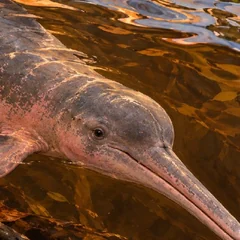
Illustrated portrait of INIA

The 80 cards of INIA, the pink river dolphin

Territory: Amazon rivers and flooded forest.

At the table they come up one at a time and are read aloud. Here is the whole deck, to read at your own pace.

Read them in

“Available” does not always mean “reviewed by specialists”: we explain this in Behind every card.

On this page

Trivia · 20 cards

INIA Trivia

A question with three answers, at three levels of difficulty. Everyone thinks it through together.

TRI-DEL-01 · THE BIG ONE OF THE RIVERS

Beginner

What is the pink dolphin like compared to other river dolphins?

  1. It's one of the largest of the river dolphins
  2. It's the smallest of all the dolphins in the world
  3. It's exactly like a sea dolphin
See the answer

A. It's one of the largest of the river dolphins

The boto is one of the largest river dolphins there are.

Intermediate

Its size among river dolphins — what does it serve for in its habitat?

  1. It serves above all to live in the open sea, far from the coast
  2. It helps it move through big rivers and the flooded forest
  3. Being so big is no use at all, living inside a small river
See the answer

B. It helps it move through big rivers and the flooded forest

Its body fits wide rivers and the flooded forest, where it swims among the trees.

Advanced

Why isn't it enough to say it's 'the biggest and the river's master'?

  1. Because it's actually, by far, the smallest dolphin in the whole world
  2. Because actually no dolphin on the planet ever lives inside rivers
  3. Because its size is better understood tied to how it uses its habitat, not as a superlative
See the answer

C. Because its size is better understood tied to how it uses its habitat, not as a superlative

More than a superlative, what's interesting is how its size fits the river and the flooded forest.

★ The boto is one of the largest river dolphins; its body fits the flooded forest.

TRI-DEL-02 · WHY SO PINK

Beginner

Why are some botos so pink?

  1. Because they eat pink shrimp, like flamingos
  2. Its color varies with age and from one individual to another
  3. Because the river water gradually dyes them pink
See the answer

B. Its color varies with age and from one individual to another

The boto's pink changes with age and from one individual to another; they're not all the same.

Intermediate

The boto's pink — is it the same in all of them?

  1. Yes: all adults are equally pink
  2. Yes: they're born completely pink from the start
  3. No: it changes with age and from one individual to another
See the answer

C. No: it changes with age and from one individual to another

There are grayer botos and very pink ones; the shade varies with age, the individual and activity.

Advanced

Why is it best not to say 'all adult botos are equally pink'?

  1. Because the shade varies between individuals and with age and activity
  2. Because the boto's color never changes in its whole life, from birth
  3. Because the boto's pink comes only from the pink shrimp it eats
See the answer

A. Because the shade varies between individuals and with age and activity

The color isn't uniform: it changes from one to another and with age. It's not like a flamingo dyed by eating.

★ The boto's pink changes with age and from one to another. There's no single shade.

TRI-DEL-03 · THE NECK THAT TURNS

Beginner

What can the boto's neck do that many sea dolphins' can't?

  1. Stretch it way up, like a giraffe's neck
  2. Hide it completely inside its body when it senses danger
  3. Bend it to turn its head among the trees
See the answer

C. Bend it to turn its head among the trees

The boto bends its neck to turn its head and dodge the trees of the flooded forest.

Intermediate

Why can the boto bend its neck so much?

  1. Because its neck vertebrae aren't fused, and it has more mobility
  2. Because it actually has not a single bone in its whole neck
  3. Because its neck is made of a soft rubber that stretches on its own
See the answer

A. Because its neck vertebrae aren't fused, and it has more mobility

In many sea dolphins the neck vertebrae are fused; in the boto they're not, and that's why it turns its head.

Advanced

Why not say 'every sea dolphin has an equally rigid neck'?

  1. Because actually no dolphin in the whole world can ever move its neck
  2. Because neck mobility varies between species; it's not identical in all
  3. Because all dolphins, river and sea, bend their necks exactly the same
See the answer

B. Because neck mobility varies between species; it's not identical in all

Generalizing erases the differences: neck mobility changes between species, and the boto stands out for having it.

★ The boto turns its head among the trunks: its neck vertebrae aren't fused.

TRI-DEL-04 · WHEN THE RIVER RISES

Beginner

Once a year the river rises hugely. What does the boto do then?

  1. It swims among the trees of the flooded forest looking for food
  2. It swims off to the sea and waits there for the river to drop again
  3. It buries itself in the mud of the riverbed until the flood passes
See the answer

A. It swims among the trees of the flooded forest looking for food

With the flood, the boto goes to swim among the trees of the flooded forest, looking for food.

Intermediate

Why does the river's flood suit the boto?

  1. Because every flood, in any river, is always good for everyone
  2. It opens new places for it to hunt among the flooded trees
  3. Because thanks to the flood it can come out and fly above the water
See the answer

B. It opens new places for it to hunt among the flooded trees

The seasonal flood opens new corners for it to hunt. Not every change in level is good, but this one serves it.

Advanced

Why does a normal flood serve it, but not 'every change in level is good'?

  1. Because any flood of the river, however strong, always benefits it
  2. Because the river's level actually never changes all year
  3. Because it takes advantage of the seasonal flood, not extreme or artificial alterations
See the answer

C. Because it takes advantage of the seasonal flood, not extreme or artificial alterations

The river's natural pulse suits it; an extreme flood or one caused by works can be another matter.

★ With the flood, the boto enters the flooded forest: new corners to hunt in.

TRI-DEL-05 · HUNTING WITHOUT SEEING

Beginner

The river water is dark and murky. How does the boto hunt if it can barely see?

  1. It doesn't hunt: it waits for a fish to bump into it on its own
  2. It uses sound: it sends clicks and listens for the echo
  3. It turns on a little light on its forehead to see
See the answer

B. It uses sound: it sends clicks and listens for the echo

In murky water, the boto sends clicks and listens for the echo to locate its prey.

Intermediate

That system of hunting with sound — what's it called?

  1. Hypnosis: it lulls the fish just by staring into their eyes
  2. A keen sense of smell: it smells the fish from many meters away
  3. Echolocation: it locates prey by the echo of its clicks
See the answer

C. Echolocation: it locates prey by the echo of its clicks

It's called echolocation: it emits clicks and, by the bouncing echo, locates fish even when it can't see them.

Advanced

Why isn't it exact to say 'the boto is blind'?

  1. Because it uses echolocation in murky water, but it also has and uses its eyes
  2. Because the boto actually has no eyes at all in its whole head
  3. Because it sees perfectly well in murky water without using sound at all
See the answer

A. Because it uses echolocation in murky water, but it also has and uses its eyes

It's not blind: it has eyes and uses them; echolocation helps it above all where the murky water won't let it see.

★ In murky water, the boto 'sees' with its hearing: it sends clicks and listens for the echo.

TRI-DEL-06 · WHAT THE BOTO EATS

Beginner

What does the pink dolphin eat?

  1. Only green plants it pulls from the murky riverbed
  2. A single kind of fish, always the same, its whole life
  3. Fish of several kinds, and sometimes crabs or little turtles
See the answer

C. Fish of several kinds, and sometimes crabs or little turtles

The boto has a varied diet: mostly fish, and sometimes crabs or little turtles.

Intermediate

Its varied diet — does it ensure it food always?

  1. No: food varies with the season, competition and threats
  2. Yes: as long as the river has some life, it never ever lacks food
  3. Yes: it always finds exactly the same to eat all year round
See the answer

A. No: food varies with the season, competition and threats

Eating several things helps, but food changes with the season, competition and fishing. It's not guaranteed.

Advanced

Why not say 'as long as the river has life, the boto doesn't lack food'?

  1. Because the boto actually eats everything, with no limit or problem at all
  2. Because availability changes with the seasons, competition and fishing
  3. Because the river always has exactly the same amount of fish all year
See the answer

B. Because availability changes with the seasons, competition and fishing

That guarantee erases the real picture: there are lean seasons, competitors and fishing that reduce what it finds.

★ The boto eats varied fish, and sometimes crabs; but food isn't always plentiful.

TRI-DEL-07 · THE ENCHANTED ONE

Beginner

In the Amazon they say that, at night, the boto turns into…

  1. An elegant man who goes out to parties, according to the legend
  2. A giant snake that slithers along the dark riverbed
  3. A huge fish that flies out above the water during the night
See the answer

A. An elegant man who goes out to parties, according to the legend

The legend of the Encante says that, at night, the boto becomes an elegant man who goes to parties.

Intermediate

That story of the boto turning into a person — what is it?

  1. A fact that science proved and confirmed long ago
  2. A cultural legend, with different versions depending on the place
  3. An identical belief shared by all the Amazon, without exception
See the answer

B. A cultural legend, with different versions depending on the place

It's a legend, and it changes from one town to another. It's not a biological fact, but a cultural tradition.

Advanced

Why not say 'the whole Amazon believes the same' about the enchanted one?

  1. Because absolutely everyone in the whole Amazon believes exactly the same about the boto
  2. Because the legend of the enchanted one is really an already-proven biological fact
  3. Because it's a tradition with many versions, attributed to specific communities
See the answer

C. Because it's a tradition with many versions, attributed to specific communities

The legend has many versions depending on the place and the teller; it's not a single belief shared by all.

★ The story of the enchanted one is a legend, with many versions depending on the town that tells it.

TRI-DEL-08 · THE LEGEND THAT PROTECTED

Beginner

Why could that old legend of the enchanted one help the pink dolphin?

  1. Because the legend makes it completely invisible to hunters' eyes
  2. Because, in some places, respect for the story discouraged harming it
  3. Because the story of the enchanted one gets it much more food in the river
See the answer

B. Because, in some places, respect for the story discouraged harming it

In some places, respect for the legend made people not want to harm the boto.

Intermediate

Is a legend of respect enough to protect the boto?

  1. Yes: as long as the story is told, nothing at all happens to the boto
  2. No: legends never influence anything people do with wildlife
  3. It helps in some contexts, but isn't enough alone: more measures are needed
See the answer

C. It helps in some contexts, but isn't enough alone: more measures are needed

Respect for the story can help, but isn't enough: fishing management and habitat care are also needed.

Advanced

Why is the link between belief and care more complex than 'no one harmed it'?

  1. Because respect varies between people and places, and other uses and threats are in play
  2. Because the legend of the enchanted one always protected all botos exactly alike
  3. Because beliefs actually have no real effect on what people do
See the answer

A. Because respect varies between people and places, and other uses and threats are in play

Beliefs influence differently depending on place and person, and coexist with other uses and threats to wildlife.

★ Respect for the legend helped in some places. But on its own it isn't enough.

TRI-DEL-09 · THE GREATEST DANGER TODAY

Beginner

Today, what is one of the greatest dangers for the pink dolphin?

  1. Being eaten by the sharks that live in the river
  2. That it gets too cold in the river water
  3. Being hunted to use its flesh as bait
See the answer

C. Being hunted to use its flesh as bait

One of the great current dangers is being hunted to use its flesh as fishing bait.

Intermediate

What is the hunted boto's flesh used for?

  1. As bait to fish for a certain fish, like the piracatinga
  2. To make medicines that supposedly cure almost any illness
  3. To feed the livestock of the ranches near the river
See the answer

A. As bait to fish for a certain fish, like the piracatinga

It's used as bait to fish for fish like the piracatinga. That hidden hunting is a serious threat.

Advanced

Why isn't it enough to name a single danger for the boto?

  1. Because hunting for bait is, no doubt, the only risk the boto runs in the river
  2. Because, besides hunting for bait, there are nets, dams and pollution
  3. Because the boto actually has no danger of any kind in its river today
See the answer

B. Because, besides hunting for bait, there are nets, dams and pollution

Hunting for bait is serious, but it's not alone: nets, dams and pollution also threaten it.

★ Today, one of the great dangers is being hunted for bait. It's not the only one.

TRI-DEL-10 · THE WALL IN THE RIVER

Beginner

A concrete wall crossing the river to make power — what does it do to the boto?

  1. It gives it a new, very comfortable place to rest at night
  2. It cuts off its passage and separates some groups from others
  3. It doesn't affect its life at all; the boto doesn't even notice a wall is there
See the answer

B. It cuts off its passage and separates some groups from others

A dam cuts the river: it separates some botos from others and keeps them from passing from one side to the other.

Intermediate

That a dam separates the botos — why does it matter?

  1. Because that way each group of botos lives much better always alone
  2. Because botos actually like to live always well separated
  3. Because the groups are left isolated and mix less with each other
See the answer

C. Because the groups are left isolated and mix less with each other

Left isolated, the groups mix less; over time that can weaken the population.

Advanced

Why not say 'every isolated group weakens immediately'?

  1. Because the effect depends on time, the group's size and the river's regime
  2. Because a group of botos left isolated always dies out completely in an instant
  3. Because being isolated from the rest never brings any consequence to a group of botos
See the answer

A. Because the effect depends on time, the group's size and the river's regime

The harm isn't instant nor the same in all: it depends on how long, how big the group is, and how the river changes.

★ The dam splits the river: the botos on each side stop mixing.

TRI-DEL-11 · DO THEY RESCUE PEOPLE?

Beginner

Is there scientific proof that botos pull drowning people out of the water?

  1. There's no proven scientific case; it's part of tales and legends
  2. Yes: it's proven by science that they always rescue people
  3. Yes: pulling people out of the water is what all botos do every day
See the answer

A. There's no proven scientific case; it's part of tales and legends

There's no proven scientific case; the idea of the rescuing boto comes from legends, not biology.

Intermediate

The story of a boto saving someone — what is it?

  1. A fact that science confirmed long ago
  2. A cultural tale, not a proven behavior of the animal
  3. A rule that absolutely all botos follow
See the answer

B. A cultural tale, not a proven behavior of the animal

It's a cultural tale, beautiful, but not a proven behavior. It's best not to confuse legend and biology.

Advanced

Why shouldn't 'the boto rescues humans' be taught as a fact?

  1. Because it's completely obvious that all the river's botos save drowning people
  2. Because a legend told by grandma is worth as much as serious scientific proof
  3. Because there's no documented case proving it; mixing legend and biology confuses
See the answer

C. Because there's no documented case proving it; mixing legend and biology confuses

With no documented case, presenting it as fact confuses: a legend is one thing and what's been proven is another.

★ That the boto saves people is part of the legend, not a proven behavior.

TRI-DEL-12 · HOW THEY GET AROUND

Beginner

How do pink dolphins get around, almost always?

  1. Always in huge pods of hundreds of botos, all packed together
  2. Always completely alone, never joining any other
  3. In small groups, or alone, and mothers with their calf
See the answer

C. In small groups, or alone, and mothers with their calf

The boto usually travels alone or in small groups; the most constant is the mother with her calf.

Intermediate

What relationship is one of the most constant among botos?

  1. That of a mother with her calf
  2. That of large pods with a boss in charge
  3. None: they have no relationship with each other
See the answer

A. That of a mother with her calf

The most stable is the bond of the mother with her calf; the rest of their social life is more flexible.

Advanced

Why not say 'the only stable thing is that they travel alone'?

  1. Because botos actually always, with no exception, travel completely alone
  2. Because their organization varies: small groups, mothers with calves, encounters
  3. Because botos always live together in fixed, huge pods of hundreds of animals
See the answer

B. Because their organization varies: small groups, mothers with calves, encounters

There's no single way: sometimes alone, sometimes in small groups, and the mother with her calf. Their social life is varied.

★ The boto usually travels in small groups or alone; the most constant, the mother with her calf.

TRI-DEL-13 · WHERE IT LIVES

Beginner

Where does the pink dolphin live?

  1. In the open sea, far from the coast
  2. In freshwater rivers, like those of the Amazon and the Orinoco
  3. In salt lakes in the middle of the desert
See the answer

B. In freshwater rivers, like those of the Amazon and the Orinoco

The boto lives in freshwater rivers, like the Amazon and Orinoco basins.

Intermediate

Could the pink dolphin live in the sea?

  1. Yes: it spends half the year living in the sea
  2. Yes: it lives just as well in the river and in the sea
  3. No: it's adapted to the fresh water of rivers
See the answer

C. No: it's adapted to the fresh water of rivers

It's adapted to fresh water; it's not a sea dolphin. It lives in rivers and the flooded forest.

Advanced

Why is it called a 'river' dolphin and not a 'sea' one?

  1. Because it lives in freshwater basins, like the Amazon and the Orinoco
  2. Because as a youngster it lives in the open sea and only as an adult moves to the river
  3. Because the boto actually lives just as well in the river as in the salt sea
See the answer

A. Because it lives in freshwater basins, like the Amazon and the Orinoco

Its home is the freshwater rivers of those basins; that's why it's called a river dolphin.

★ The boto is a freshwater dolphin: it lives in rivers like those of the Amazon and the Orinoco.

TRI-DEL-14 · THE OWNERLESS NET

Beginner

A fishing net abandoned in the river — what problem does it cause?

  1. It keeps trapping animals all by itself while it's in the water
  2. It cleans the river by taking out the sick fish
  3. It causes no problem to anyone in the river
See the answer

A. It keeps trapping animals all by itself while it's in the water

A lost net keeps trapping fish, turtles and botos all by itself, as long as it stays in the water.

Intermediate

A lost net that keeps fishing by itself is called…

  1. Magic fishing, because it never fails
  2. Ghost fishing: it traps animals with no one working it
  3. Clean fishing, because it uses no boat
See the answer

B. Ghost fishing: it traps animals with no one working it

It's called ghost fishing: the ownerless net keeps capturing, until it degrades or someone removes it.

Advanced

Why say 'as long as it stays in the water' and not 'forever'?

  1. Because an abandoned net traps exactly the same for thousands of years without ever stopping
  2. Because a net lost in the river actually never traps any animal
  3. Because nets degrade, change or are removed; they don't trap the same forever
See the answer

C. Because nets degrade, change or are removed; they don't trap the same forever

The risk lasts while the net is operative: over time it degrades, or a brigade removes it.

★ A lost net goes on fishing by itself while it's in the water. That's why they're removed.

TRI-DEL-15 · CALVES THAT TAKE TIME

Beginner

How often does a female boto have a calf, and how many?

  1. A great many calves, practically every month
  2. Ten calves at once, every year
  3. Seldom, and almost always a single calf
See the answer

C. Seldom, and almost always a single calf

The female boto has calves seldom, and almost always a single one. Its reproduction is slow.

Intermediate

The female boto carries her calf before birth for around…

  1. Close to a year, and then cares for it a long time more
  2. A single week and the calf is born
  3. Five straight years of waiting
See the answer

A. Close to a year, and then cares for it a long time more

The gestation is around a year, and then she cares for the calf a long time. Between one calf and the next, a good while passes.

Advanced

Why is its reproduction considered 'slow'?

  1. Because it has a great many calves one after another
  2. Because it has few calves, widely spaced, and cares for them a long time
  3. Because it actually never has any calf
See the answer

B. Because it has few calves, widely spaced, and cares for them a long time

Few calves, far apart in time and with long care: that's why recovering from a loss takes it years.

★ The female boto has few calves, very now and then. Recovering takes it years.

TRI-DEL-16 · IS IT WORTH MORE ALIVE?

Beginner

Can a living pink dolphin be part of a town's livelihood?

  1. No: a living boto is never any use to a town
  2. Yes: it can draw visitors who come to see it, with good management
  3. Yes: always, in any town, it brings in more money than anything
See the answer

B. Yes: it can draw visitors who come to see it, with good management

A living boto can draw visitors and provide a livelihood, when there's good management and agreements.

Intermediate

That the living boto provides a livelihood — what does it depend on?

  1. On nothing: it always works the same in every town
  2. Only on the river having a great many botos together
  3. On the management, the access for visitors and the local conditions
See the answer

C. On the management, the access for visitors and the local conditions

It's not automatic: it depends on how it's managed, on whether visitors come, and on each place's conditions.

Advanced

Why not say 'the boto is always worth more alive to the town' as a universal rule?

  1. Because the benefit depends on the place and the management; it's not automatic everywhere
  2. Because a living boto always, in any town in the world, brings sure and plentiful money
  3. Because a living boto actually can never provide any livelihood to a town
See the answer

A. Because the benefit depends on the place and the management; it's not automatic everywhere

It can be worth more alive, but not everywhere nor in the same way: it depends on the management and local conditions.

★ A living boto can support a town; it depends on the management and the place.

TRI-DEL-17 · WHY IT LETS ITSELF BE SEEN

Beginner

Why do some botos let themselves be seen without fleeing the canoes?

  1. Because some are curious or got used to the boats
  2. Because they have no eyes to see danger coming
  3. Because the legend makes them all equally tame
See the answer

A. Because some are curious or got used to the boats

Some botos are curious or got used to the boats, and so they let themselves be seen.

Intermediate

That a boto comes near a canoe — does it happen the same with all of them?

  1. Yes: all botos always come near in the same way
  2. No: it depends on the individual and on whether it got used to people
  3. No: actually no boto ever comes near a canoe
See the answer

B. No: it depends on the individual and on whether it got used to people

Not all: it depends on each boto and on whether it got used to people's presence in that stretch of river.

Advanced

Why not attribute its trust to 'it never learned to fear because of a legend'?

  1. Because the legend makes all the river's botos tame
  2. Because actually no boto ever comes near people
  3. Because the closeness depends on each individual and on habituation, not on a belief
See the answer

C. Because the closeness depends on each individual and on habituation, not on a belief

The trust is a matter of each individual and of habit, not the effect of a legend on all botos.

★ That a boto comes near depends on each one and on whether it got used to it, not on a legend.

TRI-DEL-18 · CHASING AND FEEDING

Beginner

What does it do to the boto when tourists chase it and throw it fish?

  1. It makes it stronger and much healthier than before
  2. It doesn't affect its life at all, in the least
  3. It changes its behavior and puts it at risk among the boats
See the answer

C. It changes its behavior and puts it at risk among the boats

Chasing it and feeding it fish changes its behavior and brings it near the motors, where it's in danger.

Intermediate

Feeding a boto fish from the boat — what can it cause?

  1. That it changes how it feeds and comes close to the motors
  2. That it stops eating completely for its whole life
  3. That it becomes invisible to its predators
See the answer

A. That it changes how it feeds and comes close to the motors

It can change how it feeds and make it come near the boats, where the propellers put it at risk.

Advanced

Why not say 'feeding it always makes it stop hunting'?

  1. Because feeding the boto any food always makes it stop hunting entirely forever
  2. Because it can change its behavior and raise risks, but it's not a fixed chain in all
  3. Because feeding a boto from the boat actually never changes anything at all
See the answer

B. Because it can change its behavior and raise risks, but it's not a fixed chain in all

It's not automatic nor the same in all: it can alter its behavior and raise the risks, with no obligatory causal chain.

★ Chasing it or feeding it fish changes its behavior and brings it near the motors. Better from afar.

TRI-DEL-19 · IF IT WERE GONE

Beginner

If the pink dolphin were gone, what else would be lost?

  1. All the river's water would be lost at once
  2. Nothing: nothing at all would change in the river
  3. A river animal and a very old cultural history
See the answer

C. A river animal and a very old cultural history

If the boto were gone, a river animal and a whole cultural history tied to it would be lost.

Intermediate

That there are botos in a river — what does it usually indicate?

  1. That the river has a certain health and enough food
  2. That the water is perfectly clean, with nothing wrong
  3. That no other animal lives in that river
See the answer

A. That the river has a certain health and enough food

The boto's presence is a sign that the river has a certain health and food; not a certificate that all is perfect.

Advanced

Why does the boto's presence not 'certify' a river without pollution?

  1. Because where there's a boto the water is always spotless
  2. Because it's a sign of health, not total proof; culture and ecology are different arguments
  3. Because without the boto the river dies completely at once
See the answer

B. Because it's a sign of health, not total proof; culture and ecology are different arguments

It's an indicator, not absolute proof: its cultural value and its ecological role are explained with different arguments.

★ The boto is a sign of the river's health, not a certificate that everything is perfect.

TRI-DEL-20 · WHAT PROTECTS IT BEST

Beginner

What best protects the pink dolphin today?

  1. Caring for its river: managing fishing and protecting its habitat
  2. Taking them all to live in aquariums
  3. Always telling, over and over, the legend of the enchanted one
See the answer

A. Caring for its river: managing fishing and protecting its habitat

What best cares for it is a healthy river: managing fishing and protecting its habitat.

Intermediate

To protect the boto, is tourism or a belief enough?

  1. Yes: as long as there's tourism, the boto is already protected
  2. No: above all it takes managing fishing and caring for the river's habitat
  3. Yes: it's enough for someone to keep telling the legend
See the answer

B. No: above all it takes managing fishing and caring for the river's habitat

Tourism and tradition can help, but aren't enough: the core is fishing management and care of the river.

Advanced

Why aren't there 'only two solutions' to protect the boto?

  1. Because actually only captivity can save it
  2. Because actually only the legend can save it
  3. Because fishing management, habitat and agreements combine; not a single universal requirement
See the answer

C. Because fishing management, habitat and agreements combine; not a single universal requirement

It's not choosing between two things: protecting it combines well-managed fishing, cared-for habitat and local agreements.

★ What best cares for the boto is its healthy river: managing fishing and protecting its habitat.

Pulse · 20 cards

INIA Pulse

News from the territory. Sometimes good, sometimes bad. It moves the score in favor of the Guardians or the Villains.

PUL-DEL-01

In secret, some botos are killed to use their flesh as bait for a cheap fish. In a river where few are left, each hunted boto weighs on the whole population.

At the table: Damage 2

PUL-DEL-02

The old fisherman doesn't set the net where he knows there are botos. “They're enchanted,” he says. He may not believe every word, but that story, in this stretch, has made him respect them.

At the table: Restore 2

PUL-DEL-03

A nylon net hangs in the current, almost invisible, set for fish. It doesn't choose: a boto swimming among the trees brushes the mesh and gets tangled. It's a mammal: it needs to surface to breathe, and the net won't let it.

At the table: Damage 1

PUL-DEL-04

Downriver, boats arrive with visitors to see a pink back. With guides, quotas and rules, that sighting can provide a livelihood for the town. Not everywhere nor forever: it depends on how it's cared for.

At the table: Reserve +1

PUL-DEL-05

They crossed the river with a concrete wall to make electricity. On one side some botos were left; on the other, the rest. With the passage cut off, the groups mix less and less with each other.

At the table: Reserve −1

PUL-DEL-06

On rainy nights, the grandmother tells that, once, an enchanted one pushed a boy to a log. “That's how they tell it here,” she says. It's a family story; no one should get into the river trusting in it.

At the table: Restore 1

PUL-DEL-07

The story of the enchanted one is told less than before. But what most threatens the boto isn't ceasing to believe: it's the hunting for bait, the nets and the river's concrete conflicts.

At the table: Damage 1

PUL-DEL-08

In this stretch they agreed not to fish the fish that was baited with boto flesh, and to try other baits. It didn't solve everything at once, but where a boto used to be hunted, today it's sometimes left to swim.

At the table: Restore 2

PUL-DEL-09

Some botos come near the canoes, curious, without fleeing. That closeness, in an individual used to people, can turn into danger in front of someone who wants to harm it.

At the table: Damage 1

PUL-DEL-10

A hydrophone that listens goes down into the water. The river looks empty, but it picks up clicks and clicks: a boto hunting among the trunks. The device confirms there are some; how many, takes more work.

At the table: Reserve +1

PUL-DEL-11

Upriver, a town throws trash into the water: bags, bottles. It drifts down to the flooded forest, where the boto hunts in murky water guiding itself by sound. Among so much floating plastic, the risk grows of swallowing what it shouldn't.

At the table: Damage 1

PUL-DEL-12

Once a year the river rises so much it enters the forest. The water climbs halfway up the trees and the boto swims among the branches. That seasonal flood, not extreme alterations, sets its table.

At the table: Restore 1

PUL-DEL-13

A dead boto turned up, with marks that aren't from the river. It didn't die of old age. The cause is investigated with those who know; in a river where few remain, losing one like this weighs double.

At the table: Damage 1

PUL-DEL-14

The team that patrols the river has spent months counting. This year they saw several times the same pink female swimming beside her calf. In this stretch, with so few mothers, a new calf is the best news of the year.

At the table: Reserve +2

PUL-DEL-15

The female boto carries her calf close to a year before it's born, and cares for it much longer. She has few, very now and then. A net takes minutes to finish her. Making up for that takes a long time.

At the table: Reserve −1

PUL-DEL-16

The boy thought the enchanted one was a man in a hat. Until he saw a real one: pink, bending its impossible neck, swimming among the trees of a flooded forest, guiding itself by sound. It didn't need to turn into a man to be astonishing.

At the table: Restore 1

PUL-DEL-17

So the tourists can see them up close, some boats chase them and throw them fish. That can change how the boto feeds and bring it near the motors. Admiring it that way ends up harming it.

At the table: Damage 1

PUL-DEL-18

The boto, skilled, sometimes takes the fish from the net before the fisher. To someone who fishes barely getting by, it looks like a thief. That's why agreements and support matter: so that living alongside the boto doesn't come so dear.

At the table: Damage 1

PUL-DEL-19

Between a dam that cuts the passage, nets that trap and polluted stretches, this river's botos were left in small groups. What separates them is, above all, the wall: they no longer cross from one side to the other, and they mix less.

At the table: Damage 1

PUL-DEL-20

In this town they say that under the river there's a city of enchanted ones. And as long as someone keeps telling the story —grandmother to grandchild, guide to visitor— and caring for the river, the boto keeps coming up, every so often, pink, among the trees.

At the table: Reserve +2

Encounter · 20 cards

INIA Encounters

A scene with someone who cares: a fisherwoman, a biologist, a neighbor. It almost always brings hope.

ENC-DEL-01

He knows the river like no one: in which bend, at what hour a boto comes up to breathe. As a guide, he takes the visitors up, asks for silence and brings them at dusk, without coming too close. That way he cares for the animal and the trade.

“The same river. Another trade.”

At the table: Reserve +1

ENC-DEL-02

On rainy nights, the grandmother tells the story of the Encante, as it was told to her. In this town, that story sowed respect for the boto. It isn't enough alone, but it cares for something.

“A well-told story sows respect too.”

At the table: Restore 1

ENC-DEL-03

He stopped hunting botos for bait. He can keep fishing the old way, or learn, with support, to be a sighting guide. Changing trade costs at first, but the living boto can feed him.

“The usual, or learning something new with support.”

  • A. Keeps fishing the old way Restore 1
  • B. Learns, with support, to be a guide Reserve +2

ENC-DEL-04

He drops a hydrophone into the murky water and puts on the headphones. “I can't see them,” he says, “but I hear their clicks hunting among the trunks.” The device detects that there are botos; counting them one by one takes more work.

“Where the eye doesn't reach, the ear confirms.”

At the table: Reserve +1

ENC-DEL-05

The community takes visitors to see botos. They can come close and feed them fish, which leaves a tip but habituates and endangers them, or keep their distance and silence, with agreements that sustain the sighting into the future.

“Up close pays more today. From afar cares for tomorrow.”

  • A. They come close and feed them Restore 1 · Reserve −1
  • B. They keep their distance, with agreements Reserve +2

ENC-DEL-06

At school, a boy says the river dolphin is a monster. A girl answers: “In my family they tell that a boto helped my cousin. It's a story of ours. But it's an animal, not a monster.”

“A family story, and a real animal.”

At the table: Restore 1

ENC-DEL-07

His net sometimes traps a boto by mistake. With help, he chooses gear and zones that reduce that crossing and learns to notify someone who knows how to free it. Keeping watch helps, but isn't enough alone.

“Fishing with care and knowing who to call.”

  • A. Changes zones on his own Restore 1
  • B. Adjusts gear and zones with technical support Reserve +2

ENC-DEL-08

“When I was young I helped hunt botos for bait,” he says. “Until I saw what they were worth alive: a guide taught me to show them to visitors.” He looks at the river. “Now I live off that, and I sleep easy.”

“The one who hunted them now lives off showing them alive.”

At the table: Restore 2

ENC-DEL-09

She saw a boto tangled in a net, struggling to surface. She didn't get into the water: she marked the spot, called the rescue team and made it easy for them to get there. “I don't know how to free it; they do.”

“Notifying someone who knows is saving it too.”

At the table: Restore 1

ENC-DEL-10

The children barely know the enchanted one anymore. The grandfather can tell them the legend just so, or tell it and also show them the real animal. Both fit: story and wonder together.

“The legend and the animal can go together.”

  • A. Only tells the legend Restore 1
  • B. Tells the legend and shows them the animal Reserve +2

ENC-DEL-11

A brigade heads out by canoe to pull out the old nets that keep fishing by themselves. “As long as it's in the water, it doesn't rest,” says one. It's prepared work: heavy and careful, not for just anyone.

“An ownerless net doesn't stop until someone pulls it out.”

At the table: Reserve +1

ENC-DEL-12

The guide shuts off the motor and asks for silence. “Look: it's pink, it bends its neck to dodge the trees and, in the murky water, it guides itself by sound.” A pink back breaks the surface, right on time.

“It's not a postcard dolphin; it's a river one.”

At the table: Restore 1

ENC-DEL-13

She found a tangled, exhausted boto struggling to breathe. She doesn't handle it: she marks the spot, notifies the trained team and clears their way. Waiting for those who know isn't abandoning it: it's caring for it well.

“Hold the notice, not the animal.”

  • A. Tries to free it herself Restore 1
  • B. Notifies the team and clears their way Reserve +2

ENC-DEL-14

The fishers of one stretch agreed not to set nets where botos with calves are seen. “We lose a little fishing; in exchange, that piece stays quiet for the mothers.” It guarantees nothing more, but it helps.

“A quiet stretch for the mothers is already caring.”

At the table: Reserve +1

ENC-DEL-15

“As a girl, the river had many botos,” the woman says. “Now you have to wait to see one.” She looks at the water. “But one still comes up. As long as it does, I keep coming to look.”

“The one who remembers how many there were cares for the one that comes up.”

At the table: Restore 1

ENC-DEL-16

A dead boto turned up, apparently from bait hunting. Instead of shouting it in the square, she gathers photos and data and reports it to the competent authority. Notifying well, with proof, puts on pressure without dividing the town.

“With proof you press without breaking the town.”

At the table: Reserve +1

ENC-DEL-17

An authorized brigade searches the river for nets and traps set in secret, and removes them carefully. “We don't take them all out,” says one. “But each one we pull out lowers the risk.”

“Each trap that comes out lowers the risk for the boto.”

At the table: Reserve +1

ENC-DEL-18

The teacher takes her group by canoe. “Only watch: no shouting, no fish, no chasing them.” A boy silently points to a pink back among the trees, and asks, low, how it dodges the trunks.

“A whispered question is wonder too.”

At the table: Restore 1

ENC-DEL-19

They propose a dam: cheaper power, but it would split the river and the botos couldn't cross. The town weighs alternatives —another source, another site— before deciding. It's not just power versus river.

“Before splitting the river, look at what other options there are.”

  • A. They accept the dam as it is Restore 1
  • B. They weigh alternatives to the project Reserve +2

ENC-DEL-20

In this town, the boto festival brings visitors in season, with guides and rules so as not to disturb them. It doesn't work the same everywhere; here, with agreements, the living dolphin became part of the livelihood.

“Here, with agreements, the living boto provides.”

At the table: Restore 2

Challenge · 20 cards

INIA Challenges

A real-life commitment. Each player answers “I already do it,” “I'll try it” or passes.

RET-DEL-01

With your family, locate on a map a basin where the boto lives, or tell apart in a guide a river dolphin from a sea one.

  • “I already do it” You already know the boto lives in freshwater rivers, not in the sea. Restore 1
  • “I'll try it” You locate a boto basin or compare two dolphins in images Restore 1
  • “Pass” No effect

The boto is of the river; never of the sea.

RET-DEL-02

If someone says the river dolphin 'brings bad luck,' how would you tell what the animal is, without mocking whoever keeps that story?

  • “I already do it” You already tell the legend apart from the animal, with respect for the tradition. Restore 2
  • “I'll try it” You separate in one sentence the cultural tale and a fact about the boto Restore 1
  • “Pass” No effect

The tale is one thing; the animal, another.

RET-DEL-03

Compare an image of a river dolphin and one of a sea dolphin: what differences do you notice at a glance?

  • “I already do it” You already tell apart, by looking, a river dolphin from a sea one. Restore 1
  • “I'll try it” You point out two visible differences between the two images Restore 1
  • “Pass” No effect

Two images say more than a list.

RET-DEL-04

If you see a river animal —turtle, fish, dolphin—, how do you observe it without chasing or touching it?

  • “I already do it” You already observe river wildlife from afar, without touching it. Restore 1
  • “I'll try it” You agree to watch without coming near next time Restore 1
  • “Pass” No effect

Watching from afar is not chasing.

RET-DEL-05

Faced with a photo of a river animal, how do you check the date, the author, and what species or basin it is?

  • “I already do it” You already check date, source and species before sharing a river photo. Restore 1
  • “I'll try it” You verify a photo's date and species with a guide Restore 1
  • “Pass” No effect

Not every river photo says how old or where it's from.

RET-DEL-06

At home, with your eyes closed, how do you locate something by sound? The boto does something similar in murky water.

  • “I already do it” You already understand the boto guides itself by sound, without giving up its eyes. Restore 1
  • “I'll try it” You try at home to locate a sound with your eyes closed Restore 1
  • “Pass” No effect

Sound serves to find things too.

RET-DEL-07

Who would you notify if you see an injured or tangled river animal, and what details would you give, without touching it or getting into the water?

  • “I already do it” You already know who to notify and what to describe, without handling the animal. Restore 2
  • “I'll try it” You prepare a rescue contact and three details to give Restore 1
  • “Pass” No effect

Notifying well is worth more than getting into the water.

RET-DEL-08

What legend or tradition about an animal do you know? Who told it to you and what place is it from?

  • “I already do it” You already know and can tell a tradition about an animal, with its origin. Restore 1
  • “I'll try it” You tell a legend and say who told it and where it's from Restore 1
  • “Pass” No effect

A tradition is told; it needn't be believed to the letter.

RET-DEL-09

What animal of a nearby river do you know, and what threat does that river face?

  • “I already do it” You already know a species of a nearby river and one of its threats. Restore 1
  • “I'll try it” You name a nearby river animal and a problem that affects it Restore 1
  • “Pass” No effect

Every river has its own neighbors and threats.

RET-DEL-10

Why not buy or ask for live river animals or parts as a souvenir?

  • “I already do it” You already avoid buying river wildlife or parts of it. Restore 2
  • “I'll try it” You agree not to ask for souvenirs made from river animals Restore 1
  • “Pass” No effect

A souvenir isn't worth a life torn from the river.

RET-DEL-11

What river, dam or well does your home's water come from? Ask on the bill or an adult.

  • “I already do it” You already know where your tap water comes from. Restore 2
  • “I'll try it” You find out on the bill or with an adult where the water comes from Restore 1
  • “Pass” No effect

The tap water comes from some river.

RET-DEL-12

What could you tell someone else about how what we do at home reaches the river?

  • “I already do it” You've already explained to someone a link between your home and the river. Restore 2
  • “I'll try it” You pick a daily choice that affects the river and who to tell it to Restore 1
  • “Pass” No effect

The nearby river is part of everyday life too.

RET-DEL-13

The boto bends its neck to dodge trees. What adaptation of an animal do you know that fits its habitat?

  • “I already do it” You already relate an animal's adaptation to where it lives. Restore 1
  • “I'll try it” You name an adaptation and the habitat where it serves Restore 1
  • “Pass” No effect

Each body fits its place.

RET-DEL-14

When you eat fish, what could you ask: what fish it is, where it came from and how it was caught?

  • “I already do it” You already ask what fish it is and where it comes from. Restore 2
  • “I'll try it” You frame two useful questions for next time Restore 1
  • “Pass” No effect

Asking where the fish came from cares for the river too.

RET-DEL-15

If you go out by boat to see animals, what would you ask so as not to disturb them? And if you never go out, what rule would you apply elsewhere?

  • “I already do it” You already ask to go slowly, without chasing or feeding, on a visit. Restore 2
  • “I'll try it” You agree on three rules for a respectful visit Restore 1
  • “Pass” No effect

Seeing without disturbing is enjoying too.

RET-DEL-16

How do you keep a net or a line from being left abandoned in the river? Who could you report a lost net to?

  • “I already do it” You already know gear shouldn't be abandoned and who to report a net to. Restore 2
  • “I'll try it” You find out who to report an abandoned net to Restore 1
  • “Pass” No effect

Gear that isn't abandoned doesn't become a trap.

RET-DEL-17

Where does the water from a drain in your area go? Find out if it reaches a river, and what waste is best not thrown away.

  • “I already do it” You already don't throw waste in the water and know where your drain goes. Restore 2
  • “I'll try it” You find out the destination of a drain in your area Restore 1
  • “Pass” No effect

What you throw down the drain starts a journey.

RET-DEL-18

Spend a while beside a river, lake or lagoon, just watching and listening. What did you see or hear?

  • “I already do it” You already spend time observing the water and its wildlife. Restore 1
  • “I'll try it” You plan a spell of observation beside the water Restore 1
  • “Pass” No effect

A while beside the water, watching, is already observing.

RET-DEL-19

What tradition about an animal do you know, and what concrete care action could go with it?

  • “I already do it” You already link a tradition with a checkable care action. Restore 2
  • “I'll try it” You pick a tradition and a care action to go with it Restore 1
  • “Pass” No effect

A story can go with care, not replace it.

RET-DEL-20

Near the water, stay still for a minute. What animals do you sense, by sound or movement? If you see none, that counts too.

  • “I already do it” You already pause to sense wildlife near the water, without coming to the edge. Restore 1
  • “I'll try it” You do the minute and share what you sensed Restore 1
  • “Pass” No effect

A still minute by the water reveals what lives there.