La Fábrica
Inventiva
Join usES

FAUNA Guardianes / Cards / CORAL

The full deck · 75 cards

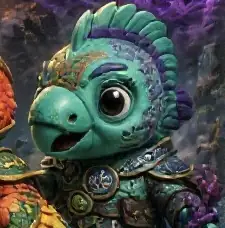
Illustrated portrait of CORAL

The 75 cards of CORAL

Territory: Mesoamerican Reef.

At the table they come up one at a time and are read aloud. Here is the whole deck, to read at your own pace.

Read them in

“Available” does not always mean “reviewed by specialists”: we explain this in Behind every card.

On this page

Trivia · 17 cards

CORAL Trivia

A question with three answers, at three levels of difficulty. Everyone thinks it through together.

TRI-COR-02

Beginner

The parrotfish's mouth looks most like…

  1. a parrot's beak
  2. a shark's mouth
  3. a pig's snout
See the answer

A. a parrot's beak

That's why it's called "parrotfish": its mouth is a hard beak. No wonder it bites what other fish won't even touch.

Intermediate

Why can that beak break coral, which is hard as stone?

  1. because it bites with more force than a shark
  2. because it's made of teeth fused into a single piece
  3. because live coral is soft and only hardens when it dies
See the answer

B. because it's made of teeth fused into a single piece

Dozens of teeth stuck together form a very hard tool. Coral is living stone; the beak beats it bite by bite.

Advanced

Besides the beak, the parrotfish has another hidden "molar" to grind the stone it swallows. Where?

  1. in the throat
  2. in the stomach
  3. in the gills
See the answer

A. in the throat

In its throat it has a second plate of teeth that grinds the coral inside until it becomes fine sand.

★ The beak scrapes. The throat teeth finish grinding. CORAL carries a whole crusher hidden in its mouth.

TRI-COR-03

Beginner

How much sand can a parrotfish produce by grinding reef material?

  1. None, really: the sand is made by waves breaking shells, and the fish only eats the skin
  2. Exactly one ton a year each, regardless of species or size: it's a fixed, proven figure
  3. The amount changes a lot, but a big fish can add a surprising amount over the year
See the answer

C. The amount changes a lot, but a big fish can add a surprising amount over the year

Production depends on the species, size, diet and place. Some estimates are large, but there's no single number for all parrotfish.

Intermediate

Why is it unwise to repeat a single kilo figure as if it held for any parrotfish?

  1. Because Caribbean parrotfish eat at night and Pacific ones only eat by day
  2. Because the real figure is secret and only marine biologists know it
  3. Because different species and sizes bite and process different amounts
See the answer

C. Because different species and sizes bite and process different amounts

Popular figures usually come from one species or specific site. The solid fact is that grazing and bioerosion contribute to producing carbonate sediment.

Advanced

If parrotfish drop a lot, what can the reef lose besides sand?

  1. Its colors, because tourists stop coming and stop caring for it
  2. Algae grazing that helps leave space for young corals
  3. The sharks, which leave the reef when there is nothing left to hunt
See the answer

B. Algae grazing that helps leave space for young corals

Its role isn't measured only in sand. By scraping algae, they help keep surfaces where coral can grow and recover.

★ CORAL carries no scale. Each bite cleans a little and turns another little into sediment.

TRI-COR-04

Beginner

What happens to coral if no one removes the algae on top of it?

  1. it runs out of light and suffocates
  2. it turns green and grows much more
  3. it dries out and turns into sand
See the answer

A. it runs out of light and suffocates

The algae covers the coral like a blanket that won't let it breathe. The parrotfish scrapes it off so the coral lives.

Intermediate

So, removing many parrotfish from the reef is dangerous because…

  1. the algae wins and drowns the coral
  2. the sharks are left with no food
  3. the water clouds up and nothing shows
See the answer

A. the algae wins and drowns the coral

Without gardeners, the algae rules. Where parrotfish fishing stopped, the reef usually breathes better.

Advanced

The parrotfish does two jobs at once with the same bite. Which?

  1. eat plankton and filter water
  2. clean the algae and make sand
  3. loosen the coral and sow more
See the answer

B. clean the algae and make sand

A single bite removes the algae (saves the coral) and grinds stone (makes beach). Pure efficiency.

★ No one thanks it for scraping. Until one day the coral goes out, and then yes they ask where the gardener was.

TRI-COR-06

Beginner

Why does healthy coral have such vivid colors?

  1. because the sun tints the rock, as it does with skin
  2. because it absorbs the colored minerals from seawater
  3. because tiny algae live inside and give it color
See the answer

C. because tiny algae live inside and give it color

Microscopic algae live inside the coral. They provide the color — and along the way, they cook for it.

Intermediate

Besides color, what do those algae give the coral?

  1. part of its food
  2. its hard skeleton
  3. shade from the sun
See the answer

A. part of its food

The algae capture light and make food they share with the coral. It's a deal: shelter in exchange for food.

Advanced

That deal, where both win by living together, is called…

  1. symbiosis
  2. parasitism
  3. predation
See the answer

A. symbiosis

Symbiosis: two different beings that need each other. Coral and algae are partners. If the coral loses them, it's left without color and without part of its food.

★ The prettiest coral actually carries tenants. And the tenants do the cooking.

TRI-COR-07

Beginner

Why does a coral turn white when the water is too warm?

  1. because it releases the algae that gave it color
  2. because the chlorine in warm water bleaches it
  3. because it dies at once from the heat of the sun
See the answer

A. because it releases the algae that gave it color

Heat stresses the coral. Stressed, it expels its algae. Without them, it's left white as bone.

Intermediate

That white coral, humans call it…

  1. albino coral
  2. calcified coral
  3. bleached coral
See the answer

C. bleached coral

Bleaching. No one poured bleach on it: it lost its tenants to the heat, and with them, the color.

Advanced

Bleaching is dangerous above all because the coral, without its algae…

  1. is left without a good part of its food
  2. can no longer hide from the fish
  3. becomes so fragile that it crumbles
See the answer

A. is left without a good part of its food

Without its cook algae, the coral goes hungry. If the heat lasts too long, it may not endure. Time matters.

★ The Grandfather didn't lose its color from sadness. It lost it because the water got too warm. I keep cleaning it — in case it cools in time.

TRI-COR-09

Beginner

The Mesoamerican Reef is…

  1. a sandbank that shifts with the currents
  2. one of the largest coral barriers in the world
  3. a chain of volcanic islands off the coast
See the answer

B. one of the largest coral barriers in the world

Kilometers and kilometers of living coral off the Mexican Caribbean. A huge city, right under where people swim.

Intermediate

Why can many people swim over a reef without grasping its size or work?

  1. Because the reef can only be seen at night, when the coral comes out to feed
  2. Because much of its structure and life stays below the surface
  3. Because from a boat it looks small, but it is longer than the coastline
See the answer

B. Because much of its structure and life stays below the surface

From above you may see only turquoise water. Below there's a living structure that alters waves and holds thousands of relationships.

Advanced

What does that reef do to the coast where the beaches and hotels are?

  1. fills it with big sharks
  2. steals sand from the beaches
  3. it protects it from storms
See the answer

C. it protects it from storms

The reef takes the hit of the big waves before they touch the coast. It's a living wall against storms.

★ Under a strip of calm water there can be a living barrier working for the whole coast.

TRI-COR-10

Beginner

What does the reef do when a big wave arrives?

  1. it bends and lets the wave pass whole
  2. it clashes with it and takes away its force
  3. it sinks down so the wave won't break it
See the answer

B. it clashes with it and takes away its force

The wave hits the reef and loses force before touching the beach. A wall almost no one sees.

Intermediate

Why do coastal people usually not notice this?

  1. because the hotels built breakwaters on top of it
  2. because the reef only works during hurricane season
  3. because the wall is underwater, working in silence
See the answer

C. because the wall is underwater, working in silence

The reef takes the blow in silence. People enjoy a calm beach without knowing who protects it.

Advanced

What's noticed on the coast when a reef dies?

  1. the water gets warmer and the beach gets wider
  2. the waves hit harder where there used to be a wall
  3. the fish leave and jellyfish arrive at the shore
See the answer

B. the waves hit harder where there used to be a wall

Where the coral dies, the wall breaks. Waves and storms hit harder. You understand it when it's no longer there.

★ The reef takes the blow so no one above feels it. Like me. Just like me.

TRI-COR-11

Beginner

Do reefs take up much of the ocean floor?

  1. No: they take up a small portion
  2. Yes: they cover almost the whole seabed
  3. Yes: they surround every continent
See the answer

A. No: they take up a small portion

Coral reefs take up little space compared to the whole ocean, but they concentrate a great diversity of life.

Intermediate

Why can a small area sustain so many species?

  1. Because warm water speeds up the reproduction of every fish
  2. Because coral produces the oxygen the whole ocean breathes
  3. Because it offers cracks, food, shelter and many microhabitats
See the answer

C. Because it offers cracks, food, shelter and many microhabitats

The three-dimensional structure creates hideouts and distinct zones. That complexity lets many species share little space.

Advanced

Why does losing coral affect organisms that don't build reef?

  1. Because they lose food, shelter, nursery zones and relationships they depended on
  2. Because dead coral releases a poison that spreads through the whole ocean current
  3. It doesn't really affect them: reef fish move out to the open sea with no trouble
See the answer

A. Because they lose food, shelter, nursery zones and relationships they depended on

The reef is habitat, not just one species. When it flattens or degrades, many other lives lose their home and their routes.

★ The reef fits in little space and opens thousands of rooms.

TRI-COR-12

Beginner

When a plastic bottle falls into the sea, over time it…

  1. breaks into smaller and smaller pieces
  2. it dissolves in the sea salt and disappears
  3. it sinks to the bottom and turns into coral
See the answer

A. breaks into smaller and smaller pieces

It doesn't evaporate or rot fast. The sea keeps breaking it: bottle → pieces → bits → crumbs.

Intermediate

Those tiny bits of plastic are called…

  1. microplastics
  2. nanoparticles
  3. marine dust
See the answer

A. microplastics

Microplastics: so tiny they're almost invisible. And so like food that animals swallow them by accident.

Advanced

Why are microplastics so hard to remove once dispersed?

  1. Because they form a floating island the size of a country that no ship can tow to the coast for disposal
  2. Because the sea belongs to every country and none agrees to pay for the cleanup, even though it is cheap
  3. Because they're tiny, spread among water, sediment and living beings, and keep entering from many sources
See the answer

C. Because they're tiny, spread among water, sediment and living beings, and keep entering from many sources

They don't form a single island you could lift with a net. Preventing and controlling sources is usually more effective than chasing already-dispersed particles.

★ PLASTIGMA doesn't need a big floating patch. It's enough for it to break, spread and keep entering.

TRI-COR-13

Beginner

Why can a sea animal mistake plastic for food?

  1. Because sea animals have no sense of smell or taste and swallow anything
  2. Because of its size, movement, smell or because it's covered in organisms
  3. Because plastic tastes of salt, and for them anything salty is food
See the answer

B. Because of its size, movement, smell or because it's covered in organisms

Plastic can look like prey or take on food smells. The confusion depends on the species and the type of particle.

Intermediate

How can plastic move through a food web?

  1. Fish pass it mouth to mouth when they greet each other
  2. Currents push it straight into the stomachs of fish
  3. One organism ingests it and another can eat that organism
See the answer

C. One organism ingests it and another can eat that organism

Particles can transfer between prey and predators, though their fate and accumulation change with size, tissue and species.

Advanced

Why is preventing plastic entry usually more effective than collecting microplastics in the open sea?

  1. Because collecting plastic at sea is forbidden by international fishing treaties
  2. Because dispersed particles are numerous, small and mixed with life and sediment
  3. Because there are no microplastics in the open sea: they all stay stuck to the beaches
See the answer

B. Because dispersed particles are numerous, small and mixed with life and sediment

Cleaning up big waste does help, but once fragmented it's much harder to separate them without affecting the ecosystem.

★ The best net for a microplastic is the one that stops it before it reaches the water.

TRI-COR-14

Beginner

Have microplastics been detected in samples of the human body?

  1. No, the human body rejects them completely
  2. Only in people who eat fish every day
  3. Yes, in different tissues and fluids studied
See the answer

C. Yes, in different tissues and fluids studied

The detection shows we're exposed through food, water and air. It doesn't mean each particle causes a disease by itself.

Intermediate

What are possible routes of exposure for people?

  1. Only by eating raw seafood, which never goes through the kitchen fire
  2. Only through the skin when swimming in the open sea for a long time
  3. Ingesting them with water or food and inhaling them with dust and air
See the answer

C. Ingesting them with water or food and inhaling them with dust and air

Exposure happens through several routes. The amount, size and composition matter, and their long-term effects are still under study.

Advanced

What statement is responsible today?

  1. Presence and exposure are documented; many concrete risks are still being studied
  2. It is already proven that they cause every modern disease, from allergies to cancer and diabetes
  3. There is nothing to worry about: the body eliminates them within hours and no study has found any inside
See the answer

A. Presence and exposure are documented; many concrete risks are still being studied

Science needn't choose between panic and indifference. It can recognize exposure, uncertainty and reasons to reduce pollution.

★ Finding plastic inside the body is a signal to investigate and prevent, not permission to invent certainties.

TRI-COR-15

Beginner

What can happen when a piece of plastic waste stays in contact with a coral?

  1. Nothing: coral is rock and plastic slides off without touching it
  2. It can hurt it, cover it or favor conditions for disease
  3. The coral absorbs it and becomes harder and more resistant to the waves
See the answer

B. It can hurt it, cover it or favor conditions for disease

Contact can cause abrasion, shade and wounds. Some studies have found a higher chance of disease in corals in contact with plastic.

Intermediate

Why isn't the problem just that the trash "looks ugly"?

  1. Because it can entangle, wound, transport organisms or keep fragmenting
  2. Because it scares off tourists, and without tourism nobody pays to care for the reef
  3. Because it attracts sharks that mistake the trash for wounded prey
See the answer

A. Because it can entangle, wound, transport organisms or keep fragmenting

The waste interacts with animals and habitats for a long time. Its impact changes with material, shape and place.

Advanced

What defense is most useful against reef plastic?

  1. Putting a giant net all around the reef to filter the plastic out of the currents
  2. Preventing it from entering, removing large waste carefully and improving management on land
  3. Training the parrotfish to eat the plastic along with the algae on the coral
See the answer

B. Preventing it from entering, removing large waste carefully and improving management on land

CORAL can clean algae, not solve a continuous stream of waste. Most of the defense begins before the coast.

★ The reef doesn't need a hero to bite every bag. It needs us to stop sending them.

TRI-COR-16

Beginner

What do some parrotfish species do when they sleep?

  1. They form a mucus wrapping around the body
  2. They bury themselves in the sand to sleep
  3. They cling to the coral with their mouths
See the answer

A. They form a mucus wrapping around the body

Some, not all, species produce a mucus cocoon before sleeping.

Intermediate

What might that wrapping be for?

  1. It can make it harder for certain parasites or chemical predators to detect them
  2. It keeps them warm at night, when the reef water gets too cold
  3. It is a mattress for sleeping comfortably on the sharp tips of the coral
See the answer

A. It can make it harder for certain parasites or chemical predators to detect them

The evidence suggests protective functions, for example against parasites that follow chemical signals. It's not an air bubble.

Advanced

What does this behavior teach?

  1. That fish feel cold and need a blanket like any mammal
  2. That the parrotfish is vain and washes itself every night
  3. That a defense can be chemical and temporary, not just teeth or speed
See the answer

C. That a defense can be chemical and temporary, not just teeth or speed

Animals combine many defenses. A nightly cocoon reduces some risks, but it doesn't eliminate them all.

★ Some nights, the parrotfish doesn't close a door: it makes itself a transparent border.

TRI-COR-17

Beginner

Why is it best to detect a reef problem as early as possible?

  1. Because while it's small it can still be stopped; later, almost not
  2. Because the law charges higher fines for damage that is already big
  3. Because reef problems disappear on their own if they are spotted early
See the answer

A. Because while it's small it can still be stopped; later, almost not

An algae patch, a coral starting to bleach, a tangled net: caught in time, they're solved; ignored, they grow until irreparable. At sea, seeing early is worth more than hitting hard.

Intermediate

Why does someone who's around the reef daily notice changes before anyone else?

  1. Because they have a sixth sense for the sea that city scientists never develop
  2. Because they see up close and every day the tiny details others overlook
  3. Because the fish warn them through their behavior, something only fishermen understand
See the answer

B. Because they see up close and every day the tiny details others overlook

Fishers, divers and guides who spend the day over the reef detect the tiny — a pale coral, new trash — before any casual visit. That's why community monitoring is a priceless early alarm.

Advanced

Against a threat that piles up in silence, like plastic, what defense works best?

  1. Watch and act early, before the damage becomes enormous
  2. Wait to have complete proof and then clean everything up at once
  3. Close the sea to fishing and tourism until the plastic sinks
See the answer

A. Watch and act early, before the damage becomes enormous

Plastic pollution gathers little by little until one day it's a mountain. Against what advances quietly, constant watching — not the final blow — is the real defense: detecting in time is winning.

★ I'm not the strongest on the reef. I'm the one who looks up close. And looking up close, sometimes, is the whole job.

TRI-COR-18

Beginner

What is a "ghost net"?

  1. a net so fine that fish don't see it until it's too late
  2. a lost fishing net that keeps catching animals on its own
  3. an illegal net that fishermen hide under the reef
See the answer

B. a lost fishing net that keeps catching animals on its own

No one manages it, but it keeps fishing. It catches fish, turtles, whatever passes. An ownerless trap.

Intermediate

Why is an abandoned net so dangerous?

  1. because it fishes even though no one uses it, for a long time
  2. because it sinks and poisons the whole bottom as it rots
  3. because it entangles the divers who go down to explore
See the answer

A. because it fishes even though no one uses it, for a long time

The net's plastic doesn't break down soon. It stays there, tangling and trapping, years after someone lost it.

Advanced

What harm does a ghost net keep causing even though no one is using it?

  1. None after the first year, because the sea breaks it down and turns it into sand
  2. It only bothers boats, which sometimes tangle it in the propeller and get stranded
  3. It keeps catching animals, damaging habitat and fragmenting over time
See the answer

C. It keeps catching animals, damaging habitat and fragmenting over time

A lost net can keep fishing for a long time. It also scrapes the bottom, tangles corals and ends up adding plastic fragments.

★ A ghost net keeps working after losing its owner: it fishes for no one and the reef pays.

TRI-COR-19

Beginner

How long does a boat's anchor take to destroy a coral that took decades to grow?

  1. Months of anchoring in one spot
  2. Never: coral is rock and holds
  3. Seconds: one blow is enough
See the answer

C. Seconds: one blow is enough

Coral grows very slowly, sometimes less than a centimeter a year. The anchor falls and in seconds shatters what took decades to raise. The slow is destroyed fast.

Intermediate

Why does a single anchor drop hurt so much on a reef?

  1. Because the noise of the anchor scares the fish away for several days
  2. Because what breaks will take years or centuries to grow back
  3. Because the iron of the anchor poisons the water around the coral
See the answer

B. Because what breaks will take years or centuries to grow back

Rebuilding that structure takes years or centuries; the blow erases it in an instant. And it's not only the coral lost: the shelter it gave fish and young also disappears at once.

Advanced

What solution keeps boats from destroying coral when anchoring?

  1. Plastic anchors, lighter, that don't weigh enough to break the coral
  2. Fixed mooring buoys, to tie the boat without dropping the anchor on the reef
  3. Banning boats completely and having tourists swim over from the beach
See the answer

B. Fixed mooring buoys, to tie the boat without dropping the anchor on the reef

Mooring buoys let you tie the boat without touching the bottom: they cost little and save decades of reef. No need to close the sea, just anchor with sense.

★ A coral can take years to build what an anchor breaks in seconds. That's why a well-placed buoy is worth more than a late repair.

TRI-COR-20

Beginner

What is a 'coral nursery'?

  1. A tourist aquarium displaying colorful corals brought from other seas
  2. A place where they grow coral fragments to replant them on damaged reefs
  3. An area of sea fenced with nets where parrotfish breed under protection
See the answer

B. A place where they grow coral fragments to replant them on damaged reefs

In nurseries they hang bits of healthy coral on underwater structures, let them grow and then plant them where the reef was lost. It's like a greenhouse, but for coral.

Intermediate

Why does cutting a piece of coral and growing it separately work?

  1. Because cut coral suffers, and the stress makes it produce twice as much skeleton as a calm one
  2. Because a fragment can grow into a new colony, faster than waiting for the sea
  3. Because in the nursery it gets special food that doesn't exist for coral in the open sea
See the answer

B. Because a fragment can grow into a new colony, faster than waiting for the sea

A finger-sized piece, protected in the nursery, becomes a colony in a few years. It doesn't replace what was lost, but it speeds up what the sea would take far longer to redo: it's active ecological restoration.

Advanced

What makes restoring a reef really work, and not just 'gluing coral'?

  1. Planting suitable species, in healthy water, and following up on them for years
  2. Use good-quality marine glue and glue as many pieces as possible
  3. Bring corals from other countries, which are tougher than Caribbean ones
See the answer

A. Planting suitable species, in healthy water, and following up on them for years

Replanting coral in still-warm or dirty water is sowing in sick ground. Serious restoration chooses resistant species, first fixes the causes and watches for years: caring for the sea is a craft, not a gesture.

★ I thought: more trash. I was wrong. They work like me: one piece, another piece, another. That I do understand.

Pulse · 19 cards

CORAL Pulse

News from the territory. Sometimes good, sometimes bad. It moves the score in favor of the Guardians or the Villains.

PUL-COR-01

Coral isn't one color by accident: its shade comes from tiny algae living inside it. When the water gets too hot, it expels them and turns white — alive, but in debt. If the heat eases in time, it gets them back; if it drags on, it doesn't. Each heat wave leaves less room for the next.

At the table: Damage 2

PUL-COR-02

Parrotfish and other grazers scrape off the algae that compete with coral. Without them, algae can smother the spots where young coral was trying to grow. CORAL doesn't just make sand: he keeps the place open for the next generation.

At the table: Damage 1

PUL-COR-03

To many reef animals, a tiny scrap of plastic looks too much like food, and they swallow it without knowing. A coral that 'eats' plastic spends energy on something that doesn't nourish it and sometimes sickens it — a harm you can't see from outside, grain by grain, inside the animal.

At the table: Damage 1

PUL-COR-04

A net that broke loose from a boat doesn't stop fishing: it keeps trapping fish, turtles and coral for years, on its own. Nobody decides it should keep fishing — nobody just stops it, and it takes lives in silence, season after season.

At the table: Reserve −1

PUL-COR-05

A carelessly placed fin snaps in one second what took years to grow, and coral gives no warning when it breaks. It looks like solid rock, but it grows millimeters a year: every broken piece is time the reef can't recover as fast as it's damaged.

At the table: Damage 1

PUL-COR-06

Underwater, sound travels far, and engine noise floods a world where many animals steer by what they hear. Larvae find the reef by following its sound; when the motor covers it, fewer arrive. Noise doesn't kill outright: it turns away the ones that were on their way.

At the table: Reserve −1

PUL-COR-07

Some products that reach the water with swimmers can affect reef organisms, though not all act the same and the research keeps refining. The safe move is to cut what enters the sea: clothing, shade and local rules protect your skin too.

At the table: Damage 1

PUL-COR-08

A healthy reef breaks a storm's waves; a weakened one shatters against them and leaves the coast without a shield. It's the shore's first barrier — and when it reaches the storm already broken, it doesn't protect: it crumbles, and the next surge finds less defense.

At the table: Damage 1

PUL-COR-10

An anchor can drag its chain across the reef and snap colonies as it goes. The boat stops in seconds; the coral takes years to rebuild what was left underneath.

At the table: Damage 1

PUL-COR-11

The lionfish isn't from here: it came from another ocean and almost nothing hunts it here. In its home sea something kept it in check; here that brake doesn't exist. A single female leaves a huge number of young, and the reef never evolved to withstand this hunter.

At the table: Damage 1

PUL-COR-12

A healthy reef is loud: it creaks, clicks, sounds like life. When it goes quiet it isn't calm, it's absence. Today reefs are listened to to gauge their health — a mute one can look whole and be empty inside. Silence arrives before the visible ruin.

At the table: Damage 1

PUL-COR-13

Some people grow coral the way you tend a garden: they hang fragments on underwater structures and let them grow, protected, until they plant them on a damaged reef. A piece the size of a finger can become a colony in a few years — it doesn't replace what was lost, but it speeds up what the sea would do in far longer.

At the table: Reserve +1

PUL-COR-14

On many coral beaches, part of the white sand passed through the digestive tract of parrotfish and other animals that grind the reef. Grain by grain, CORAL clears algae and helps make sediment with the very same bite.

At the table: Restore 1

PUL-COR-15

When a stretch of reef has clear rules and watch — no anchors on the coral and well-managed fishing — fish and corals gain time to recover. Animals don't read boundaries: part of that life also moves into neighboring areas.

At the table: Restore 2

PUL-COR-16

Mangrove and reef work together without seeing each other: the mangrove traps the soil before it clouds the water, and the reef breaks the waves before they reach the mangrove. The mangrove raises the young fish that as adults live on the reef — protecting only one isn't enough; it's the whole chain that holds up the coast.

At the table: Reserve +1

PUL-COR-17

You can visit a reef without leaving a trace: float still, look, touch nothing — and the reef never even knows you were there. The difference between admiring and damaging is sometimes a matter of centimeters, and multiplied by thousands of visitors, it decides a site's fate.

At the table: Reserve +1

PUL-COR-18

Trained teams go down to carefully untangle the reef's ghost nets, and what had been trapping for years finally stops. It's slow, technical work, done by people who know how not to hurt the coral: every net recovered stops taking lives and gives the reef back a piece of quiet.

At the table: Restore 1

PUL-COR-19

Where lionfish is caught steadily and responsibly, its pressure on native fish drops. It isn't wiped from the Caribbean, but it can be held closer to levels the reef can bear. Caring is sometimes a repeated task, not a final victory.

At the table: Restore 1

PUL-COR-20

On reefs that are protected and repaired, sound comes back little by little: first one click, then another. Life doesn't return all at once, it arrives in layers, in order, over years. Hearing a reef recover its noise is hearing, without instruments, that the whole system is healing.

At the table: Reserve +2

Encounter · 19 cards

CORAL Encounters

A scene with someone who cares: a fisherwoman, a biologist, a neighbor. It almost always brings hope.

ENC-COR-01

A retired fisherman lets white sand fall through his fingers in front of a boy. "Part of this passed through the mouths of fish that scrape the reef." The boy doesn't believe him. The man smiles: the beach has many stories, and CORAL takes part in one of the strangest.

"He didn't make the whole beach. But he did leave an awful lot of grains."

At the table: Reserve +1

ENC-COR-02

The tourist asks to remove "that white rock" from the photo. The guide explains it's bleached coral: still alive, but it lost the algae that give it color and food. If the heat drops soon, it can get them back; if it lasts too long, its chance shrinks.

"Pale isn't dead. But it is an alarm."

At the table: Reserve −2 · Restore 2

ENC-COR-03

The volunteer diver sees Lija approach a glint among the coral with her mouth open, as if to a sweet; that glint is plastic. She can startle her away at once or grab the plastic first with the hand net, but she can't do both at the same time.

"That's not food, Lija. Even if it shines. Especially if it shines."

  • A. They shoo Lija away Restore 1
  • B. They grab the plastic Restore 1

ENC-COR-05

The boatman recognizes an old net tangled in the coral: not his, it's been there months, fishing alone whatever passes. He cuts the engine so as not to push it deeper. Those "ghost nets" kill ownerless for years, until someone decides to pull them out.

"The net doesn't know no one uses it anymore. It keeps fishing on its own."

At the table: Restore 1

ENC-COR-06

The restaurant owner cleans a fish for lunch and finds inside something that isn't food: hard, colored bits. She freezes, knife in the air; she was going to serve that fish. The microplastic we throw in the sea comes back, in silence, to our own plate.

"They thought it was gone. It was just going around."

At the table: Reserve +1

ENC-COR-07

A tourist boat is about to drop anchor right on the reef's oldest coral; the chain is already down. The dock authority can shout at them to move now, or mark the zone with buoys for tomorrow. An anchor breaks in seconds what took a century to grow.

"What took a hundred years to grow, an anchor breaks before coffee."

  • A. They stop the anchor Restore 1
  • B. They set a buoy Reserve −2 · Restore 2

ENC-COR-08

The old fisherman puts away his net when he sees parrotfish. "Leave those," he tells the young ones. "Without them there's no sand, without sand no tourist, without tourist we don't eat." He got it late, but he got it: protecting the parrotfish is protecting his own living.

"It took him thirty years to leave them be. Better late than net."

At the table: Restore 1

ENC-COR-09

The volunteer ties bits of coral to a frame of pipes and rope. CORAL sees her from afar and growls: it looks like trash stuck in his reef, and he comes to remove it. Then he sees the new sprouts growing on the pipes. It wasn't trash: it was a coral nursery.

"I thought it was trash. It was a nursery. Even I get it wrong."

At the table: Reserve −1 · Restore 1

ENC-COR-10

The student watches a parrotfish sleeping inside a wrapping of mucus, a defense some species produce to hide their scent. Nearby, Lija settles among the rocks without that bubble. On the reef, not everyone sleeps the same way.

"Each fish brings its own trick to reach tomorrow."

At the table: Restore 1

ENC-COR-11

The cleaner sweeps the beach and leaves it spotless; he sits to rest. When he looks close again, among the grains there are colored specks that aren't sand. They were there the whole time: the big stuff gets picked up, but the microplastic has already worked its way into the sand.

"The big stuff you see and pick up. The tiny stuff already got in."

At the table: Restore 1

ENC-COR-12

The researcher sinks the sensor beside the oldest coral and reads the number twice: the water is hotter than it should be. The coral loses color slowly, like someone holding their breath. Acting now can save it; waiting to be sure can be too late.

"It's turning pale. It's not goodbye yet."

  • A. They act now Restore 1
  • B. They measure more Reserve +2

ENC-COR-13

The diver watches CORAL set things before Lija, one by one: a rock, an alga, food, a piece of plastic. Lija gets three right and hesitates at the plastic. That's the one that matters: telling plastic from food is the only thing between a live parrotfish and one dead inside.

"Rock you bite. Alga you scrape. Food you swallow. Plastic you leave."

At the table: Reserve +1

ENC-COR-14

A girl builds a castle with very white sand and asks where it came from. A diver tells her part can come from coral ground up by fish and other animals. The castle has no single maker: waves, rock and life worked together.

"The beach has more than one factory, and none uses a chimney."

At the table: Reserve −2 · Restore 2

ENC-COR-15

The ranger writes down the same as yesterday: nothing spectacular, coral scraped, algae in check, all in order. Nobody applauds. Below, CORAL does the same. They're two invisible jobs that show only the day they stop being done, when it's already too late.

"No one sees the healthy reef. Only the broken one. That's why I keep scraping."

At the table: Restore 1

ENC-COR-16

The hotel worker picks up the beach trash before the guests arrive and finds the same wrapper as yesterday, and the day before. Someone above keeps throwing; she keeps picking up. For now she's winning, but cleaning doesn't fix what won't stop falling.

"Someone throws at night. Lupe picks up by day. Today Lupe's winning."

At the table: Restore 1

ENC-COR-17

A boy points at the coral and says: "It looks like a rock." The researcher shows him, without touching it, how tiny polyps retract in a close-up video. The boy steps back: what looked like stone is a colony of living animals.

"To find out it's alive, you don't have to lay a hand on it."

At the table: Reserve +1

ENC-COR-18

The volunteer returns to the nursery she set up half a year ago: the fragments she tied are now colonies the size of a hand. CORAL passes, inspects them one by one and scrapes the algae off the supports without anyone asking. What was planted took, and now it has to be kept up.

"I didn't plant them. But someone has to scrape their algae. That's on me."

At the table: Reserve −1 · Restore 1

ENC-COR-19

The researcher closes the year's logbook and writes down how much coral was lost and how much held on. The second number is smaller, but it isn't zero, and she underlines that one. In conservation, counting what endures — and not only what dies — is what keeps the will to go on.

"I don't count what I lost. I count what holds on."

At the table: Reserve +1

ENC-COR-20

Fishermen, students, a doctor and two tourists remove plastic from the reef, piece by piece. They don't clean the whole sea, but they keep that trash from trapping or being eaten. Today each person takes home a concrete part to care for afterward.

The work doesn't end today; that's why today matters.

At the table: Restore 2

Challenge · 20 cards

CORAL Challenges

A real-life commitment. Each player answers “I already do it,” “I'll try it” or passes.

RET-COR-01

I use oxybenzone-free sunscreen or cover up with clothing and a hat.

  • “I already do it” Restore 2
  • “I'll try it” Reserve +1
  • “Pass” No effect

RET-COR-02

I don't buy coral, starfish, or seashell souvenirs.

  • “I already do it” Restore 1
  • “I'll try it” Reserve +1
  • “Pass” No effect

RET-COR-03

I don't touch or step on coral when I swim or dive.

  • “I already do it” Restore 1
  • “I'll try it” Reserve +1
  • “Pass” No effect

RET-COR-04

I don't buy reef fish or invertebrates for aquariums.

  • “I already do it” Restore 1
  • “I'll try it” Reserve +1
  • “Pass” No effect

RET-COR-05

I choose sustainably sourced seafood and avoid overfished species.

  • “I already do it” Restore 2
  • “I'll try it” Reserve +1
  • “Pass” No effect

RET-COR-06

I don't use plastic straws or cutlery.

  • “I already do it” Restore 1
  • “I'll try it” Reserve +1
  • “Pass” No effect

RET-COR-07

At the beach I pick up my trash and some of other people's.

  • “I already do it” Restore 2
  • “I'll try it” Reserve +1
  • “Pass” No effect

RET-COR-08

I don't release balloons or sky lanterns near the coast.

  • “I already do it” Restore 1
  • “I'll try it” Reserve +1
  • “Pass” No effect

RET-COR-09

I use reusable bags; turtles mistake plastic for jellyfish.

  • “I already do it” Restore 1
  • “I'll try it” Reserve +1
  • “Pass” No effect

RET-COR-10

I don't leave cigarette butts in the sand or the sea.

  • “I already do it” Restore 1
  • “I'll try it” Reserve +1
  • “Pass” No effect

RET-COR-11

I use biodegradable toiletries.

  • “I already do it” Restore 2
  • “I'll try it” Reserve +1
  • “Pass” No effect

RET-COR-12

I take part in or support beach cleanups.

  • “I already do it” Restore 2
  • “I'll try it” Reserve +1
  • “Pass” No effect

RET-COR-13

I avoid spray sunscreen; it pollutes the sand and the water.

  • “I already do it” Restore 1
  • “I'll try it” Reserve +1
  • “Pass” No effect

RET-COR-14

I ask whether the fish I buy comes from fishing that doesn't harm the reef.

  • “I already do it” Restore 2
  • “I'll try it” Reserve +1
  • “Pass” No effect

RET-COR-15

I don't buy sand or shells sold as decoration.

  • “I already do it” Restore 1
  • “I'll try it” Reserve +1
  • “Pass” No effect

RET-COR-16

I use less fertilizer in the garden; it ends up harming the reef.

  • “I already do it” Restore 2
  • “I'll try it” Reserve +1
  • “Pass” No effect

RET-COR-17

I save energy at home: extra heat bleaches the corals.

  • “I already do it” Restore 2
  • “I'll try it” Reserve +1
  • “Pass” No effect

RET-COR-18

I bring my own bottle and thermos to the beach.

  • “I already do it” Restore 1
  • “I'll try it” Reserve +1
  • “Pass” No effect

RET-COR-19

I don't anchor or moor over the reef; I use the buoys.

  • “I already do it” Restore 2
  • “I'll try it” Reserve +1
  • “Pass” No effect

RET-COR-20

I cut down on single-use plastic in my daily life.

  • “I already do it” Restore 2
  • “I'll try it” Reserve +1
  • “Pass” No effect