La Fábrica
Inventiva
Join usES

FAUNA Guardianes / Cards / LUMA

The full deck · 79 cards

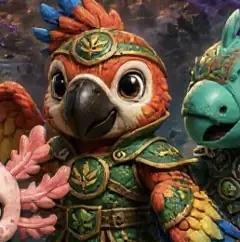
Illustrated portrait of LUMA

The 79 cards of LUMA, the macaw

Territory: Cloud Forest.

At the table they come up one at a time and are read aloud. Here is the whole deck, to read at your own pace.

Read them in

“Available” does not always mean “reviewed by specialists”: we explain this in Behind every card.

On this page

Trivia · 20 cards

LUMA Trivia

A question with three answers, at three levels of difficulty. Everyone thinks it through together.

TRI-LUM-01

Beginner

What does a macaw need to breed?

  1. A wide hollow in a big tree and surroundings where it can find food and safety
  2. A nest of woven twigs high in the canopy, like almost every other forest bird builds
  3. A cave or crack in the mountain rocks, far from any tree or predator
See the answer

A. A wide hollow in a big tree and surroundings where it can find food and safety

Many macaws nest in the cavities of large trees. When those trees disappear, it also becomes hard to find a place to breed.

Intermediate

Why does the scarlet macaw need very old, tall trees to nest?

  1. Because from up high it keeps a better watch for predators, and young trees don't give it the view it needs
  2. Because it builds enormous nests that only the branches of an old tree can hold without snapping in the wind
  3. It nests only in hollows of mature trees with very thick trunks — and those are the first to disappear with deforestation
See the answer

C. It nests only in hollows of mature trees with very thick trunks — and those are the first to disappear with deforestation

The scarlet macaw only nests in hollows of very old, thick trees, and those are the first to be felled. Without ancient trees, there's nowhere to breed.

Advanced

What can happen when a macaw that already had a mate is captured?

  1. The other dies of grief within days, because it cannot live without its lifelong mate
  2. The other leaves the forest for good and joins the first flock it comes across
  3. The other can lose its breeding partner and take time to form a new pair
See the answer

C. The other can lose its breeding partner and take time to form a new pair

Macaws form lasting pair bonds, but there's no identical answer in every case. Capturing one affects more than a single individual.

★ Taking a macaw from the forest can also leave an empty nest and a broken pair.

TRI-LUM-02

Beginner

What can a macaw do for the forest besides fly?

  1. Move seeds of some fruits far from the tree where it found them
  2. Pollinate the forest's flowers, the way bees and hummingbirds do
  3. Prune the dead branches with its beak so the trees grow better
See the answer

A. Move seeds of some fruits far from the tree where it found them

By eating fruits and moving around, it can transport or drop seeds. Its importance changes with the plant species and the place.

Intermediate

Why does it matter that different animals disperse seeds?

  1. Because that way the seeds don't rot on the ground, which is what happens when they stay put
  2. Because each moves different sizes and types, and together they help regenerate the forest
  3. Because one would actually be enough, but the rest compete and force it to sow more
See the answer

B. Because each moves different sizes and types, and together they help regenerate the forest

There's no single sower of the forest. Birds, mammals, wind and water share different tasks; losing one can leave some plants with fewer options.

Advanced

What risk appears when the animals able to move large seeds disappear?

  1. Some trees find it harder to reach new places and regenerate
  2. Nothing serious happens, because wind and rain move any seed just as well
  3. The trees produce smaller seeds so that the small animals can carry them
See the answer

A. Some trees find it harder to reach new places and regenerate

Certain plants depend more than others on big dispersers. Losing the animal doesn't stop the whole forest at once, but it changes who gets to grow tomorrow.

★ A macaw doesn't plant with its feet. It plants by traveling.

TRI-LUM-03

Beginner

Why isn't a macaw a good pet, even if you love it a lot?

  1. because it is aggressive by nature and sooner or later attacks the people who care for it
  2. because it needs to fly far, have a flock and forest, and none of that fits in a house
  3. because it eats only wild fruits you can't buy, and starves in captivity
See the answer

B. because it needs to fly far, have a flock and forest, and none of that fits in a house

Its life is sky, distance and the company of its own kind. A house doesn't fit it.

Intermediate

A macaw raised in a cage and then released, does it survive on its own?

  1. it's extremely hard: it never learned to find food or care for itself
  2. yes, no problem: the instinct to fly and find food is born with her
  3. yes, as long as it is released in a forest with plenty of trees and fruit
See the answer

A. it's extremely hard: it never learned to find food or care for itself

In the cage it didn't learn what's learned by flying free. Outside it's lost.

Advanced

There's a metal cage you can see. What's the one you can't see?

  1. the chain they fasten to its leg so it can't escape, hidden well under the feathers
  2. the fear of humans, which keeps it from ever trusting again even when it is set free
  3. being left without sky, without a flock and with nothing to do, until it stops being what it was
See the answer

C. being left without sky, without a flock and with nothing to do, until it stops being what it was

The worst cage isn't the bars: it's losing everything that made it a macaw.

★ The bird that reaches a cage doesn't show all it cost to capture it: stress, wounds and a forest with one voice less.

TRI-LUM-04

Beginner

How many birds have disappeared from North America since 1970, even though most species aren't extinct?

  1. About a hundred thousand individuals — almost all from rare species already in danger
  2. About three hundred whole species, mostly birds from the polar regions
  3. More than three billion individuals — one of every three birds that existed in 1970
See the answer

C. More than three billion individuals — one of every three birds that existed in 1970

Since 1970 more than three billion birds disappeared in North America: one of every three. Almost no species went extinct; they simply stopped being there.

Intermediate

Why is it worrying that birds once considered common are declining?

  1. Because common species are the only ones the law protects, and losing them leaves the rare ones defenseless
  2. Because if common birds decline, rare species take their place and the forest fills with unknown birds
  3. Because their abundance sustains many functions and a big drop can go unnoticed for years
See the answer

C. Because their abundance sustains many functions and a big drop can go unnoticed for years

The common also sustains ecosystems. That doesn't make rare species less valuable: both losses matter, but a massive drop in individuals changes processes on a large scale.

Advanced

Which group showed some of the sharpest losses in the North America study?

  1. Grassland birds and other open-environment species
  2. Seabirds and birds of the Pacific coast
  3. Birds of prey, such as hawks, owls and eagles
See the answer

A. Grassland birds and other open-environment species

Grassland birds suffered especially large losses. The result reveals that a landscape can stay green and still be left with far fewer birds.

★ Since 1970, nearly three billion fewer birds were estimated in the US and Canada. The loss happened individual by individual, long before an extinction.

TRI-LUM-05

Beginner

How do forest animals warn each other of danger?

  1. with a single alarm call that all of them know from birth
  2. with sounds, smells and movements that others learn to read
  3. they don't warn each other: each animal fends for itself and flees alone
See the answer

B. with sounds, smells and movements that others learn to read

There's a whole language of shrieks, signals and smells. The forest is full of warnings.

Intermediate

When an animal cries 'danger!', do other species understand it?

  1. no: each species has its own language and ignores the rest
  2. only monkeys, which are the only ones able to learn signals
  3. often yes: they learn to recognize others' alarm
See the answer

C. often yes: they learn to recognize others' alarm

A bird can save a deer's life. The warning crosses from species to species.

Advanced

Some monkeys have one cry for 'eagle' and another for 'cat'. What does that show?

  1. that monkeys have a language as complete as adult humans do
  2. that the cry doesn't only say 'danger', it also says what kind of danger
  3. that each monkey invents its own calls and the others don't understand them
See the answer

B. that the cry doesn't only say 'danger', it also says what kind of danger

It's not just any cry: it warns whether the danger comes from the sky or the ground.

★ Even a squirrel changes its shriek depending on whether the danger comes from above or below. The whole forest warns itself.

TRI-LUM-06

Beginner

The cloud forest is called that because…

  1. Its trees release a white vapor that looks like fog from a distance
  2. It rains so much that the water evaporates and forms mist all day long
  3. Clouds descend and wet it constantly, even without rain
See the answer

C. Clouds descend and wet it constantly, even without rain

The clouds tangle among the trees and water drips from leaves and mosses: the forest 'drinks' from the mist, catching water that never falls as rain.

Intermediate

It occupies a tiny portion of Mexico, but inside it holds…

  1. A huge amount of species for how little it occupies
  2. Few species, but all of them found only there
  3. Mostly pines and oaks, like any other mountain
See the answer

A. A huge amount of species for how little it occupies

It fits in a tiny fraction of the country and, even so, concentrates a huge part of its plants and animals. It's among the ecosystems with the most life per square meter.

Advanced

Why is it among the forests most fragile to heat?

  1. It lives in a narrow mountain band that shrinks if the temperature rises
  2. Its trees can't stand direct sun and burn as soon as the cloud lifts
  3. It is made of tropical plants that die if the temperature drops at night
See the answer

A. It lives in a narrow mountain band that shrinks if the temperature rises

It inhabits a narrow altitude band. If the climate warms, that band climbs the slope seeking coolness, but up top the mountain ends: from heat stress the habitat shrinks until it has nowhere to go.

★ The cloud forest fits in a tiny portion of Mexico and, even so, holds a good part of its life.

TRI-LUM-07

Beginner

What would change in our food if many pollinators were missing?

  1. Nothing important: most of what we eat pollinates itself or by wind, with no need for insects
  2. All food would run out within a few years, because no plant can bear fruit without an insect visiting it first
  3. The production or variety of many fruits, seeds and crops that depend on them to different degrees would drop
See the answer

C. The production or variety of many fruits, seeds and crops that depend on them to different degrees would drop

Many crops depend at least partly on animal pollinators. Others use wind or self-pollinate, so the effect isn't the same for each food.

Intermediate

What do we know about the state of pollinators?

  1. Many populations face habitat loss, pesticides, diseases and changing climate, though data are missing for many insects
  2. They are nearly extinct worldwide: the honeybee will vanish within ten years and take all of agriculture with it
  3. They are doing great: commercial hives grow every year, which proves wild pollinators are doing fine too
See the answer

A. Many populations face habitat loss, pesticides, diseases and changing climate, though data are missing for many insects

The picture varies by region and group. There are clear signs of decline in several pollinators and big information gaps in others.

Advanced

Why does how and when pesticides are used matter?

  1. Because any pesticide is equally harmful regardless of the dose, so the only real option is to ban them all
  2. Because exposure can harm pollinators; reducing it and applying integrated management lowers the risk
  3. Because modern pesticides no longer affect bees, and all that matters is that the farmer applies them by day
See the answer

B. Because exposure can harm pollinators; reducing it and applying integrated management lowers the risk

The risk depends on the product, dose, timing and route of exposure. Protecting flowers, refuges and control alternatives helps conserve pollinators.

★ A flower can feed a pollinator or expose it. The difference is in how we care for the field around it.

TRI-LUM-08

Beginner

Migratory birds travel thousands of kilometers. Why do they need stops?

  1. To wait for the rest of the flock to catch up along the way
  2. To rest and eat; without those stops they don't complete the journey
  3. To sleep at night, because birds cannot fly in the dark
See the answer

B. To rest and eat; without those stops they don't complete the journey

Migration is exhausting; birds depend on 'service stations' where they eat and sleep. If those sites disappear, many don't arrive: each stop is a link of the journey.

Intermediate

What happens to many birds that fly at night over cities?

  1. They settle in the city for good, drawn by the easy food
  2. Nothing: birds see well at night and cross the city without trouble
  3. They get disoriented by the lights and crash into lit windows
See the answer

C. They get disoriented by the lights and crash into lit windows

Many migrate at night guided by the sky; the lights confuse them and the glass deceives them. Light pollution steers them off course and causes deadly crashes.

Advanced

A city turned off its tower lights at night during migration season. What happened?

  1. The birds got lost without the lights and ended up at sea
  2. Far fewer birds crashed, at almost no cost to anyone
  3. Nothing changed, because birds collide by day, not at night
See the answer

B. Far fewer birds crashed, at almost no cost to anyone

Reducing unnecessary lights during migration nights can greatly cut collisions. Bird-visible glass and turning off interior lights near windows also help.

★ Turning off an unnecessary light during migration can save birds. Making the glass visible completes the defense.

TRI-LUM-09

Beginner

What helps care for an inhabited forest?

  1. That those who live there have voice, rights, knowledge and benefits for conserving it
  2. Removing people from the forest and fencing it, because nature takes better care of itself alone
  3. Having the government post armed guards at every entrance and ban any use of the forest
See the answer

A. That those who live there have voice, rights, knowledge and benefits for conserving it

Living nearby doesn't make anyone an automatic protector. But participation, clear rights and lasting benefits can turn care into a viable decision.

Intermediate

Why does local knowledge matter?

  1. Because it is always more accurate than science, which only measures the forest from a distant lab
  2. Because it helps recognize seasons, species, risks and changes that someone far away may not see
  3. Because communities are never wrong about their land and need no other information at all
See the answer

B. Because it helps recognize seasons, species, risks and changes that someone far away may not see

Local knowledge and scientific research can complement each other. Whoever observes a site every day detects signals a brief visit misses.

Advanced

What does a community that earns income without emptying the forest show?

  1. That conservation and wellbeing can reinforce each other when there are rules and fair sharing
  2. That tourism money is enough for everyone and there is no longer any need to care for the forest
  3. That they actually live on government aid, because nobody can make a living from the forest
See the answer

A. That conservation and wellbeing can reinforce each other when there are rules and fair sharing

Saying 'live off the forest' isn't enough. You need agreements, monitoring and benefits that reach those who bear the cost of conserving.

★ The best forest ranger doesn't always wear a uniform. But they do need voice, rules and reasons to keep caring.

TRI-LUM-10

Beginner

Can human noise harm wild animals even if we don't touch them?

  1. No — wild animals get used to noise just like we do in the city
  2. Yes — it interferes with how they find mates, detect dangers and hunt
  3. Only birds; mammals hear so little that noise doesn't affect them
See the answer

B. Yes — it interferes with how they find mates, detect dangers and hunt

Yes: even without touching them, human noise interferes with how animals find mates, detect dangers and hunt. Sound pollutes without leaving a stain.

Intermediate

How can noise affect a bat looking for insects?

  1. It can make it harder to detect weak signals or change where and when it hunts
  2. It leaves it deaf for life, because its hearing is more delicate than any bird's
  3. It doesn't: the bat is blind and deaf, and hunts by smell alone
See the answer

A. It can make it harder to detect weak signals or change where and when it hunts

The effect depends on the type of noise and the species. Some bats change their behavior, spend more energy or avoid noisy sites.

Advanced

What's the use of comparing a place's soundscape over time?

  1. To know exactly how many animals there are, because each one sings only once a day
  2. To record pretty songs and sell them, since sound says nothing about the forest's health
  3. To detect changes in animal activity and diversity, along with other measurements
See the answer

C. To detect changes in animal activity and diversity, along with other measurements

Recordings let you compare hours, seasons and years. Sound is a powerful window, but it must be interpreted with context.

★ A forest can still be green in a photograph and be losing voices. Listening to it reveals another layer of the change.

TRI-LUM-11

Beginner

At a market you see a box with a red-feathered bird inside. What's wrong?

  1. That a forest bird shouldn't be caged for sale
  2. That the box is too small; a big cage would be fine
  3. Nothing, if the seller has a permit and the bird looks fine
See the answer

A. That a forest bird shouldn't be caged for sale

A wild bird for sale may come from illegal capture and suffer stress or injury. It's best not to confront or try to release it yourself.

Intermediate

Why does taking birds from the forest to sell them leave it quieter?

  1. Because the remaining birds stop singing for fear of being caught
  2. Because only males sing, and those are the ones that get captured
  3. Because each missing bird is one song less, and many aren't replaced
See the answer

C. Because each missing bird is one song less, and many aren't replaced

The forest loses voices one by one, without a crash. It's the mark of silent extinction: the volume drops little by little until one day the song no longer returns.

Advanced

What can happen during the capture and transport of wild birds?

  1. Nothing serious: they travel asleep and wake up calm in their new home
  2. They quickly get used to the cage and lose the urge to fly
  3. They can suffer injuries, stress or die before reaching the buyer
See the answer

C. They can suffer injuries, stress or die before reaching the buyer

Capture and transport can be very harsh. The proportion changes by case, but the harm isn't limited to the bird that ends up on display.

★ A macaw in a box isn't an exotic ornament. It's a life torn from a flock and a forest.

TRI-LUM-12

Beginner

How can a healthy forest support people's health and wellbeing?

  1. It keeps dangerous animals away from homes, which is the only way a forest protects us
  2. It helps regulate water, temperature and air quality, and offers spaces and resources that sustain communities
  3. Not directly at all: the forest serves animals, and people's health depends only on doctors and hospitals
See the answer

B. It helps regulate water, temperature and air quality, and offers spaces and resources that sustain communities

The relationship isn't a barrier that 'keeps wildlife in its place'. Forests sustain environmental and social processes that influence our lives.

Intermediate

What usually happens when a habitat is reduced or fragmented?

  1. Animals become more aggressive by instinct and attack people who come too close to the forest
  2. Some animals lose food and shelter, change their routes and encounters with people can rise
  3. Nothing happens as long as some patch of forest remains: the animals settle into whatever space is left
See the answer

B. Some animals lose food and shelter, change their routes and encounters with people can rise

Habitat loss reorganizes movements and resources. It can raise conflicts, but each species and landscape responds differently.

Advanced

Why is it best to care for the forest before it breaks, and not after?

  1. Because restoring a broken ecosystem costs much more and takes decades
  2. Because once broken nothing can be planted again and the soil stays barren
  3. Because the law only allows planting trees before the forest is lost
See the answer

A. Because restoring a broken ecosystem costs much more and takes decades

An intact forest sustains itself; a destroyed one loses soil, species and processes that take decades to return, if they return. Restoration is expensive: that's why resilience is cared for before, not after.

★ When the forest loses space, its inhabitants seek new routes. Caring for the habitat reduces collisions before they happen.

TRI-LUM-13

Beginner

You see someone selling a forest animal at the market. What can you do?

  1. Buy it yourself to release it later in the nearest forest
  2. Tell a trusted adult or whoever cares for nature
  3. Confront the seller loudly and take the animal away right there
See the answer

B. Tell a trusted adult or whoever cares for nature

It's not up to you to solve it alone or your way: tell someone who can act legally. Buying or releasing it just like that usually makes things worse for the animal and the forest.

Intermediate

Why does buying it 'to save it' almost always make things worse?

  1. Because the animal is already used to the cage and won't survive in the wild
  2. Because buying wildlife is legal and the seller has no reason to stop
  3. Because your money pays whoever captured it and funds the next capture
See the answer

C. Because your money pays whoever captured it and funds the next capture

Each purchase, even with good intentions, confirms to the trafficker that there's a market: you save one and condemn several more. Demand is the engine of trafficking.

Advanced

Why is it best to tell an adult or competent authority soon?

  1. Because the animal must be released that same day in the forest, before nightfall
  2. Because the authorities pay a reward for every wild animal that gets reported
  3. Because they can document the case and decide safe handling for the animal
See the answer

C. Because they can document the case and decide safe handling for the animal

Not all confiscated animals can be released immediately or at the site of origin. First they must be identified, checked and handled by specialists.

★ Telling in time doesn't guarantee a perfect ending, but it keeps a good intention from putting the animal and people at more risk.

TRI-LUM-14

Beginner

The water of many city springs begins…

  1. up high, in the mountain's cloud forest
  2. below, in the city's underground rivers
  3. in the dams that summer rains fill up
See the answer

A. up high, in the mountain's cloud forest

The cloud forest catches the water from the clouds and releases it slowly downslope. Many cities drink from there without knowing it.

Intermediate

If a mountain's cloud forest is felled, what usually happens below?

  1. the springs drop and the water arrives with soil
  2. there is more water, because the trees no longer drink it
  3. nothing changes, because the water comes from the rain
See the answer

A. the springs drop and the water arrives with soil

Without trees holding the water and soil, the spring turns thin and murky.

Advanced

Why is a felled cloud forest so hard to recover?

  1. because once cut, the soil dries out and nothing ever grows on it again
  2. because it depends on a humidity and old trees that take very long to return
  3. because the clouds change course and stop passing over that mountain
See the answer

B. because it depends on a humidity and old trees that take very long to return

The constant mist and the moss-laden trees take decades. It's not reassembled by planting fast.

★ Many springs that reach the city are actually born in the mist of a mountain forest.

TRI-LUM-15

Beginner

Can wild birds and animals exist in a big city?

  1. No — only pigeons and rats live in the city; the rest are escaped pets
  2. Only passing through — birds cross the city, but none can breed in it
  3. Yes — many species adapt to parks, gardens, green roofs and urban rivers
See the answer

C. Yes — many species adapt to parks, gardens, green roofs and urban rivers

Yes: many species adapt to parks, gardens, green roofs and urban rivers. A city doesn't have to be a desert of life.

Intermediate

What can urban vegetation offer besides beauty?

  1. Hardly anything useful: city trees crack sidewalks and pipes and draw pests into homes
  2. Shade, rain infiltration, refuge for wildlife and heat relief, depending on site and design
  3. All the oxygen the city breathes; without its gardens it would run out of air in a few hours
See the answer

B. Shade, rain infiltration, refuge for wildlife and heat relief, depending on site and design

Trees, gardens and urban wetlands can cool, retain water and connect habitats. The magnitude changes with species, cover and maintenance.

Advanced

Why can Mexico City host so many birds?

  1. Because birds go after the food in the dumps, which the city never runs short of
  2. Because of its location, relief and mosaic of wetlands, forests, parks and gardens
  3. Because smog scares off predators and the birds live more safely there
See the answer

B. Because of its location, relief and mosaic of wetlands, forests, parks and gardens

The city combines migratory routes and very different environments. That diversity creates opportunities, though there are also collisions, pollution and habitat loss.

★ A city doesn't replace a forest, but it can leave corridors, water and refuges so life doesn't end on the sidewalk.

TRI-LUM-16

Beginner

Why can some tropical birds be sensitive to a small rise in temperature?

  1. Because it's already hot in the tropics, and one more degree makes them sweat until they dehydrate within hours
  2. Because their colorful feathers attract sunlight and heat up more than the gray feathers of northern birds
  3. Because they evolved under relatively narrow climate ranges and not all have somewhere to move
See the answer

C. Because they evolved under relatively narrow climate ranges and not all have somewhere to move

Sensitivity varies among species. In stable environments, some tolerate less change or already live near their thermal limit.

Intermediate

What is a seasonal mismatch?

  1. When a species mistakes summer for winter and breeds twice a year
  2. When the timing of breeding or migrating no longer coincides with the food peak
  3. When birds arrive somewhere and find another species occupying their nest
See the answer

B. When the timing of breeding or migrating no longer coincides with the food peak

Plants, insects and birds don't adjust their calendars at the same speed. If the food appears earlier, the chicks may arrive late to the table.

Advanced

Why isn't it enough to say birds should 'just move up' their migration?

  1. Because the migration date is imprinted in their memory from birth and can never be modified
  2. Because they do: all birds already migrate a month earlier and the problem solved itself years ago
  3. Because they use several signals — light, climate and body condition — and each population has limits to change
See the answer

C. Because they use several signals — light, climate and body condition — and each population has limits to change

Evolution and learning can help, but environmental change can advance faster or alter different stages of the route.

★ The climate moves the calendar. The problem is that flowers, insects and birds don't get the same invitation at the same time.

TRI-LUM-17

Beginner

Why does the knowledge forest communities have built about plants and landscapes matter?

  1. Because it gathers observations from many generations and can guide care, food or research
  2. Because it is older than science and is therefore always right when the two disagree
  3. Because they are nice beliefs worth keeping in museums, even if they serve no practical purpose today
See the answer

A. Because it gathers observations from many generations and can guide care, food or research

Traditional knowledge is diverse and alive. It can bring valuable questions and uses, and must be treated with consent and respect.

Intermediate

If a company uses a community's knowledge to create a product, what would be fair?

  1. Nothing: what is known in the countryside is in the public domain
  2. Paying once for the information and never mentioning it again
  3. Recognizing the origin, agreeing on the use and sharing benefits
See the answer

C. Recognizing the origin, agreeing on the use and sharing benefits

Justice doesn't begin when the profit appears: it begins with consent, recognition and clear agreements from the start.

Advanced

How can knowledge be lost without the plant disappearing?

  1. When the language, the practice or the daily relationship with the territory stops being passed on
  2. When someone writes it in a book and nobody has to memorize it or practice it anymore
  3. When the plant becomes so common that nobody sees any need to study it anymore
See the answer

A. When the language, the practice or the daily relationship with the territory stops being passed on

Knowing how to identify, prepare or care for a species lives in people, words and practices. Documenting doesn't replace cultural continuity.

★ Caring for a plant can also mean caring for the language and the community that learned to name it.

TRI-LUM-18

Beginner

The cloud forest 'harvests' water in an unusual way. How?

  1. Its roots suck water from underground rivers and lift it up to the clouds
  2. It makes rain from the vapor its trees release when it gets hot at midday
  3. It traps the moisture from clouds on leaves and mosses, and lets it drip drop by drop
See the answer

C. It traps the moisture from clouds on leaves and mosses, and lets it drip drop by drop

Leaves, mosses and epiphytes comb the mist: they condense its moisture and drip it to the ground. The forest delivers water that never fell as rain and feeds springs downstream.

Intermediate

Why is a healthy cloud forest up high good for the cities below?

  1. Because it regulates and filters the water those cities drink the rest of the year
  2. Because it stops the hurricanes and storms that roll down the mountain toward the cities
  3. Because it produces the oxygen that everyone in the region breathes each day
See the answer

A. Because it regulates and filters the water those cities drink the rest of the year

The forest catches water in the wet season and releases it little by little the rest of the year, clean and constant. Those living downhill drink from what the forest retains up top: a water-catchment service.

Advanced

Epiphytes —mosses, orchids and bromeliads on the branches— what role do they play?

  1. They work like sponges that store the mist and sustain life up high
  2. They are parasites that suck the tree's sap and eventually dry it out
  3. They only decorate the branches; they hold no water and serve no forest animal
See the answer

A. They work like sponges that store the mist and sustain life up high

Epiphytes live on the branches without harming the tree: they accumulate mist water and create microhabitats where frogs and insects nest. They're a good part of the cloud forest's richness — and of its sponge.

★ The cloud forest combs the clouds. Part of the water we drink begins as drops trapped on leaves, mosses and branches.

TRI-LUM-19

Beginner

'Shade' coffee is grown…

  1. Under the forest trees, which shade it instead of felling them
  2. Inside dark greenhouses, away from the sun and the rain
  3. On the coldest slopes, where the sun almost never hits directly
See the answer

A. Under the forest trees, which shade it instead of felling them

Shade coffee grows under the forest canopy instead of replacing it. That way the coffee grove stays home to birds, insects and trees: it produces food without emptying the mountain.

Intermediate

What does the farmer gain by leaving the trees standing over their coffee?

  1. Less harvest, but a better-tasting coffee that sells for twice the price
  2. Birds and insects that control pests and pollinate, plus protected soil
  3. Nothing: the trees steal water and light from the coffee, and only serve to sell timber
See the answer

B. Birds and insects that control pests and pollinate, plus protected soil

The trees bring birds and insects that eat pests and pollinate, and their roots hold the soil. The forest works for free for the coffee grove: pest control and pollination are ecosystem services with real value.

Advanced

Why does sun coffee yield more at first but usually end up costly in the long run?

  1. Because the sun scorches the beans and within a few years the plants stop producing coffee altogether
  2. Because it demands more chemicals and depletes the soil, losing the forest's natural allies
  3. Because the government charges much higher taxes to farms that keep no trees
See the answer

B. Because it demands more chemicals and depletes the soil, losing the forest's natural allies

Without trees, the coffee grove loses its pest controllers and pollinators and depends on more agrochemicals that tire the land. It wins one year and loses several: the nature it dismissed charged less than its replacements.

★ A cup of coffee also has a canopy. When it keeps diverse shade, more life can share the crop.

TRI-LUM-20

Beginner

What can bird songs tell us about a forest?

  1. Exactly how many birds there are, because each individual sings only once a day
  2. Which species are active and how the community changes between places and moments
  3. Whether it will rain or get hot, because birds sing according to the coming weather
See the answer

B. Which species are active and how the community changes between places and moments

Listening helps detect species and activity. To assess health you also need habitat, abundance, reproduction and other signals.

Intermediate

If the chorus changes or drops, what's best to do?

  1. Set up speakers with recorded songs so the birds come back when they hear them
  2. Compare seasons and look for changes in food, cover, climate or disturbance
  3. Assume the birds have gone extinct and stop visiting that forest for good
See the answer

B. Compare seasons and look for changes in food, cover, climate or disturbance

A silence can have several causes, even the hour or season. The strength of monitoring is in repeating and comparing, not in guessing from a single morning.

Advanced

Why are birds useful bioindicators?

  1. Because they are the only animals that leave the forest as soon as something goes wrong, so their absence says it all
  2. Because they sing louder when the forest is healthy and go quiet when it is sick, with no need to measure anything
  3. Because many respond to changes and can be detected by sight or sound, within a monitoring program
See the answer

C. Because many respond to changes and can be detected by sight or sound, within a monitoring program

They're visible, audible and diverse. Well sampled, they help track ecosystem changes, but they don't replace all the other indicators.

★ Silence can be an alert, not a verdict. To understand it you have to return, listen and compare.

Pulse · 19 cards

LUMA Pulse

News from the territory. Sometimes good, sometimes bad. It moves the score in favor of the Guardians or the Villains.

PUL-LUM-01

Some birds that come back every year didn't arrive this year. Nobody announced they were leaving; they just stopped showing up. The trouble builds in several places at once — where they winter, where they rest, where they breed — and there's no single culprit.

At the table: Damage 1

PUL-LUM-02

In noisy places, some birds sing louder or higher to be heard. Adapting costs them energy and even so they may lose important messages. Surviving the noise doesn't mean the noise does them no harm.

At the table: Reserve −1

PUL-LUM-03

Birds don't see glass: a window reflecting the sky is, to them, the sky. The most vulnerable are the migrants, that fly at night and arrive exhausted in a city they don't know — and they don't see the trap until it's too late.

At the table: Damage 1

PUL-LUM-04

There are fewer bees and butterflies than before, and without them many flowers make no fruit or seed. Fewer fruits means less food for everything that lives off them: the harm doesn't stay in the flower, it climbs up the chain.

At the table: Damage 1

PUL-LUM-05

When an old tree is cut, the animals that lived in its hollows lose their home — and a new tree takes decades to have those same hollows. The birds that depend on them can't wait that long.

At the table: Damage 1

PUL-LUM-06

In a market, a scarlet macaw stuffed in a cage the size of a shoe. It was born for its voice to carry far; here no one answers it. For every one that reaches a cage alive, several were lost along the way.

At the table: Damage 2

PUL-LUM-07

Heat can bring flowers and insects out earlier, while many migratory birds keep traveling by signals learned over thousands of years. If they arrive after the great banquet, they find less food just when they must raise their young.

At the table: Reserve −1

PUL-LUM-08

A cat can hunt even when it has eaten: chasing is part of its behavior. When it goes out unsupervised, the harm adds up bird by bird and garden by garden. Keeping it safe indoors also protects the wildlife outside.

At the table: Damage 1

PUL-LUM-09

Many insect-eating birds are losing their food. The problem weighs more when they feed chicks: they need a huge number of prey in exactly those weeks. If the forest runs out of bugs, it also starts to run out of songs.

At the table: Damage 1

PUL-LUM-10

A pruning done during nesting can open or bring down nests even though the tree stays standing. Cutting at the wrong moment also leaves chicks without shelter.

At the table: Damage 1

PUL-LUM-11

There are forests that look the same as ever but already have almost no birds: no visible damage, no obvious hunting, just silence where there used to be song. That emptiness is one of the first signs the forest is degrading from within.

At the table: Damage 1

PUL-LUM-12

Some seeds only reach new places when a bird eats them and carries them far. If the bird disappears, the tree stays where it is — alive, but still. And that stillness, over the years, turns into fragility.

At the table: Damage 1

PUL-LUM-14

A single pot of native flowers on the windowsill can draw hummingbirds and butterflies — the smallest space counts. When there are enough gardens spread across the city, pollinators move between them as if along an invisible corridor no one built.

At the table: Reserve +1

PUL-LUM-15

There are patterns on glass that birds do see and humans barely notice — and where they're used, collisions drop a lot. The obstacle isn't technical: the solution already exists and works.

At the table: Restore 1

PUL-LUM-16

A native tree draws far more local insects than one brought from another country — and more insects means more food for the birds. Planting native rebuilds a whole chain, and it all starts with which tree you choose.

At the table: Reserve +1

PUL-LUM-17

A well-designed nest box can help birds that no longer find hollows in old trees. It doesn't replace a hundred-year-old tree, but it can hold them over while natural shelters grow back. It's a bridge, not a wooden forest.

At the table: Reserve +1

PUL-LUM-18

Millions of birds still cross thousands of kilometers each year, and when the resting places are protected, they arrive. On such a long route, a few sites are essential: protecting the right one can save an entire migration.

At the table: Restore 1

PUL-LUM-19

In restored forests, after a few years, the songs come back: first one, then more. The birds return in order — first the most adaptable, then the most demanding. Hearing that sequence is measuring the recovery with your ears, no lab needed.

At the table: Reserve +2

PUL-LUM-20

An urban park can be the rest a bird was missing on a journey of thousands of kilometers — and what's inside matters more than its size. Trees of different heights, shrubs, living soil: that diversity can decide whether the bird completes the journey.

At the table: Restore 2

Encounter · 20 cards

LUMA Encounters

A scene with someone who cares: a fisherwoman, a biologist, a neighbor. It almost always brings hope.

ENC-LUM-01

The family loves the macaw, but it hasn't flown in years and sometimes pulls out its own feathers, a possible sign of stress. The daughter asks if it's really okay. Telling the truth can hurt; keeping quiet leaves the bird without a chance to get proper help.

Loving an animal can also mean changing what we do to it.

  • A. They tell the truth Restore 1
  • B. They take a first step Reserve +1

ENC-LUM-02

In the market, a red macaw calls from a cage that's far too small. The seller has seen it as a normal trade for years. The team must help the bird and, at the same time, cut the chain that brings others from the forest.

Rescuing one isn't enough if another arrives tomorrow.

  • A. They alert rescue Restore 1
  • B. He hands over the bird Restore 2

ENC-LUM-03

She arrived with a court order, searched the stall and seized three macaws; the seller is already drafting his complaint. The seizure isn't the happy ending: these birds come from raided nests and many don't survive captivity. But for today, three stop being merchandise.

Recovering them is only the start of giving them back.

At the table: Restore 1

ENC-LUM-04

Fifteen years following the same macaw family, and this week they marked for felling the very tree where they nest. Macaws only nest in old trees with hollows, which take a century to form: if that one falls, there's no other at hand.

A tree like that can't be replaced in a human lifetime.

At the table: Restore 1

ENC-LUM-05

This morning she heard something in the patio tree. She didn't see it: she only heard it, and stayed still for a long while. At nine, going quiet so as not to scare a wild bird is already a way of caring for it that no one taught her.

Staying still is already a way of answering.

At the table: Reserve +1

ENC-LUM-06

He's cared for the cloud forest for years without steady pay, and this week he took down alone, from a nest tree, a net set to trap birds. Those invisible nets empty a forest without a sound; whoever removes them one by one does what no law manages to watch over.

Some stayed to protect it even when no one paid them.

At the table: Restore 1

ENC-LUM-07

He bought a macaw for the science room until his own students asked why it looked so sad. He understood that a caged macaw doesn't teach biology, it teaches confinement, and returned it to the rescue program. The kids saw the best lesson.

Sometimes the students teach the teacher.

At the table: Restore 1

ENC-LUM-08

"A tree like that needs no papers to be sacred." It's said by a traditional authority who has known the macaw's nest tree since she was a girl, up there in the mist. Her grandparents already cared for it: that community knowledge protected the tree centuries before any regulation.

There are roots the law is only beginning to name.

At the table: Reserve −2 · Restore 2

ENC-LUM-09

He left a recorder out all night in the mist, and in the morning he counted three fewer voices than last year: no felling, no fire, just less song. When a forest loses voices with no visible cause, something is emptying it slowly, before it shows.

If there are macaws, the forest sings. Today it sings less.

  • A. They protect slopes Restore 1
  • B. They investigate the silence Reserve +1

ENC-LUM-10

She has three recovered macaws at the clinic, one of them handed over by someone who "didn't want it anymore." All three are ready to fly free; the one thing they still lack isn't health, it's a safe forest to return to.

Healing them was the easy part. The sky is still missing.

At the table: Reserve +1

ENC-LUM-11

From the air you can see the freshly cut nest tree and, nearby, four macaws still flying the area. When they look for somewhere to nest, they'll have fewer options. Losing an old tree doesn't erase the birds that day; it closes a door for the next season.

Some losses are understood when someone tries to come back.

At the table: Restore 1

ENC-LUM-12

The video of the felled nest tree gets shared everywhere. The outrage can stay in comments or turn into pressure to identify and protect the trees that remain. Watching only helps when it pushes someone to do something.

Attention is powerful, but it fades fast if no one turns it into action.

At the table: Restore 1

ENC-LUM-13

The permit was in order and the nest tree no longer exists; the manager swears he didn't know which one it was. Three others are still standing, for now. The problem wasn't illegal, it was blind: no one marked which trees were irreplaceable before cutting.

Those hollows are made only by time, and can't be replaced.

  • A. They save trees Restore 1
  • B. They mark nests Reserve +2

ENC-LUM-14

She has eleven macaws in perfect condition, ready for reintroduction, and she lacks the hardest part: a safe tree to release them into. Raising them took years; without a protected nest to wait for them, all that effort stays in the cage.

Eleven birds ready to fly, waiting on a single tree.

At the table: Reserve −2 · Restore 2

ENC-LUM-15

He heard a macaw calling from the street tree, whistled, and the bird whistled back; he stayed still twenty minutes. At ten he discovered you can converse with the wild without touching it, and he'll remember that his whole life.

Sometimes answering is enough.

At the table: Reserve +1

ENC-LUM-16

She ran macaw workshops in three schools and sixteen kids asked her the same thing: where could they see one in the wild. She didn't know what to answer. That a whole generation hasn't seen a free macaw measures, better than any census, what's being lost.

The question with no answer hurts more.

At the table: Reserve +1

ENC-LUM-17

A shipment of macaws is stopped before it reaches the market. Some are weak and all need specialized care. The rescue shows one part of the harm; the other stayed in the empty nests and on the road we don't get to see.

Each cage carries a story that began far from the cage.

At the table: Restore 2

ENC-LUM-18

"If you assure me she'll be well cared for, I'll hand her over." The macaw belonged to his mother and has lived many years at home. A rescue center will have to assess whether she can live with other birds or one day return to a freer setting. Handing her over is the first step, not an improvised release.

Letting go out of love also takes help and patience.

At the table: Reserve +1

ENC-LUM-19

He took three groups to hear macaws at dawn and one family didn't want to leave; the father kept repeating: "I didn't know something like this still existed here." Ecotourism done right turns the living bird into the town's livelihood, and a tourist into its defender.

What amazes you, you later protect.

At the table: Restore 1

ENC-LUM-20

The program's macaws completed their first full year in the wild: they fly the routes, they call, they answer. That proves the reintroduction worked, that they learned to live without a cage, and that the forest got its voice back.

And they fly. And they call. And they answer.

At the table: Restore 1
Challenge · 20 cards

LUMA Challenges

A real-life commitment. Each player answers “I already do it,” “I'll try it” or passes.

RET-LUM-01

I don't buy wild birds, eggs, or nests as pets.

  • “I already do it” Restore 1
  • “I'll try it” Reserve +1
  • “Pass” No effect

RET-LUM-02

I don't buy pictures, fans, or crafts made with bird feathers.

  • “I already do it” Restore 1
  • “I'll try it” Reserve +1
  • “Pass” No effect

RET-LUM-03

I put stickers or tape on large windows so birds don't crash into them.

  • “I already do it” Restore 2
  • “I'll try it” Reserve +1
  • “Pass” No effect

RET-LUM-04

I keep my cat indoors so it doesn't hunt birds.

  • “I already do it” Restore 2
  • “I'll try it” Reserve +1
  • “Pass” No effect

RET-LUM-05

I set up a bird bath and keep it clean.

  • “I already do it” Restore 2
  • “I'll try it” Reserve +1
  • “Pass” No effect

RET-LUM-06

I plant native trees or shrubs that give fruit or nectar to birds.

  • “I already do it” Restore 2
  • “I'll try it” Reserve +1
  • “Pass” No effect

RET-LUM-07

I don't use pesticides in the garden; they kill the insects that birds eat.

  • “I already do it” Restore 2
  • “I'll try it” Reserve +1
  • “Pass” No effect

RET-LUM-08

I turn off outdoor lights at night so I don't disorient birds.

  • “I already do it” Restore 1
  • “I'll try it” Reserve +1
  • “Pass” No effect

RET-LUM-09

I don't prune or cut down trees during nesting season.

  • “I already do it” Restore 2
  • “I'll try it” Reserve +1
  • “Pass” No effect

RET-LUM-10

I buy shade-grown, high-altitude coffee or cacao that keeps the forest standing.

  • “I already do it” Restore 2
  • “I'll try it” Reserve +1
  • “Pass” No effect

RET-LUM-11

I watch birds through binoculars instead of trying to touch or catch them.

  • “I already do it” Restore 1
  • “I'll try it” Reserve +1
  • “Pass” No effect

RET-LUM-12

I don't release balloons; they fall in the forest and harm wildlife.

  • “I already do it” Restore 1
  • “I'll try it” Reserve +1
  • “Pass” No effect

RET-LUM-13

I cut down on food waste by planning and freezing.

  • “I already do it” Restore 2
  • “I'll try it” Reserve +1
  • “Pass” No effect

RET-LUM-14

I buy secondhand clothes and furniture.

  • “I already do it” Restore 2
  • “I'll try it” Reserve +1
  • “Pass” No effect

RET-LUM-15

I collect rainwater for the garden.

  • “I already do it” Restore 2
  • “I'll try it” Reserve +1
  • “Pass” No effect

RET-LUM-16

I cut down on online shopping, which multiplies packaging and shipping.

  • “I already do it” Restore 2
  • “I'll try it” Reserve +1
  • “Pass” No effect

RET-LUM-17

I use both sides of the paper and recycle what's no longer useful.

  • “I already do it” Restore 1
  • “I'll try it” Reserve +1
  • “Pass” No effect

RET-LUM-18

I prefer local products from the mountain region.

  • “I already do it” Restore 2
  • “I'll try it” Reserve +1
  • “Pass” No effect

RET-LUM-19

I switch to LED bulbs and turn off what I'm not using.

  • “I already do it” Restore 1
  • “I'll try it” Reserve +1
  • “Pass” No effect

RET-LUM-20

I pick up thread, fishhooks, or plastic that could entangle birds.

  • “I already do it” Restore 2
  • “I'll try it” Reserve +1
  • “Pass” No effect