La Fábrica
Inventiva
Join usES

FAUNA Guardianes / Cards / CIMA

The full deck · 80 cards

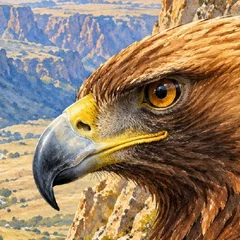
Illustrated portrait of CIMA

The 80 cards of CIMA, the golden eagle

Territory: Highland grassland.

At the table they come up one at a time and are read aloud. Here is the whole deck, to read at your own pace.

Read them in

“Available” does not always mean “reviewed by specialists”: we explain this in Behind every card.

On this page

Trivia · 20 cards

CIMA Trivia

A question with three answers, at three levels of difficulty. Everyone thinks it through together.

TRI-AGU-01 · THE EAGLE'S SIGHT

Beginner

What is a golden eagle's eyesight like?

  1. Very sharp: it sees small prey at a good distance
  2. More or less like any person's sight out in the field
  3. So poor it has to hunt by ear, not using its eyes at all
See the answer

A. Very sharp: it sees small prey at a good distance

The golden eagle has very sharp sight: it makes out small prey from high above.

Intermediate

What helps it see so well from far away?

  1. Special lenses the eagle wears over its eyelids
  2. Large eyes and a retina with many sensitive cells
  3. That it always flies very low, hugging the ground, to see up close
See the answer

B. Large eyes and a retina with many sensitive cells

Its large eyes, with a retina rich in cells, give it that sharpness to detect prey.

Advanced

Why is it best not to say 'it sees a rabbit two kilometers off like a fly on the wall'?

  1. Because it actually sees worse than a person at any distance
  2. Because eagles don't use sight to hunt anything
  3. Because its sight is very sharp, but that exact figure depends on conditions and isn't proven that way
See the answer

C. Because its sight is very sharp, but that exact figure depends on conditions and isn't proven that way

Its sight is excellent, but turning that into an exact, infallible figure goes beyond what's known.

★ The golden eagle has razor-sharp sight: that's why it hunts from very high up.

TRI-AGU-02 · THE ONE ON THE FLAG

Beginner

The bird standing on the prickly pear on Mexico's flag — which one is it?

  1. A bald-headed vulture
  2. The golden eagle
  3. A small city falcon
See the answer

B. The golden eagle

The one on the flag is the golden eagle, perched on the prickly pear with a snake.

Intermediate

The eagle on the flag — does it really live in Mexico?

  1. No: it's only a drawing someone invented to put on the flag
  2. It only lives on far-off continents, but never here in Mexico
  3. Yes: the golden eagle inhabits the country's grasslands and sierras
See the answer

C. Yes: the golden eagle inhabits the country's grasslands and sierras

It's not an invention: the golden eagle really lives in Mexico's plains and sierras.

Advanced

What's the relation between the flag's symbol and the real bird?

  1. The symbol stands for a golden eagle that really lives and needs habitat
  2. The flag's symbol and the real bird have no relation between them
  3. The bird on the flag is a species that has already gone completely extinct
See the answer

A. The symbol stands for a golden eagle that really lives and needs habitat

The symbol points to a real bird, still alive, that needs its plain to go on being so.

★ The one on the flag isn't an invention: it's the golden eagle, alive, on the plain.

TRI-AGU-03 · HOW MANY BREED IN MEXICO?

Beginner

In Mexico, are there many or few golden eagle pairs that raise young?

  1. A great many, all over the country
  2. None: there are none left
  3. Very few
See the answer

C. Very few

In Mexico very few pairs manage to raise young. Each nest counts.

Intermediate

If someone gives a number of pairs, what should they clarify?

  1. What year it's from, what area it covered, and whether it counts registered pairs or ones that bred
  2. Nothing at all: any number works the same with no further detail
  3. Only the color of the feathers those counted eagles have
See the answer

A. What year it's from, what area it covered, and whether it counts registered pairs or ones that bred

A figure with no year, area or definition can mislead. Registering pairs isn't the same as seeing them breed.

Advanced

Why isn't 'registered pairs' the same as 'pairs that raise young'?

  1. Because every pair someone registers always ends up raising young each year without fail
  2. Because a pair can exist and still fail to breed that year
  3. Because golden eagles never actually form stable pairs
See the answer

B. Because a pair can exist and still fail to breed that year

Existing as a pair doesn't guarantee breeding: weather, food or a disturbance can mean no young in a given year.

★ Very few pairs raise young in Mexico. That's why each nest weighs so much.

TRI-AGU-04 · THE CLIFF NEST

Beginner

What is a golden eagle's nest like?

  1. A large platform of branches, on cliffs or tall trees
  2. A small grass nest well hidden in the grass on the ground
  3. A tiny hole it digs itself inside a big cactus
See the answer

A. A large platform of branches, on cliffs or tall trees

The nest is an enormous platform of branches, almost always on a cliff, sometimes in a tall tree.

Intermediate

That huge nest — how does it reach that size?

  1. It's born already made at that great size from day one, completely finished
  2. They use it and enlarge it season after season
  3. They build it whole, start to finish, in a single long night
See the answer

B. They use it and enlarge it season after season

It isn't made all at once: the pair reuses it and adds branches year after year, until it grows enormous.

Advanced

Why not say 'every pair uses a single nest all its life'?

  1. Because they never ever repeat the same nest two years running, always abandoning it
  2. Because every pair in the country shares among them one giant nest
  3. Because they can have and alternate several nests, not always the same one
See the answer

C. Because they can have and alternate several nests, not always the same one

It's common for them to reuse a nest, but many pairs have several and alternate them; it's not a fixed rule.

★ The golden eagle's nest is a huge platform, used and enlarged over years.

TRI-AGU-05 · WHAT IT REALLY HUNTS

Beginner

What does a golden eagle hunt, above all?

  1. Cows and big calves it grabs inside the ranch corrals
  2. Medium mammals like hares and rabbits
  3. Only very small insects it finds in the open field
See the answer

B. Medium mammals like hares and rabbits

Its main diet is medium mammals: hares, rabbits and other prey of the plain.

Intermediate

Besides hares and rabbits, what else can it come to eat?

  1. It never touches a fish or livestock of any size in its whole long life
  2. Only animals it already found dead and lying in the field
  3. Other prey, and even sometimes small livestock or a fish
See the answer

C. Other prey, and even sometimes small livestock or a fish

It eats mostly hares and rabbits, but its diet is varied: sometimes a kid goat or a fish. It's not just one thing.

Advanced

How to tell its real diet from the myth that 'it carries off cows and children'?

  1. It hunts medium prey and sometimes kid goats; it doesn't carry off cows or children
  2. Because it's completely true that it carries off whole cows and even children from the town
  3. Because it actually hunts nothing at all and only feeds on old carrion
See the answer

A. It hunts medium prey and sometimes kid goats; it doesn't carry off cows or children

It may take a kid goat, but carrying off a cow or a child is physically impossible: that's legend, not biology.

★ The eagle hunts hares and rabbits; sometimes a kid goat. Cows and children, no: that's a myth.

TRI-AGU-06 · THE POLE THAT KILLS

Beginner

Why can it be dangerous for an eagle to perch on a power pole?

  1. Because the pole is very slippery and the eagle falls off it to the ground
  2. Because power poles frighten it so much it gets stressed and sick
  3. Because it can be electrocuted by touching live parts
See the answer

C. Because it can be electrocuted by touching live parts

On perching, a large eagle can touch live parts and be electrocuted.

Intermediate

How does electrocution happen on a pole?

  1. By touching two parts of different charge at once, or one live part and the ground
  2. Only if it rains very hard and a lightning bolt also strikes the pole
  3. Only at night, when more light is on, running through the wires
See the answer

A. By touching two parts of different charge at once, or one live part and the ground

The current passes when the bird bridges two parts of different charge, or a live part and the ground.

Advanced

Why isn't it enough to say 'it's electrocuted only if it touches two wires'?

  1. Because an eagle actually never gets electrocuted on a pole
  2. Because it can also happen between a live part and the ground; there are several paths
  3. Because it always needs to touch three wires at once
See the answer

B. Because it can also happen between a live part and the ground; there are several paths

Two wires is one path, but not the only one: contact with a live part and the ground also kills it.

★ It's not always two wires: touching parts with different charges is enough. That's why the pole kills.

TRI-AGU-07 · THE PLAIN OF THE PRAIRIE DOGS

Beginner

The prairie dogs the eagle hunts — are they any use on the plain?

  1. Yes: their tunnels and grazing keep the grassland alive
  2. No: they only dig useless holes that are no good to anyone on the plain
  3. No: they're pure pests with no function at all in the whole open grassland
See the answer

A. Yes: their tunnels and grazing keep the grassland alive

Prairie dogs aerate the soil, move seeds and feed many animals. They hold up the plain.

Intermediate

How do prairie dogs help the grassland?

  1. They completely dry out the whole plain where they choose to live and dig tunnels
  2. They aerate the soil, move seeds and feed many predators
  3. They scare off every other animal species in the entire grassland
See the answer

B. They aerate the soil, move seeds and feed many predators

With their tunnels they aerate the earth, favor plants and are food for eagles, foxes and more. They're a key piece.

Advanced

Can you say they 'never cause any conflict' on a ranch?

  1. Yes: they never create any management problem for anyone
  2. They contribute nothing and only cause problems for livestock
  3. No: they contribute a lot to the ecosystem, though sometimes conflicts must be managed
See the answer

C. No: they contribute a lot to the ecosystem, though sometimes conflicts must be managed

Their ecological role is enormous; that doesn't erase that there are sometimes management conflicts, solved without absolutes.

★ The plain full of holes isn't empty: the prairie dogs hold it up.

TRI-AGU-08 · HOW IT CLIMBS SO HIGH

Beginner

How does the eagle climb so high without tiring?

  1. It beats its wings nonstop for many hours straight, day and night
  2. It rides columns of warm rising air, and glides
  3. It takes a run-up with big leaps from the tops of the plain's trees
See the answer

B. It rides columns of warm rising air, and glides

It uses the rising warm air currents: it enters them and glides, almost without beating its wings.

Intermediate

Those columns of warm air — how does it use them?

  1. It pushes them downward with very strong, very rapid wingbeats
  2. It uses them only to dive, but never ever to climb
  3. It enters them and circles, letting itself be lifted without beating its wings
See the answer

C. It enters them and circles, letting itself be lifted without beating its wings

It enters the thermal and circles; the rising air does the work of lifting it.

Advanced

Why does gliding on thermals save it so much effort?

  1. Because the rising air does the work of lifting it, and it barely beats its wings
  2. Because beating its wings fast for hours tires it much less than starting to glide
  3. Because the eagle actually never climbs very high, however hard it tries
See the answer

A. Because the rising air does the work of lifting it, and it barely beats its wings

Letting the current lift it saves the cost of beating its wings; that's why it covers so much sky without wearing out.

★ The eagle climbs in circles on the warm air, almost without moving its wings.

TRI-AGU-09 · THE OPEN WINGS

Beginner

With open wings, how big is a golden eagle?

  1. The size of a whole soccer field
  2. Barely like a person's hand
  3. Around two meters from tip to tip
See the answer

C. Around two meters from tip to tip

With open wings, a golden eagle runs around two meters from tip to tip.

Intermediate

That wingspan of about two meters — is it the same in all of them?

  1. It varies somewhat between individuals, but hovers around that measure
  2. It's identical to the millimeter in all golden eagles in the whole world
  3. It changes completely each day according to the weather and the hour
See the answer

A. It varies somewhat between individuals, but hovers around that measure

Around two meters is typical, with variation between one and another. It's not an exact fixed number.

Advanced

Why is a two-meter wingspan already enormous for a bird?

  1. Because with such large, wide wings the eagle can even swim underwater
  2. Because it lets it glide on thermals and cover a lot of territory
  3. Because such long wings serve it above all to dig burrows in the earth
See the answer

B. Because it lets it glide on thermals and cover a lot of territory

Those long wings are ideal for gliding on currents and traveling great distances in search of prey.

★ The golden eagle's open wings run close to two meters. A shadow that commands respect.

TRI-AGU-10 · DOES IT CARRY OFF LIVESTOCK?

Beginner

Is it true the golden eagle carries off the ranch's livestock?

  1. Yes: it carries whole cows out of the corral with no problem at all
  2. It can take small animals, like a kid goat, but not cows
  3. No: it never touches any ranch animal, big or small
See the answer

B. It can take small animals, like a kid goat, but not cows

It can take small prey, like sometimes a kid goat, but carrying off a cow is impossible.

Intermediate

If a rancher loses a kid goat, what's best to do?

  1. Blame right away the eagle that was seen flying over the corral
  2. Always blame the area's coyotes without checking anything
  3. Investigate what happened before blaming the eagle or another animal
See the answer

C. Investigate what happened before blaming the eagle or another animal

Before blaming anyone it's best to check the case: it could be disease, a coyote or another cause.

Advanced

Why is it no good either to blame the eagle or to deny it takes kid goats?

  1. Because sometimes it does take small prey, but each loss is investigated and prevented
  2. Because the eagle never touches livestock of any size, ever
  3. Because whenever an animal is missing the eagle is the culprit
See the answer

A. Because sometimes it does take small prey, but each loss is investigated and prevented

Neither deny it can take a kid goat nor blame it without proof: each case is investigated and prevented.

★ A kid goat, maybe; a cow, no. And each loss is investigated, not guessed.

TRI-AGU-11 · SAFER POLES

Beginner

So an eagle isn't electrocuted on the poles, what's done?

  1. Electrical staff adapt the poles and use safe designs
  2. The eagles are asked, with signs, not to perch on the poles
  3. All the power poles in the country are switched off forever, day and night
See the answer

A. Electrical staff adapt the poles and use safe designs

To lower the risk, electrical staff adapt the poles with safer materials and designs.

Intermediate

Those pole adaptations — who should do them?

  1. Any neighbor who has a good long ladder kept at home
  2. Trained electrical staff, not people on their own
  3. The schoolkids from near the plain, during recess
See the answer

B. Trained electrical staff, not people on their own

It's a job for trained electrical staff: touching a pole on your own is very dangerous.

Advanced

Why can't it be promised that 'a cover eliminates all the risk'?

  1. Because no adaptation is any use on the poles
  2. Because a cover leaves the pole a hundred percent safe forever
  3. Because it reduces the danger, but not every electrocution path on every pole
See the answer

C. Because it reduces the danger, but not every electrocution path on every pole

Adaptations lower the risk a lot, but no material guarantees closing every path on every pole.

★ Trained staff adapt the poles. The risk drops a lot, though not to zero.

TRI-AGU-12 · DOES IT HELP THE PLAIN?

Beginner

Can the golden eagle do the plain any good?

  1. No: it only causes problems for the ranch
  2. It has no effect on the plain
  3. Yes: by hunting, it's part of the grassland's balance
See the answer

C. Yes: by hunting, it's part of the grassland's balance

Yes: as a hunter, the eagle is part of the balance of the grassland's life.

Intermediate

How does the eagle fit into the grassland's web of life?

  1. As a predator, it influences how many herbivores there are and where they roam
  2. It doesn't relate to any other animal of the plain or the open grassland
  3. By growing the plain's grass itself, with its own talons
See the answer

A. As a predator, it influences how many herbivores there are and where they roam

By hunting herbivores, it influences their numbers and how they move: it's a thread of the plain's web.

Advanced

Why is it best not to measure the eagle only by 'whether it suits the rancher'?

  1. Because the eagle is only worth something if it serves the livestock
  2. Because its role is ecological; helping the ranch would be an effect, not its whole value
  3. Because it has no role in the plain's ecosystem
See the answer

B. Because its role is ecological; helping the ranch would be an effect, not its whole value

It may, in passing, suit the ranch, but its value is being part of the ecosystem, not a service to livestock.

★ The eagle is part of the plain. That it sometimes suits the ranch is an effect, not its only reason.

TRI-AGU-13 · YOUNG THAT COME SLOWLY

Beginner

How many young does an eagle pair raise in a year?

  1. Always a great many, like a hen
  2. Few: sometimes one, sometimes none
  3. Exactly ten young every year
See the answer

B. Few: sometimes one, sometimes none

The eagle breeds slowly: it raises few young, and some years none.

Intermediate

Why does the eagle reproduce so slowly?

  1. Because it actually lays hundreds and hundreds of eggs that almost all are lost
  2. Because it comes to breed up to twice a month all year round
  3. It lays few eggs and not every year do young come out
See the answer

C. It lays few eggs and not every year do young come out

It lays few eggs (often one to three) and the success varies: not every year does it manage to raise young.

Advanced

Why not say 'every pair always raises a single young'?

  1. Because it can be one to three eggs and the success varies each year
  2. Because every eagle pair always raises exactly one single young, not one more
  3. Because eagles actually never manage to raise any young in a year
See the answer

A. Because it can be one to three eggs and the success varies each year

There's variation: one to three eggs and a survival that changes from year to year.

★ The eagle breeds slowly: few eggs, and not every year with luck.

TRI-AGU-14 · WHEN THEY ABANDON THE NEST

Beginner

Why might a pair of eagles abandon their nest?

  1. Because a nearby disturbance frightens it and it stops coming back
  2. Because it gets bored of the same old scenery
  3. Because they switch nests every week for fun
See the answer

A. Because a nearby disturbance frightens it and it stops coming back

A nearby disturbance —noise, works, people— can frighten them so much they leave the nest.

Intermediate

What kind of disturbance can make the breeding fail?

  1. A single light afternoon of rain on the nest mid-season
  2. Noise or works nearby in breeding season, depending on how close and intense
  3. A plane passing very high a single time during the whole breeding month
See the answer

B. Noise or works nearby in breeding season, depending on how close and intense

It depends: works or noise nearby, in full breeding season, can make the pair fail. Not just any distant sound.

Advanced

Why not say 'any noise always makes them abandon'?

  1. Because eagles actually never abandon their nest for any reason in the world
  2. Because they abandon the nest at the slightest sound, always, no matter when or where
  3. Because it depends on the season, the distance and the intensity; it's not automatic
See the answer

C. Because it depends on the season, the distance and the intensity; it's not automatic

It's not a fixed reaction: the outcome depends on when, how close and how strong the disturbance is.

★ A disturbance nearby in breeding season can cost it the nest. Better, from afar.

TRI-AGU-15 · THE PLAIN THAT SEEMS EMPTY

Beginner

The grassland, that plain that seems 'empty' — what is it really?

  1. Dead ground where no animal lives
  2. A desert where nothing can grow or live
  3. A habitat full of life: hares, prairie dogs, birds
See the answer

C. A habitat full of life: hares, prairie dogs, birds

The grassland seems empty, but it's full of life: hares, prairie dogs, birds and more.

Intermediate

What happens to the grassland when it's turned into even cropland?

  1. It loses part of the conditions and prey the eagle needs
  2. It fills with many more wild animals than before
  3. It stays exactly the same as when it was grassland
See the answer

A. It loses part of the conditions and prey the eagle needs

Turned into even cropland, the plain loses burrows, prey and refuges: conditions the eagle needs.

Advanced

Why isn't it exact to say 'all cropland is totally empty of wildlife'?

  1. Because in croplands no animal of any kind ever comes to live
  2. Because the problem is habitat loss, not that nothing lives there at all
  3. Because even cropland always has far more wildlife than the original grassland
See the answer

B. Because the problem is habitat loss, not that nothing lives there at all

Something lives in a crop, but the grassland's conditions are lost. The problem is the transformation, not the total emptiness.

★ The plain isn't empty: it's the eagle's pantry. Changing it takes away its food.

TRI-AGU-16 · HOW LONG AN EAGLE LIVES

Beginner

How long can a golden eagle come to live?

  1. Barely a few months and that's it
  2. More than twenty years, in good conditions
  3. More than a hundred years, always, without fail
See the answer

B. More than twenty years, in good conditions

A golden eagle can pass twenty years of life in good conditions.

Intermediate

Living more than twenty years — does it happen to every eagle?

  1. Yes: absolutely all of them reach exactly that same age, with no exception
  2. No: none actually ever lives past a single year in the whole plain
  3. It's a possible capacity; many live quite a bit less
See the answer

C. It's a possible capacity; many live quite a bit less

Twenty years or more is what they can come to live, but many die earlier from various risks.

Advanced

Why is it best to distinguish 'maximum longevity' from 'what it normally lives'?

  1. Because a few reach very far, but the usual survival is lower
  2. Because all golden eagles live exactly the same number of years, with no variation
  3. Because no eagle actually survives more than a single year in the plain
See the answer

A. Because a few reach very far, but the usual survival is lower

The maximum age is reached by few; the usual is less. Confusing them gives a wrong idea of the species.

★ A golden eagle can pass twenty years. Can: not all of them make it.

TRI-AGU-17 · GOLDEN AND BALD

Beginner

The flag's eagle and the river's bald eagle — are they the same?

  1. No: they're different eagle species
  2. Yes: they're exactly the same species
  3. Yes, they only change color with the season
See the answer

A. No: they're different eagle species

The golden eagle and the bald eagle are different species, though both are eagles.

Intermediate

The golden eagle and the bald eagle — does each live in a single country?

  1. Yes: each lives in a single country and never leaves
  2. No: a species can inhabit several countries
  3. Yes: neither of the two ever crosses a border
See the answer

B. No: a species can inhabit several countries

A species doesn't stop at borders: it can inhabit several countries at once.

Advanced

Why not say 'the bald one is from another country and I don't eat fish' as if they were walls?

  1. Because the bald eagle exists only within a single country and never leaves it
  2. Because the golden eagle never tastes a fish in its whole life for any reason
  3. Because a species crosses countries and diet isn't a total exclusion
See the answer

C. Because a species crosses countries and diet isn't a total exclusion

Neither country nor diet are sharp borders: a species crosses countries and a diet has exceptions.

★ Golden eagle and bald eagle are different species; but neither country nor diet are walls.

TRI-AGU-18 · THE HIGHWAY TRAP

Beginner

Why can a roadkilled animal be dangerous for an eagle?

  1. Because that roadside meat is always poisoned
  2. Because the cars chase it on purpose across the field
  3. Because it comes down to eat it beside the cars and can be run over
See the answer

C. Because it comes down to eat it beside the cars and can be run over

The eagle comes down to make use of the roadside carrion, and there, among the cars, many don't rise again.

Intermediate

What makes the carrion beside the highway risky?

  1. It's near the fast traffic, and eating there exposes it
  2. That it always sickens any bird that eats it
  3. That the roadkilled animals scream and scare it
See the answer

A. It's near the fast traffic, and eating there exposes it

The main danger is the traffic: eating stuck to the asphalt puts it within reach of the cars.

Advanced

Why not say 'every scrap on the highway sickens the eagle'?

  1. Because all the carrion on a highway always ends up sickening the eagle
  2. Because the main risk is the traffic, not that all carrion infects
  3. Because the roadside carrion actually has no risk at all for the bird
See the answer

B. Because the main risk is the traffic, not that all carrion infects

The great risk is being run over, not a sure disease: not all carrion infects.

★ The easy food on the shoulder can be the last: that's where the cars pass.

TRI-AGU-19 · WHY IT PERCHES THERE

Beginner

Why does the eagle end up perching on power poles?

  1. Because it likes poles more than any tree
  2. Because the power poles feed it
  3. Because on the open plain there are almost no other high places
See the answer

C. Because on the open plain there are almost no other high places

On the bare plain there are almost no trees or crags; the pole is, sometimes, the only high spot.

Intermediate

Does the eagle use only poles to perch?

  1. No: it uses rocks, trees and other perches when there are any
  2. Yes: it only perches on poles, never on anything else
  3. No: it actually never perches anywhere
See the answer

A. No: it uses rocks, trees and other perches when there are any

When there are rocks or trees, it uses them. The pole rules above all where no high alternatives remain.

Advanced

Why not say 'the pole is the only high place and always kills'?

  1. Because every time an eagle perches on a power pole it dies electrocuted without fail
  2. Because it uses different perches and a pole isn't deadly on every occasion
  3. Because on the open plain there are actually loads of tall trees everywhere
See the answer

B. Because it uses different perches and a pole isn't deadly on every occasion

It's neither the only possible perch nor does every pole kill it: the problem is the lack of alternatives in that landscape.

★ On the bare plain, sometimes the only high spot is a pole. And not all are safe.

TRI-AGU-20 · WHAT IT REALLY NEEDS

Beginner

For the golden eagle to stay alive, what does it really need?

  1. Grassland with prey, quiet nests and safe poles
  2. To be drawn on even more flags
  3. For people to stop seeing it as a symbol
See the answer

A. Grassland with prey, quiet nests and safe poles

What really sustains it is a plain with prey, nests without disturbance and safe poles.

Intermediate

Which of these does truly help the eagle?

  1. Putting it on more coins and more coats of arms
  2. Adapting the dangerous poles and caring for the grassland
  3. Thinking nice things about it now and then
See the answer

B. Adapting the dangerous poles and caring for the grassland

Concrete actions help it: safe poles and a cared-for grassland, with its prey.

Advanced

Why is 'people stop seeing it as a drawing' not a solution of the same kind as the others?

  1. Because seeing it differently already protects it completely
  2. Because the symbol has no relation to the bird
  3. Because caring for habitat and poles is concrete action; changing one's mind, on its own, isn't
See the answer

C. Because caring for habitat and poles is concrete action; changing one's mind, on its own, isn't

Changing the view may help people care for it, but on its own it gives it no plain, no prey, no safe pole.

★ Being on the flag doesn't save it: the plain, the quiet nest and the safe pole do.

Pulse · 20 cards

CIMA Pulse

News from the territory. Sometimes good, sometimes bad. It moves the score in favor of the Guardians or the Villains.

PUL-AGU-01

The golden eagle is on the flag, on the coins, in every school. And one morning, over the plain, a chance to protect it goes by with no one attending to it: an unadapted pole, a colony of prey left untended.

At the table: Damage 2

PUL-AGU-02

A boy lowered the binoculars and, for once, didn't look at the drawing on any flag: he looked at her, enormous, golden, alive. “You exist,” he said. In the story, the eagle seemed to feel seen.

At the table: Restore 2

PUL-AGU-03

On the plain there are almost no tall trees. An old eagle perched on a power pole, opened its wings to settle, and touched live parts. A crack, a spark, and it fell. With no one firing a shot.

At the table: Damage 1

PUL-AGU-04

Pickups came with helmets and ladders. Electrical staff adapted pole by pole, covering the dangerous parts so a bird wouldn't touch two at once. It isn't fast, but it lowers the risk a lot.

At the table: Reserve +1

PUL-AGU-05

Where there was plain with hares and prairie dogs, today there are even furrows. The grassland, which seemed empty, was the eagle's pantry. Turned into cropland, it has less prey left to hunt.

At the table: Reserve −1

PUL-AGU-06

Mid-morning, when the sun warms the ground, the air rises in invisible columns. The eagle enters one and lets itself be carried in circles, barely moving its wings, until it becomes a dot in the plain's sky.

At the table: Restore 1

PUL-AGU-07

People from the big ranch came with poison for the prairie dogs. They dropped it down the tunnels, and the town below ground fell silent. With fewer prairie dogs and hares, the eagle had less left to hunt.

At the table: Damage 1

PUL-AGU-08

On a piece of plain, by agreement of the ranches, they stopped poisoning the prairie dogs and plowing the grassland. The mounds and the hares came back. And one afternoon a shadow that had been missing crossed again, very high.

At the table: Restore 2

PUL-AGU-09

Two kid goats turned up dead at dawn. The rancher saw a big shadow cross and ran for the rifle. A technician checked the case: it had been coyotes and a disease. The one seen flying gets blamed first.

At the table: Damage 1

PUL-AGU-10

They climbed to an authorized lookout, facing the cliff, without coming near. On the ledge, an enormous nest of branches, and inside a chick. They took notes and made sure no one climbed up. They didn't spread where it was.

At the table: Reserve +1

PUL-AGU-11

Word goes around that the golden eagle 'doesn't exist anymore,' that it's only a drawing. And what's believed lost, fewer people look for or report. With data and sightings, that idea can be corrected.

At the table: Damage 1

PUL-AGU-12

The eagle drops like an arrow and carries off a hare. Another day, a field mouse; another, a ground squirrel. By hunting the plain's herbivores, it's part of the grassland's web of life.

At the table: Restore 1

PUL-AGU-13

They opened a road with machines and noise at the foot of the cliff, right in breeding season. The pair, nervous, stopped coming back to the nest and the egg went cold. A nearby disturbance, at the wrong moment, cost the young.

At the table: Damage 1

PUL-AGU-14

The cliff nest raised one young this year. They saw it stretch its wings and launch into the air for the first time. Just one. This pair managed it; others, other years, didn't. That's why each flight counts.

At the table: Reserve +2

PUL-AGU-15

In Mexico very few golden eagle pairs manage to breed. With so little margin, a lost nest or a deadly pole weigh on the country's population. Each young that flies is a fragile gain.

At the table: Reserve −1

PUL-AGU-16

A boy who thought the eagle was an invention climbed the cliff and saw one, with its nest. But he also saw a dangerous pole nearby, and reported it with an adult. By Monday, he looked at the flag differently.

At the table: Restore 1

PUL-AGU-17

A roadkilled animal was left on the highway shoulder. An eagle came down to make use of it: easy food. Alongside, the cars pass at full speed. Someone notified the crew to remove it carefully.

At the table: Damage 1

PUL-AGU-18

Someone learned of the nest and climbed up to steal the chick to sell it. In taking it, they didn't carry off a pet: they took from the plain one of the very few that manage to be born. The illegal taking leaves an empty nest.

At the table: Damage 1

PUL-AGU-19

The eagle needs a high spot to watch the plain. Where the grassland became even cropland, almost only the poles remain. A crew assesses which to adapt and places safe perches, so perching isn't a risk.

At the table: Damage 1

PUL-AGU-20

For generations they've been drawing it and swearing it no longer exists. And one morning, over a hill of the high plateau, a dot drops in a dive and carries off a hare. Golden. Enormous. Alive. The flag's eagle, in flesh and bone.

At the table: Reserve +2

Encounter · 20 cards

CIMA Encounters

A scene with someone who cares: a fisherwoman, a biologist, a neighbor. It almost always brings hope.

ENC-AGU-01

She climbs to the same lookout each week, with her notebook: she writes whether the pair came back, whether there's an egg. “From here I don't disturb them,” she says. “And I write down what I manage to see.” She doesn't know everything about them.

“Caring is, very often, watching from afar and writing it down.”

At the table: Reserve +1

ENC-AGU-02

He spends the day atop the poles, sheathing wires in helmet and gloves. “These poles used to kill eagles,” says the electrician. “Every pole we adapt lowers the risk.”

“The adapted pole isn't seen; nor is the eagle still alive.”

At the table: Restore 1

ENC-AGU-03

They've already investigated what happened to their kid goats. He can pen the livestock at night and also join the program that adapts his ranch's poles. The two measures go together.

“Fix what's his and also what's in the sky.”

  • A. Pens the livestock at night Restore 1
  • B. Also adapts his poles Reserve +2

ENC-AGU-04

In class he said the flag's eagle was an invention. The teacher took him up the hill one Saturday, with binoculars. He saw one, for real, gliding, and fell silent. “It does exist,” he said.

“What one thinks invented, one doesn't care for. Until one sees it.”

At the table: Reserve +1

ENC-AGU-05

The crew can adapt the old poles that already kill, or install safe poles where they're most lacking. There isn't enough for everything: whatever's left unattended stays at risk this season.

“Heal what already kills, or build new where it's lacking.”

  • A. Installs safe poles where they are missing Restore 1
  • B. Adapts the old ones that already kill Reserve +2

ENC-AGU-06

The rancher stopped poisoning the prairie dogs. In time the grass came back, the hares came back, and one afternoon a big shadow crossed, very high. It wasn't one single cause, but something began to heal.

“What they called a pest held up the plain.”

At the table: Restore 1

ENC-AGU-07

She decided not to poison the prairie dogs. She can leave it at that, or also care for the colony with rules and distances and welcome those who come to watch birds. Caring with order protects the plain more.

“Letting them live, or seeing that they go on living.”

  • A. Leaves them in peace Restore 1
  • B. Cares for the colony with rules Reserve +2

ENC-AGU-08

“When I was young I'd shoot at every eagle,” the old man says. “Until we investigated: it was coyotes eating my kid goats, not her.” He looks at the sky. “Now I'm glad when one passes.”

“The one who shot at them now misses them when none pass.”

At the table: Restore 2

ENC-AGU-09

She found an eagle under a pole, dazed but alive. She didn't touch it. She called someone who knew and followed their instructions to keep it calm until they arrived. “I know who to notify.”

“Knowing who to notify is already half the help.”

At the table: Restore 1

ENC-AGU-10

They're going to open a road at the foot of the cliff where an eagle nests, in breeding season. The team weighs it: diverting the works protects the nest; going ahead, even with less noise, doesn't guarantee the young come out.

“Divert the works, or cross your fingers.”

  • A. Goes ahead with the plan, with less noise Restore 1
  • B. Diverts the works around the nest Reserve +2

ENC-AGU-11

He reviews the photos from an installed, authorized camera facing the cliff. In one, sharp: the mother arriving at the nest with a hare. No one climbed to the nest. That photo convinces many to care for it.

“One photo from afar cares more than a hundred up close.”

At the table: Reserve +1

ENC-AGU-12

High up, three large birds circle. The guide teaches how to read them: “That one with wings in a V and a bare head is a vulture; the golden eagle is brown, with a golden nape.” They look at several traits, not one.

“Not everything that flies high is an eagle. And it's worth knowing.”

At the table: Restore 1

ENC-AGU-13

She found an active nest. Instead of publishing it or keeping it wholly quiet, she quietly notifies the park rangers who protect it. That way those who should care for it do, without drawing in someone who'd climb up to steal the chick.

“Notifying those who protect is neither silence nor shouting.”

At the table: Reserve +1

ENC-AGU-14

Several ranchers agreed to leave a strip of grassland unplowed and unpoisoned, “so there are hares and prairie dogs.” One strip doesn't guarantee everything, but it can improve the plain's habitat.

“A piece of living plain is already a beginning.”

At the table: Reserve +1

ENC-AGU-15

“As a girl you'd see several crossing the plain,” the woman says. “Today, with luck, one a year.” She doesn't keep count; she remembers. “As long as that one comes, I keep climbing up to look.”

“The one who remembers how many there were cares for the one that's left.”

At the table: Restore 1

ENC-AGU-16

She finds an electrocuted eagle, alive. She doesn't move it on her own: she calls those who assess and handle the animal, and follows their instructions while they come. Stabilizing it isn't a job for just anyone.

“Waiting for those who know is caring too.”

  • A. Moves it himself, in a hurry Restore 1
  • B. Calls those who handle it, and waits Reserve +2

ENC-AGU-17

A wildlife crew removes, by protocol, the roadkilled animals from the shoulder. “The eagles come down to eat them among the cars,” they explain. It's not a job for a lone pedestrian beside the traffic.

“Clearing from the road what attracts is the work of those who know.”

At the table: Reserve +1

ENC-AGU-18

The teacher took her group up to the lookout. “From here we don't go further, low voices.” A boy recognized, by its silhouette, the eagle circling above, and pointed it out silently to the others.

“Sometimes a gesture is worth more than a shout.”

At the table: Restore 1

ENC-AGU-19

The town wants to make the most of the eagle being on the flag. It can sell souvenirs of the drawing, or put that money toward adapting poles and caring for the real nest. The second protects the actual bird.

“Sell the drawing, or care for the real eagle.”

  • A. Sells souvenirs of the drawing Restore 1
  • B. Puts the money toward poles and the nest Reserve +2

ENC-AGU-20

The town discovered that the flag's eagle nests on its hill. They care for the nest, adapted the poles and receive visitors in turns, without approaching in breeding season. “We had it alive and didn't know it.”

“The symbol was worth more alive, at home, than in the drawing.”

At the table: Restore 2

Challenge · 20 cards

CIMA Challenges

A real-life commitment. Each player answers “I already do it,” “I'll try it” or passes.

RET-AGU-01

What golden eagle conservation place or action do you know of or could look up, where the living bird and its plain are cared for?

  • “I already do it” You already know a site or action that cares for the living golden eagle. Restore 2
  • “I'll try it” You look up together a golden eagle sanctuary or program Restore 1
  • “Pass” No effect

What is known, is cared for.

RET-AGU-02

If someone says the eagle 'carries off cows or children,' how would you tell what it really hunts, and how would you verify a livestock case?

  • “I already do it” You already know what the eagle hunts and that the cows-or-children thing is a myth. Restore 2
  • “I'll try it” You name two real prey and one way to verify a story Restore 1
  • “Pass” No effect

Before believing a story, it helps to know what it really hunts.

RET-AGU-03

With a guide or a drawing, build a grassland chain: a plant, a herbivore and the eagle. Who eats whom?

  • “I already do it” You already recognize a grassland food chain. Restore 1
  • “I'll try it” You draw a chain with three links of the plain Restore 1
  • “Pass” No effect

Every prey is a link in something larger.

RET-AGU-04

If you see a large bird's nest, how do you observe it without coming near or making noise?

  • “I already do it” You already observe nests from afar, without coming near or disturbing. Restore 1
  • “I'll try it” You agree on a distance and silence for next time Restore 1
  • “Pass” No effect

A nest is cared for by watching it from afar.

RET-AGU-05

Faced with a photo of 'an eagle,' how do you check the date, the author, and whether it's really a golden eagle and not another raptor?

  • “I already do it” You already check the date, source and species before sharing. Restore 1
  • “I'll try it” You compare the photo with a raptor guide Restore 1
  • “Pass” No effect

Not every large bird in a photo is a golden eagle.

RET-AGU-06

If you see a pole where a bird could be electrocuted, who would you notify, from a safe place, without touching anything?

  • “I already do it” You already know who to notify about a dangerous pole, without approaching. Restore 2
  • “I'll try it” You find out which agency to report a dangerous pole to Restore 1
  • “Pass” No effect

Reporting a danger is already helping, without touching it.

RET-AGU-07

Who would you notify if you see a large bird injured or tangled, and what useful details would you give, without touching it?

  • “I already do it” You already know who to notify and what to describe about a bird in trouble. Restore 2
  • “I'll try it” You prepare a wildlife contact and three details to give Restore 1
  • “Pass” No effect

A good report is worth more than a bad rescue.

RET-AGU-08

With a guide, what do you look at to tell an eagle from a vulture or a hawk? A tentative ID counts.

  • “I already do it” You already tell apart, with a guide, an eagle from other large birds. Restore 1
  • “I'll try it” You look up three traits to differentiate them in images Restore 1
  • “Pass” No effect

Looking calmly teaches you to tell apart.

RET-AGU-09

What species or relationships of the grassland do you know? The golden eagle doesn't count: it lives in many countries.

  • “I already do it” You already know species of the Mexican grassland. Restore 1
  • “I'll try it” You name two plain species and how they relate Restore 1
  • “Pass” No effect

The plain has neighbors that live nowhere else.

RET-AGU-10

Why not buy wild animals, feathers or parts? And if you find a feather in the field, what do you do?

  • “I already do it” You already avoid buying wildlife or parts, and don't pick up wild feathers. Restore 2
  • “I'll try it” You agree to observe and not take feathers or parts Restore 1
  • “Pass” No effect

A feather is looked at; it isn't collected.

RET-AGU-11

From a trail or with a guide, what signs of grassland life could you observe without approaching the burrows?

  • “I already do it” You already recognize signs of life in the grassland, from a distance. Restore 1
  • “I'll try it” You look for two prairie-dog signs without touching burrows Restore 1
  • “Pass” No effect

A plain full of holes is full of life.

RET-AGU-12

What true thing about the golden eagle could you share with someone else, with a concrete observation?

  • “I already do it” You've already shared something true about the golden eagle with someone. Restore 2
  • “I'll try it” You pick a fact and who you'll tell it to Restore 1
  • “Pass” No effect

What you share, you see better.

RET-AGU-13

In an image or on a walk, how do you recognize a bird that glides in circles and when it beats its wings?

  • “I already do it” You already tell apart a raptor's circling glide. Restore 1
  • “I'll try it” You observe a silhouette and describe when it glides and when it beats Restore 1
  • “Pass” No effect

The sky can be read too.

RET-AGU-14

If you see a perched raptor, how do you observe it still, without startling it or coming near?

  • “I already do it” You already observe perched raptors without disturbing them. Restore 1
  • “I'll try it” You agree to stay still and watch without approaching Restore 1
  • “Pass” No effect

Observing without startling is caring too.

RET-AGU-15

Watch the sky a while looking for large birds. If you see none, that counts too: what did you see?

  • “I already do it” You already spend time watching the sky and describing what you see. Restore 1
  • “I'll try it” You spend a few minutes watching the sky and share what you saw Restore 1
  • “Pass” No effect

Watching the sky a while is already observing.

RET-AGU-16

How does the eagle fit into the plain's web of life? Observe a relationship: what does it eat and who depends on that?

  • “I already do it” You already understand the eagle is part of a food web. Restore 2
  • “I'll try it” You draw a relationship between the eagle and two plain species Restore 1
  • “Pass” No effect

A hunter is a piece of a web, not a balance button.

RET-AGU-17

Who could a family consult about managing 'pests' or waste, so as not to harm other animals?

  • “I already do it” You already consult about wildlife or waste management before using poisons. Restore 2
  • “I'll try it” You find out who to ask about safe pest management Restore 1
  • “Pass” No effect

What kills a pest can kill much more.

RET-AGU-18

If you see a roadkilled animal on the shoulder, which adult do you notify? You don't need to remove it yourselves.

  • “I already do it” You already notify an adult of a scrap by the road, without removing it. Restore 2
  • “I'll try it” You agree who to notify about roadkill beside the highway Restore 1
  • “Pass” No effect

A timely notice avoids a trap on the shoulder.

RET-AGU-19

In a natural place, how do you respect trails and signs? A local site or the intention for the next visit counts.

  • “I already do it” You already respect trails and signs in natural places. Restore 2
  • “I'll try it” You agree on a rule of respect for your next outing Restore 1
  • “Pass” No effect

Respecting the trail cares for what isn't seen.

RET-AGU-20

Look upward for a minute and count how many different birds you can spot, by their silhouette and way of flying.

  • “I already do it” You already pause to count birds by their silhouette. Restore 1
  • “I'll try it” You do the minute and note how many different silhouettes you saw Restore 1
  • “Pass” No effect

A minute looking up changes what you see.