La Fábrica
Inventiva
Join usES

FAUNA Guardianes / Cards / BALEY

The full deck · 80 cards

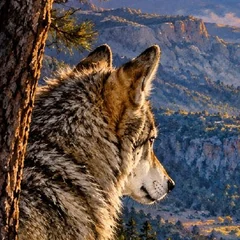
Illustrated portrait of BALEY

The 80 cards of BALEY, the Mexican wolf

Territory: Sierra Madre Occidental.

At the table they come up one at a time and are read aloud. Here is the whole deck, to read at your own pace.

Read them in

“Available” does not always mean “reviewed by specialists”: we explain this in Behind every card.

On this page

Trivia · 20 cards

BALEY Trivia

A question with three answers, at three levels of difficulty. Everyone thinks it through together.

TRI-BAY-01 · THEY ALL COME FROM SEVEN

Beginner

How many wolves do all of today's Mexican wolves descend from?

  1. From just seven founders
  2. From hundreds that survived hidden in the sierra
  3. From two pairs brought from a faraway country
See the answer

A. From just seven founders

All of today's Mexican wolves descend from only seven founders. That's why each one matters for the whole species.

Intermediate

The Mexican wolf is a subspecies of gray wolf. What does that mean?

  1. A wolf crossed with a ranch dog
  2. A kind of gray wolf belonging to a region, not a separate species
  3. An animal of a completely different species from the wolf
See the answer

B. A kind of gray wolf belonging to a region, not a separate species

Subspecies means a variety of the gray wolf, with its own traits — not a different species nor a mix with a dog.

Advanced

Why does 'seven founders' not mean only seven wild wolves are left today?

  1. Because there were never really seven but far more
  2. Because those seven original wolves are still alive in the sierra
  3. Because from those seven lineages descend the hundreds alive today
See the answer

C. Because from those seven lineages descend the hundreds alive today

Seven were the founders of the lineage; from them descend all those that run the sierras today.

★ They all come from seven. That's why a single loss weighs on the whole species.

TRI-BAY-02 · SMALL, BUT A WOLF

Beginner

What is the Mexican wolf like compared to other gray wolves?

  1. It's the biggest wolf on the whole planet, no doubt about it
  2. It's one of the smallest gray wolves in North America
  3. It's identical in size to a coyote from the same hills
See the answer

B. It's one of the smallest gray wolves in North America

The Mexican wolf is one of the smallest gray wolves in North America. Small, but a complete wolf.

Intermediate

Does being smaller make it a big dog or a mix?

  1. Yes: it's really almost a big hill dog
  2. Yes: it's a cross of wolf and ranch dog
  3. No: it's a wild gray wolf, just of a small subspecies
See the answer

C. No: it's a wild gray wolf, just of a small subspecies

Being small doesn't make it a dog or a mix: it's a wild gray wolf of a smaller-sized subspecies.

Advanced

Why is it best to compare its size with other gray wolves and not with just any animal?

  1. Because it's a subspecies of gray wolf, so the comparison makes sense
  2. Because it's bigger than any wolf that exists in the world
  3. Because it's really not a wolf but something else
See the answer

A. Because it's a subspecies of gray wolf, so the comparison makes sense

Since it's a subspecies of gray wolf, its size is understood by comparing it within that group.

★ One of the smallest gray wolves, and still a wolf from head to tail.

TRI-BAY-03 · NEW BLOOD BY HAND

Beginner

'Cross-fostering' to bring in new blood — what does it consist of?

  1. Crossing a wolf with a dog so they come out stronger
  2. Raising all the pups locked in a cage
  3. Placing very young pups in the den of wild wolves
See the answer

C. Placing very young pups in the den of wild wolves

Cross-fostering puts very young pups into a wild den, so they grow up free and with new blood.

Intermediate

A pup born in captivity and placed with wild wolves — is it still a wolf?

  1. Yes: it's a wolf; where it was born changes, not what it is
  2. No: raised among hands, it turns half dog
  3. Only if it never got to see a person
See the answer

A. Yes: it's a wolf; where it was born changes, not what it is

Being born in captivity doesn't make it any less a wolf. Placed in time with wild wolves, it grows up wild.

Advanced

What does cross-fostering achieve that just keeping more wolves in cages doesn't?

  1. It makes the wolves grow much bigger and stronger
  2. It brings in diversity and raises wild wolves, not tame ones
  3. It guarantees no pup ever dies
See the answer

B. It brings in diversity and raises wild wolves, not tame ones

It's not about keeping more wolves locked up: the technique adds diversity and raises truly wild animals.

★ A pup placed in time in a wild den grows up a wolf, with new blood.

TRI-BAY-04 · TOGETHER AND ALSO ALONE

Beginner

Why does a pack hunt better than a lone wolf?

  1. Because together they can take down bigger prey
  2. Because a lone wolf can't hunt anything at all
  3. Because the pack's howl keeps the prey still
See the answer

A. Because together they can take down bigger prey

Hunting as a group lets them bring down big prey that a lone wolf would hardly reach.

Intermediate

Hunting in a group helps, but can a lone wolf survive and hunt?

  1. No: alone, it starves within days
  2. Yes: a dispersing wolf hunts small prey and lives
  3. Only if another pack adopts it before winter
See the answer

B. Yes: a dispersing wolf hunts small prey and lives

A dispersing wolf can get by with small prey. Cooperation gives an edge; it's not the only way to live.

Advanced

Why isn't it exact to say 'alone we can't bring down a deer or stay alive'?

  1. Because wolves actually never hunt in a group
  2. Because a lone wolf hunts just as well as ten together
  3. Because a disperser does survive; the pack gives an edge, it's not mandatory
See the answer

C. Because a disperser does survive; the pack gives an edge, it's not mandatory

Cooperation helps, but a lone wolf can survive and hunt. The absolute doesn't hold.

★ Together they hunt bigger; but a lone wolf also gets by to live.

TRI-BAY-05 · GOING OFF TO FIND ITS OWN

Beginner

What does a young wolf often do to start its own family?

  1. It stays forever in the pack where it was born
  2. It goes off alone to find territory and a mate, far from its pack
  3. It calmly waits for someone to bring it a mate
See the answer

B. It goes off alone to find territory and a mate, far from its pack

Many young wolves disperse: they leave their pack and travel to find their own territory and mate.

Intermediate

Does traveling very far guarantee it finds a mate of different blood?

  1. Yes: the farther it goes, it always finds new blood
  2. No: if it leaves, it never finds a mate again
  3. No: it helps, but doesn't ensure a less-related mate
See the answer

C. No: it helps, but doesn't ensure a less-related mate

Dispersing improves the odds, but reaching far doesn't by itself guarantee a less-related mate.

Advanced

Why is dispersal 'a frequent possibility' and not an obligation?

  1. Because many disperse, but not all, nor in the same way
  2. Because absolutely every young wolf leaves, without exception
  3. Because no young wolf ever actually leaves home
See the answer

A. Because many disperse, but not all, nor in the same way

It's common, not a law: many young ones disperse, others don't, and each in its own way.

★ Going off alone to find territory is common in young wolves, though not every one does it.

TRI-BAY-06 · THE RISK ISN'T FAMILY

Beginner

What can weaken a wolf population over time?

  1. That they live together as a family, as wolves always do
  2. That they howl too much on winter nights
  3. That close relatives mate again and again, with no new blood
See the answer

C. That close relatives mate again and again, with no new blood

The risk is always mating close relatives in a small population, with no diversity. Not family life.

Intermediate

Living as a family is normal in wolves. So what's the risk?

  1. That in a small population close relatives always mate
  2. That the wolf family loves each other too much
  3. That the parents devote themselves to caring for the pups
See the answer

A. That in a small population close relatives always mate

Living as a family is natural. The problem appears when no new blood arrives and relatives always mate.

Advanced

Why is it wrong to say that 'living as a family sickens the pack'?

  1. Because family always brings sure diseases to the group
  2. Because family is normal; the risk is the lack of diversity
  3. Because wolves don't actually live as a family
See the answer

B. Because family is normal; the risk is the lack of diversity

Family life isn't the problem; the lack of genetic diversity in small populations is.

★ The problem isn't being family: it's that no new blood arrives from outside.

TRI-BAY-07 · A MESSAGE OF SCENT

Beginner

Why does a wolf mark its territory with scent?

  1. To warn other wolves who's around
  2. So that prey follow it to its den
  3. To find its own way back home
See the answer

A. To warn other wolves who's around

The scent mark is a warning to other wolves: it says who roams that territory.

Intermediate

Does marking with scent always prevent fights between wolves?

  1. Yes: where there's a mark, no fight ever happens
  2. Not entirely: it warns and avoids some encounters, but not all
  3. No: wolves don't care at all about another's scent
See the answer

B. Not entirely: it warns and avoids some encounters, but not all

The mark helps to warn and avoid certain encounters, but it doesn't prevent every conflict over territory.

Advanced

What does the scent mark mostly do?

  1. Divide the territory so a conflict never happens
  2. Mark a trail so prey fall into it
  3. Signal presence and help divide the space
See the answer

C. Signal presence and help divide the space

Above all it signals who's around and helps divide the space, reducing some encounters.

★ The scent mark says 'I'm around here.' It warns, though it doesn't prevent every fight.

TRI-BAY-08 · THEY DON'T HOWL AT THE MOON

Beginner

When a wolf howls at night, what is it really doing?

  1. It howls at the moon because it loves the light
  2. It communicates with its pack: where it is, who's still there
  3. It warns the whole hills that rain is coming soon
See the answer

B. It communicates with its pack: where it is, who's still there

The howl is communication: it locates the pack and says who's still there. It's not at the moon.

Intermediate

The howl serves for contact and location. Is that its only function?

  1. Yes: all the howl does is let wolves count each other at night
  2. Yes: they howl only to scare the livestock on nearby ranches
  3. No: it also marks territory and gathers the pack, among others
See the answer

C. No: it also marks territory and gathers the pack, among others

It communicates many things: location, territory, gathering. It doesn't have a single function.

Advanced

Why is 'they're counting each other' a good image but not the whole truth?

  1. Because the howl communicates and locates; counting is only part
  2. Because wolves really do count each other one by one when they howl
  3. Because the howl actually means nothing to them
See the answer

A. Because the howl communicates and locates; counting is only part

It's a lovely image, but the howl does more than 'count': it communicates, locates and gathers.

★ They don't howl at the moon: they talk in the dark to know who's still there.

TRI-BAY-09 · THE COLLAR THAT LISTENS

Beginner

Why is a tracking collar put on a wild wolf?

  1. To slowly tame it over time
  2. So it can never move away from the ranch
  3. To know where it roams without having to catch it again
See the answer

C. To know where it roams without having to catch it again

The collar lets its movements be followed from a distance, without disturbing or taming it.

Intermediate

A collar sends the location. Can it, on its own, tell if the wolf had pups?

  1. No: it gives positions; to know about pups you need more observation
  2. Yes: the collar automatically reports each time a new pup is born
  3. Yes: the collar keeps the exact count of all the pups by itself
See the answer

A. No: it gives positions; to know about pups you need more observation

The collar gives positions and signals. Knowing whether there were pups requires observation and other data.

Advanced

What is observed with a collar and what is inferred from other data?

  1. Everything: the collar reports pups, food, health and mood
  2. Positions and movements; the rest, like pups, is worked out separately
  3. Nothing: the collar is actually no use for observing the wolf
See the answer

B. Positions and movements; the rest, like pups, is worked out separately

Positions are observed; pups or health are inferred by combining the collar with more information.

★ The collar says where it roams, not everything it does. The rest is investigated.

TRI-BAY-10 · THEY ALMOST ERASED IT

Beginner

What nearly erased the Mexican wolf?

  1. A sudden disease that struck them all at once
  2. A campaign of traps and poison that almost finished it
  3. That one day they all decided to leave together for another country
See the answer

B. A campaign of traps and poison that almost finished it

A long campaign of traps and poison nearly erased the Mexican wolf from the map.

Intermediate

It nearly vanished and today it's recovering. How to describe the conflict with livestock today?

  1. Every rancher still persecutes the wolf exactly as a century ago
  2. There's no longer any conflict today between the wolf and livestock
  3. Not every livestock loss is persecution; today many seek to coexist
See the answer

C. Not every livestock loss is persecution; today many seek to coexist

Today the picture is mixed: there are conflicts, but also many producers who seek to live alongside the wolf.

Advanced

Why is it best to place the persecution in a region and a period?

  1. Because it was something specific; seeing it as current erases those who coexist today
  2. Because the Mexican wolf was actually never persecuted by anyone
  3. Because that persecution continues today exactly the same everywhere
See the answer

A. Because it was something specific; seeing it as current erases those who coexist today

It was a situated history. Presenting it as the present erases the role of those working on coexistence today.

★ They almost erased it with traps and poison. Today, many are learning to live alongside it.

TRI-BAY-11 · THE LITTLE FLAGS ON THE FENCE

Beginner

The little cloth flags on a ranch's fences — what are they for?

  1. To make the wolf wary so that, for a while, it doesn't cross
  2. Because, once hung, they keep the wolf away from livestock forever
  3. Because the wolf is so afraid of them it never dares to cross again
See the answer

A. To make the wolf wary so that, for a while, it doesn't cross

The fluttering flags make the wolf wary and, for a time, keep it away from the livestock.

Intermediate

Are the flag-lines a sure barrier forever?

  1. Yes: once the cloth is up, the wolf doesn't come back
  2. No: they deter for a while and with management; they're not infallible
  3. No: the wolf doesn't even notice them on the fence
See the answer

B. No: they deter for a while and with management; they're not infallible

They work for a time and alongside management. They're not an infallible or permanent barrier.

Advanced

Why are the flags 'one more tool' and not the whole solution?

  1. Because on their own they stop every wolf forever
  2. Because wolves have a fear of them that never goes away
  3. Because they work for a time and within a set of measures
See the answer

C. Because they work for a time and within a set of measures

They help, but within a package of measures; alone and forever, they're not enough.

★ The little flags make the wolf wary for a while. They help, but they're no magic wall.

TRI-BAY-12 · DOGS AMONG THE COWS

Beginner

How do the big dogs that sleep among the cows help?

  1. Because a big dog beats any wolf that comes near the livestock
  2. Because loosing any big dog in the hills protects the livestock just the same
  3. They warn and stand up to it, and many wolves prefer not to come near
See the answer

C. They warn and stand up to it, and many wolves prefer not to come near

A good guardian dog warns and stands its ground; faced with that, many wolves prefer not to approach the livestock.

Intermediate

Is a good guardian dog the same as loosing any dog in the hills?

  1. No: it's a dog raised and managed to protect livestock
  2. Yes: any loose dog in the hills protects the livestock the same way
  3. Yes, as long as the dog is good and big, strong and a fighter
See the answer

A. No: it's a dog raised and managed to protect livestock

It's not a loose pet: it's a dog raised and managed to guard livestock, a trade of its own.

Advanced

Why not say the dog 'fears nothing' and the wolf 'always backs off'?

  1. Because the guardian dog always loses against any wolf that comes
  2. Because it deters a lot, but doesn't guarantee the wolf always leaves
  3. Because dogs are actually no use for guarding livestock
See the answer

B. Because it deters a lot, but doesn't guarantee the wolf always leaves

The dog deters a good deal, but nothing guarantees the wolf always backs off; the absolutes are needless.

★ A good guardian dog deters the wolf. It's not a loose pet: it's a trade.

TRI-BAY-13 · REMOVING THE ATTRACTANT

Beginner

Why is it best to remove a cow that died on its own at the ranch?

  1. Because that way the wolf gets a taste for the cow and comes back every night for more
  2. To remove an attractant that would bring the wolf near the livestock
  3. Because the Mexican wolf actually doesn't eat beef in any way
See the answer

B. To remove an attractant that would bring the wolf near the livestock

A dead cow left there draws the wolf toward the livestock. Removing it properly takes away that reason to come near.

Intermediate

Is removing a dead cow done any which way and anywhere?

  1. Yes: any hole dug in the field works perfectly the same
  2. Nothing needs doing with the cow: it can just be left lying there
  3. No: it's handled as the program and the responsible staff direct
See the answer

C. No: it's handled as the program and the responsible staff direct

It's not digging just anywhere: it's handled as directed by the program and trained staff.

Advanced

Why does removing the attractant help coexistence?

  1. Because it reduces the reasons for the wolf to approach the livestock
  2. Because that way the wolf learns to hunt cows much more easily
  3. Because then the wolf stops eating entirely all winter long
See the answer

A. Because it reduces the reasons for the wolf to approach the livestock

Fewer attractants near the livestock means fewer reasons for the wolf to come close.

★ A dead cow left badly brings the wolf near the livestock. Removing it in time avoids the problem.

TRI-BAY-14 · WHAT IT REALLY EATS

Beginner

Most of what a Mexican wolf eats — what is it?

  1. Wild prey, like deer and other animals of the hills
  2. Because the Mexican wolf feeds mostly on ranch livestock
  3. Because almost everything it eats it gets from trash near towns
See the answer

A. Wild prey, like deer and other animals of the hills

Its food base is wild prey from the hills, like deer, not mainly livestock.

Intermediate

If a calf is lost, is the wolf blamed right away?

  1. Yes: when a calf is missing at the ranch, it was always the wolf, no question
  2. No: you investigate what happened; it could be disease or another animal
  3. Yes: the blame is surely the coyotes that roam the area at night
See the answer

B. No: you investigate what happened; it could be disease or another animal

A loss is investigated. It could be disease or another animal; you don't guess or blame from the start.

Advanced

Why not say 'the wolf lives off livestock' nor 'ask the coyotes'?

  1. Because the wolf never touches a single wild prey in the hills
  2. Because around here there isn't a single coyote for miles
  3. Because its base is wild prey, and a loss is investigated
See the answer

C. Because its base is wild prey, and a loss is investigated

It eats mostly from the wild, and each loss is investigated instead of shifting the blame to another species.

★ The wolf eats mostly from the wild. A loss is investigated, not guessed.

TRI-BAY-15 · A PACK IS A FAMILY

Beginner

What is a wolf pack really like?

  1. A group of strangers fighting all day to be in charge
  2. A bunch of wolves together with no order at all
  3. A family: the parents and pups of different years
See the answer

C. A family: the parents and pups of different years

A pack is, above all, a family: parents with their pups of several years.

Intermediate

The pack is a family. Can a wolf from outside ever get in?

  1. Sometimes yes: it's not a completely closed group forever
  2. Never ever: no different wolf gets into a pack under any circumstance
  3. Always: any wolf passing through its territory gets into the pack
See the answer

A. Sometimes yes: it's not a completely closed group forever

It's above all family, but not a perfectly closed group: sometimes an individual is taken in.

Advanced

Why isn't the useful correction 'all hierarchy is a myth'?

  1. Because inside a wolf pack no one ever actually leads
  2. Because the pack is a family with its order, not strangers fighting
  3. Because the pack is always pure chaos of fights from start to finish
See the answer

B. Because the pack is a family with its order, not strangers fighting

The useful point isn't to deny all order, but to understand that the pack is a family, not strangers disputing command.

★ A pack is a family, not a band of strangers fighting for command.

TRI-BAY-16 · HOW FAR IT GOES

Beginner

A young wolf that disperses — how far can it go?

  1. Only a few meters around its den
  2. It can cover tens or hundreds of kilometers
  3. It takes a short loop and returns home the same day
See the answer

B. It can cover tens or hundreds of kilometers

A dispersing young wolf can cross tens or hundreds of kilometers seeking its own.

Intermediate

Does every wolf that disperses cover that same great distance?

  1. Yes: all dispersing wolves cover the same number of kilometers
  2. No: no dispersing wolf ever actually goes past a single kilometer
  3. No: it's a possible capacity, not a fixed distance for all
See the answer

C. No: it's a possible capacity, not a fixed distance for all

It's what they can come to cover, not a required distance equal for every wolf.

Advanced

Does going far guarantee it adds new genes at the end of the journey?

  1. No: it can go far and not find a less-related mate
  2. Yes: going far always brings new blood into the other pack
  3. No: traveling far is actually no use for anything
See the answer

A. No: it can go far and not find a less-related mate

Traveling far helps, but doesn't ensure finding a mate of different blood when the road ends.

★ A young wolf can cross hundreds of kilometers. That they all make it, no.

TRI-BAY-17 · BORN IN THE DEN

Beginner

Where are wolf pups born?

  1. In a den, and the whole family cares for them
  2. Running in the middle of winter, out in the open with no shelter
  3. High up in the trees, like some birds do
See the answer

A. In a den, and the whole family cares for them

The pups are born in a den and the whole family cares for them during their first weeks.

Intermediate

Who cares for the newborn pups?

  1. No one at all: the pups care for themselves from day one
  2. The parents and others of the pack, cooperatively
  3. Only the oldest wolf in the whole group takes care of them
See the answer

B. The parents and others of the pack, cooperatively

The care is cooperative: parents and other pack members take charge of the pups.

Advanced

Why does 'born running in winter and in the trees' not even work as a distractor?

  1. Because wolves really are born high up in the trees
  2. Because wolf pups are born already grown and hunting from day one
  3. Because they're born helpless in a den; it's basic biology
See the answer

C. Because they're born helpless in a den; it's basic biology

The pups are born helpless in a den; the rest is so false it doesn't even confuse.

★ The pups are born helpless in the den, and the whole family cares for them.

TRI-BAY-18 · THE WOLF AND THE HILLS

Beginner

Having wolves around — what does it do to the rest of the hills?

  1. It changes nothing in the hills: wolves don't affect other animals
  2. It makes more trees grow overnight all over the slope
  3. It influences how many herbivores there are and where they roam
See the answer

C. It influences how many herbivores there are and where they roam

As a predator, the wolf influences how many herbivores there are and how they move through the hills.

Intermediate

Is the wolf's effect on the hills the same everywhere?

  1. No: it depends on the place, the prey and the other animals
  2. Yes: in every hill country in the world exactly the same always happens
  3. Yes: anywhere there are wolves, the forest grows all at once
See the answer

A. No: it depends on the place, the prey and the other animals

The effect changes with the place, the prey and the rest of the ecosystem; it's not identical everywhere.

Advanced

Why not say 'without the wolf they eat up the hills' as a universal rule?

  1. Because the Mexican wolf actually eats no animal of the hills
  2. Because the wolf influences processes that depend on the place
  3. Because herbivores never touch plants no matter how many there are
See the answer

B. Because the wolf influences processes that depend on the place

The wolf contributes to trophic processes that depend on the site; it's not an identical chain everywhere.

★ The wolf influences the hills, but not the same way in every place.

TRI-BAY-19 · HOW IT'S DOING TODAY

Beginner

After almost vanishing, how is the Mexican wolf doing today?

  1. It's completely safe now and today runs no risk of any kind
  2. It vanished entirely and today not one wolf is left alive in the sierra
  3. It's recovering, though it's still vulnerable
See the answer

C. It's recovering, though it's still vulnerable

The Mexican wolf is recovering little by little, but it's still vulnerable: there are still few of them.

Intermediate

It's said 'today there are hundreds.' What's worth clarifying about that figure?

  1. What year it's from, what area, and whether it includes captivity or only wild
  2. Nothing at all: that number is exact, fixed and holds the same forever
  3. That there are actually millions of wolves spread across all the sierras
See the answer

A. What year it's from, what area, and whether it includes captivity or only wild

A figure needs context: year, area, and whether it counts wild wolves, captive ones, or both.

Advanced

Why isn't an increase the same as a full recovery?

  1. Because as soon as their number rises a bit they're safe forever
  2. Because growing helps, but they're still few and depend on management
  3. Because the number of wolves actually never changes over the years
See the answer

B. Because growing helps, but they're still few and depend on management

More wolves is a good sign, but they're still few and depend on management: it's not being out of danger.

★ From seven to hundreds: the wolf came back, but it still walks a tightrope.

TRI-BAY-20 · ROADS AND NEW BLOOD

Beginner

What's needed so wolves don't weaken from being few?

  1. Connecting populations and making sure new blood arrives
  2. Gathering all the wolves on one hill to protect them better
  3. Letting each pack live isolated, on its own, never mixing
See the answer

A. Connecting populations and making sure new blood arrives

You need roads between populations and management so diversity arrives: new blood.

Intermediate

Does mixing with another population, on its own, suffice for diversity?

  1. Yes: with a single mix between populations the problem is solved
  2. No: it helps, but they all come from a small base of founders
  3. No: mixing two wolf populations always ends up making things worse
See the answer

B. No: it helps, but they all come from a small base of founders

Mixing helps, but isn't enough alone: all the populations start from a small genetic base.

Advanced

Why are connectivity and genetic management needed together?

  1. Because with just one of the two it's already more than enough to solve it all
  2. Because wolves actually need no diversity to live
  3. Because connecting lets wolves through and management tends the diversity
See the answer

C. Because connecting lets wolves through and management tends the diversity

Connecting allows wolves to pass; management watches that the diversity holds. They go hand in hand.

★ More wolves isn't enough: you need roads between them and new blood to tend.

Pulse · 20 cards

BALEY Pulse

News from the territory. Sometimes good, sometimes bad. It moves the score in favor of the Guardians or the Villains.

PUL-BAY-01

All of today's Mexican wolves descend from just seven founders. They're a subspecies that was on the brink. That's why each loss weighs: it doesn't erase the species, but it subtracts diversity and makes the recovery more uphill.

At the table: Damage 2

PUL-BAY-02

A young wolf crossed half the desert alone, dodging highways and ranches. At the end of the road it met another she-wolf and they paired up. If the team confirms she comes from another population, that meeting may bring the new blood that's needed.

At the table: Restore 2

PUL-BAY-03

A calf turned up dead in the pasture at dawn. No one saw what happened: it could be disease, a slip, some animal. It's easier to blame the wolf than to investigate. But without checking the tracks and the body, blaming it is guessing, and guessing costs it a bullet.

At the table: Damage 1

PUL-BAY-04

The rancher hung on the fence a rope with little flags that flutter in the wind. To the wolf, those moving flags give unease, and for a while it avoids crossing. It's no magic wall: it lasts while it's maintained and paired with management.

At the table: Reserve +1

PUL-BAY-05

A straight highway splits the pack's territory in two. On one side is the prey; on the other, the water. Crossing it at night is a risk: many vehicles can't brake in time. A wildlife crossing or slowing down would change that story.

At the table: Reserve −1

PUL-BAY-06

A cross-fostering team carefully chose some pups of a compatible age and placed them in the den of a pair of wild wolves. It wasn't an improvised adoption: there was a plan and selection. Those parents raised them as their own. New blood, placed with care.

At the table: Restore 1

PUL-BAY-07

There was a time when the wolf was hunted with poison and traps all across the north. Poison doesn't distinguish: where it falls, it can reach the wolf, but also the eagle, the coyote and the fox that pass by. It exposes many species at once.

At the table: Damage 1

PUL-BAY-08

The ranch learned: a big dog among the cows, a rider at night, and dead cattle removed so as to leave no attractants. It's not magic, it's work. That season had fewer incidents, and no wolf ended up dead.

At the table: Restore 2

PUL-BAY-09

A young wolf, thin, was crossing an open plain looking for territory. With no trees to hide in, a man saw it from his porch and shot. This time he missed, and the wolf escaped. The plain with no cover had left it in plain sight.

At the table: Damage 1

PUL-BAY-10

In an office, far from the sierra, they follow the dot of a collar on a map. One morning they confirm a long movement: the she-wolf crossed half the desert. The team will watch the coming weeks to see if she forms a family; the collar marks the road, it doesn't count the pups on its own.

At the table: Reserve +1

PUL-BAY-11

The idea goes around, old as fear, that 'a loose wolf is a dead wolf.' And what's given up for condemned, few people defend: less support, fewer hands caring. Changing that idea, with data, also changes what happens to the wolf.

At the table: Damage 1

PUL-BAY-12

As night falls, the old wolf lets out a long howl. From the other side of the hill, another answers; farther off, another. They don't howl at the moon: they communicate, locate each other, gather. Counting each other is one way to put it. And tonight several are heard.

At the table: Restore 1

PUL-BAY-13

In an isolated corner, a pack has gone years with no blood arriving from outside. They're all close relatives. They care for each other and hunt together; the bond doesn't fail. What's missing is diversity: always mating among relatives, with no new blood, weakens them in the long run.

At the table: Damage 1

PUL-BAY-14

That winter's count brought a figure hard to believe: of those seven, today hundreds are estimated across the sierras of both countries, between wild and managed. They're not safe, and no one sings it as a victory. But the howl came back where it had been silent for decades.

At the table: Reserve +2

PUL-BAY-15

Two wolf populations, separated by hundreds of kilometers of ranches and roads. Between them, now and then, a young one who dares to cross. Connecting those populations matters: not everything depends on a single traveler, but each crossing counts.

At the table: Reserve −1

PUL-BAY-16

In the town's school, the teacher taught what the wolf really eats and how a loss is investigated. That afternoon, a boy asked his grandfather, a lifelong rancher, how they knew it was the wolf. The grandfather was left thinking.

At the table: Restore 1

PUL-BAY-17

Where there was once hill country, today there's pasture stripped bare to the horizon. A wolf crossing that open zone is left in plain sight, with no shade to slip into. Not every plain brings persecution —the wolf uses open spaces too— but with no cover, the risk rises.

At the table: Damage 1

PUL-BAY-18

When deer grow scarce —from hunting, from the hills shrinking— the wolf has little of its own left to hunt. A hungry wolf, surrounded by slow livestock, may approach what it shouldn't. The scarcity of prey is part of the problem.

At the table: Damage 1

PUL-BAY-19

Four days without hunting. On the other side of the ridge, a calf alone, easy. Hunger presses. If it takes her, retaliation may come against it or against other wolves. Coexistence seeks precisely to lower that risk, not to condemn the hungry wolf in advance.

At the table: Damage 1

PUL-BAY-20

In that sierra they'd gone a long time without hearing a howl; many gave it up for gone. And one early morning a deep howl rolled again over the treetops. There weren't many, and it's not all won. But there they were: alive, free, back on that hill.

At the table: Reserve +2

Encounter · 20 cards

BALEY Encounters

A scene with someone who cares: a fisherwoman, a biologist, a neighbor. It almost always brings hope.

ENC-BAY-01

A member of the team spends her nights following on the screen the dot of a collar crossing the desert. She has never touched it. She only wants to know if the she-wolf made it. “She made it,” she says one day, and writes it down.

“Caring for her from afar is caring for her too.”

At the table: Reserve +1

ENC-BAY-02

He used to grab the rifle at the first shadow. Today he has two big dogs among the livestock and flags on the fence. “It's not that I love the wolf,” he says. “It's that this way I lose fewer cattle and don't have to kill.”

“He didn't need to love it to let it live.”

At the table: Restore 1

ENC-BAY-03

He's owed a payment for the calf he lost. He can take the payment and also use part of it on dogs and flags so it doesn't happen again. The payment and prevention aren't at odds: they can be done together.

“The payment plugs today's hole; prevention closes the door.”

  • A. Only takes the payment Restore 1
  • B. Adds prevention to the payment Reserve +2

ENC-BAY-04

Trained staff bring a captive pup, of a compatible age, down to a wild wolves' den, following a protocol. They leave it among the others, which smell alike. “Let it grow up wild. Because it's already a wolf.”

“New blood, placed with care and by someone who knows.”

At the table: Reserve +1

ENC-BAY-05

He has resources for just one thing this season: a rider to guard the livestock at night, or buying more cattle. The rider prevents losses and conflicts; more cattle, unguarded, just add animals to watch in the same hills.

“Prevent today, or have more to guard tomorrow.”

  • A. Buys more cattle Restore 1
  • B. Pays the night rider Reserve +2

ENC-BAY-06

In class they say wolves howl at the moon. A girl casts doubt: “I heard they call each other, to know who's nearby.” The teacher suggests they look up together what else a howl says.

“Sometimes the good doubt comes from someone who's nine.”

At the table: Restore 1

ENC-BAY-07

The team has pups born in captivity. Raising them in refuge and later placing them, with a plan, in a wild den are not opposite things: conservation in refuge and the return to wild life complement each other.

“Refuge and freedom, two steps of the same road.”

  • A. Only keeps them safe this year Restore 1
  • B. Prepares their planned release Reserve +2

ENC-BAY-08

“When I was young they paid me for every wolf I brought in,” the old man says. Today he lends his land for a wildlife crossing. A technician taught him something he repeats: hills with wolves are also healthy hills.

“What once helped erase, today helps bring back.”

At the table: Restore 2

ENC-BAY-09

A cow of hers died of disease. She tells the ranch manager to remove it properly, far from the livestock, so no attractant is left. It's not a job for children nor done any which way.

“The problem doesn't start with the wolf: with what we leave near it.”

At the table: Restore 1

ENC-BAY-10

A young she-wolf disperses near ranches. The team reviews the data: relocating her may break her route, and letting her go on doesn't ensure she adds new blood. With the information in hand, they choose the lowest-risk measure.

“There are no certainties: there are risks weighed with data.”

  • A. They relocate her on technical advice Restore 1
  • B. They let her go on, monitored Reserve +2

ENC-BAY-11

An authorized project works on a wildlife crossing to stitch two pieces of sierra that a highway split. It doesn't guarantee that all cross, but it gives a chance to the young wolf seeking a mate on the other side.

“Stitching what a road cut, with an open door.”

At the table: Reserve +1

ENC-BAY-12

They check her, asleep, for a few minutes: weight, teeth, a new collar. Then they release her. The she-wolf trots off into the sierra. The monitoring of the coming weeks will tell if all went well; one glance doesn't prove it.

“Releasing her is the step; following from afar, the proof.”

At the table: Restore 1

ENC-BAY-13

In the ejido they debate the deer hunting permits. With the data on how many there are, they look for a number that leaves meat for the people and prey for the wolf, without emptying the hills.

“The number isn't guessed: it comes from counting the hills.”

  • A. They set permits without data Restore 1
  • B. They adjust permits to the count Reserve +2

ENC-BAY-14

Two ranchers who laid poison in their youth agreed never to do it again. “Poison doesn't choose: it killed the wolf, but also my dogs and the eagles.” Years later, between their ranches, a howl was heard again.

“What doesn't choose shouldn't be thrown down.”

At the table: Reserve +1

ENC-BAY-15

“Twenty years without hearing a howl in these hills,” the old man says. One night he heard it, distant, and stayed at the door until another answered. He doesn't know how many there are; he knows that, on this hill, they came back.

“The one who remembers the silence knows what a voice is worth.”

At the table: Restore 1

ENC-BAY-16

They saw a wolf near the town. The manager puts out word calmly and with data: where it was seen, what to do and not do, without hiding that it's best to guard the livestock that night. Informing well protects people without manufacturing hatred.

“Warning with data protects everyone, the wolf too.”

At the table: Reserve +1

ENC-BAY-17

He checks the cameras tied to the trees. In one, a wolf appears crossing at night. It's a sign that there are still some, though one photo alone can't say how many or whether they breed. He keeps the exact spot safe, so as not to expose it.

“A photo confirms presence; the rest is investigated.”

At the table: Reserve +1

ENC-BAY-18

Crouched in the mud, the guide points to a four-toed track. “It could be a wolf, but there are dogs around here; you have to compare with a guide.” A trail is read with care, not guessed.

“A track gives clues, not verdicts.”

At the table: Restore 1

ENC-BAY-19

She finds a wolf pup that seems alone. Instead of taking it, she notifies an expert: there could be adults nearby, and a wolf that gets used to people loses its place in the sierra. She doesn't touch it.

“Notifying someone who knows cares better than taking it.”

  • A. Notifies an expert and does not touch it Reserve +2
  • B. Stays close, watching, without touching it Restore 1

ENC-BAY-20

In San Juan, the town that once paid for a dead wolf today holds a festival for the ones that return: a mural, visitors coming down the trails. For this community it worked, without persecuting the animals or baiting them.

“Here, the wolf is worth more alive than shot.”

At the table: Restore 2

Challenge · 20 cards

BALEY Challenges

A real-life commitment. Each player answers “I already do it,” “I'll try it” or passes.

RET-BAY-01

With your family, look up one real thing the wolf recovery program does (for example, placing pups with wild wolves). What is it for?

  • “I already do it” You already know and can describe a real action of the wolf's recovery. Restore 2
  • “I'll try it” You look up together what cross-fostering is and what it's for Restore 1
  • “Pass” No effect

What you care for, you first understand.

RET-BAY-02

If you hear that 'a wolf killed livestock,' how would you find out where that news comes from, or how the loss was investigated?

  • “I already do it” You already ask how a loss was investigated before taking it as fact. Restore 1
  • “I'll try it” You think of two questions to find out if it really was the wolf Restore 1
  • “Pass” No effect

Before repeating a news item, it helps to know where it comes from.

RET-BAY-03

What measure do you know of so a ranch doesn't lose animals without killing the wolf, and who would you ask for reliable information?

  • “I already do it” You already know a coexistence measure and who to turn to for information. Restore 2
  • “I'll try it” You name a prevention (dogs, flags, corral) and a reliable source Restore 1
  • “Pass” No effect

Prevention doesn't need a ranch: it needs knowing who to ask.

RET-BAY-04

If you see a wild animal, how do you observe it without feeding it or coming near?

  • “I already do it” You already observe wild animals from afar, without feeding them. Restore 1
  • “I'll try it” You agree on a distance and no leaving food next time Restore 1
  • “Pass” No effect

Watching from afar is already respect.

RET-BAY-05

Faced with a 'wolf attack' news item, what do you check before sharing it? Think about the date and who published it.

  • “I already do it” You already check the date and source of a wildlife news item before sharing it. Restore 1
  • “I'll try it” You pick a news item and verify its date and its author Restore 1
  • “Pass” No effect

How old it is and who said it: two questions that save lies.

RET-BAY-06

On a map, what two nearby natural areas could be connected so a young wolf can cross? What barriers are in between?

  • “I already do it” You already understand that connecting areas helps dispersing wolves. Restore 1
  • “I'll try it” You point out two areas and one barrier (highway, town) between them Restore 1
  • “Pass” No effect

A connected road helps the wolf more than a big cage.

RET-BAY-07

If you go out to the countryside with a dog, how do you keep it from disturbing wildlife? What rules of the place do you respect?

  • “I already do it” You already keep the dog on a leash and respect the site's rules. Restore 2
  • “I'll try it” You agree on a leash and checking whether the place allows dogs Restore 1
  • “Pass” No effect

A well-managed dog protects wildlife too.

RET-BAY-08

How would you recognize an animal's track or trail, with a guide or a photo, without following it or approaching its refuge?

  • “I already do it” You already recognize animal tracks as observation, without chasing them. Restore 1
  • “I'll try it” You look up a track image and learn to tell it apart Restore 1
  • “Pass” No effect

Reading a trail is seeing without chasing.

RET-BAY-09

With an adult, who would you notify if you see an injured or roadkilled wild animal, without getting out on a dangerous highway?

  • “I already do it” You already know who to notify safely, without intervening on the animal. Restore 2
  • “I'll try it” You locate a wildlife contact and agree not to stop in a dangerous zone Restore 1
  • “Pass” No effect

Notifying well is worth more than coming close.

RET-BAY-10

What species or landscapes connected to the wolf do you know of between Mexico and the United States? Remember its recovery belongs to both countries.

  • “I already do it” You already know the Mexican wolf and its habitat are binational. Restore 1
  • “I'll try it” You name a species or landscape shared across the two sides Restore 1
  • “Pass” No effect

The Mexican wolf isn't only from here: it crosses the border.

RET-BAY-11

With your family, what does 'genetic diversity' mean in wolves, or what is a corridor that connects them? Find an example.

  • “I already do it” You can already explain with an example what diversity or a corridor is. Restore 1
  • “I'll try it” You look up together a simple example of a wildlife corridor Restore 1
  • “Pass” No effect

Diversity isn't recited: it's understood with an example.

RET-BAY-12

When you eat meat, what could you ask to know if it comes from a place that cares for predators?

  • “I already do it” You already ask about the origin of meat with coexistence in mind. Restore 2
  • “I'll try it” You frame a useful question for the next purchase Restore 1
  • “Pass” No effect

Asking where food comes from cares for the hills too.

RET-BAY-13

Listen to a reliable recording of a howl. What do you think the wolf is communicating? It's not about imitating it to lure it.

  • “I already do it” You already know the howl communicates, beyond the moon story. Restore 1
  • “I'll try it” You listen to a recorded howl and name one communication function Restore 1
  • “Pass” No effect

Hearing a real howl is worth more than imitating it.

RET-BAY-14

What trash or food scraps could you take away from the countryside so as not to get animals used to people?

  • “I already do it” You already take your trash away and leave no food that attracts wildlife. Restore 2
  • “I'll try it” You agree on a way to collect your scraps on the next outing Restore 1
  • “Pass” No effect

What we don't leave behind doesn't habituate.

RET-BAY-15

What true thing about wolves could you tell someone else, without having to argue with anyone?

  • “I already do it” You've already shared something true about wolves with someone. Restore 2
  • “I'll try it” You pick a fact and who you'll tell it to this week Restore 1
  • “Pass” No effect

What you share, you understand twice.

RET-BAY-16

What information from an official project do tracking collars give? Remember: they're not for taming or for moving the wolf wherever we want.

  • “I already do it” You already know the collar gives tracking, not control or taming. Restore 1
  • “I'll try it” You explain in your own words what a tracking collar records Restore 1
  • “Pass” No effect

A collar is information, not a leash.

RET-BAY-17

How would you ask an adult to heed the signs and go slower at night in an animal area?

  • “I already do it” In your family you already slow down at night in wildlife areas. Restore 2
  • “I'll try it” You agree to remind the adult to slow down where there are signs Restore 1
  • “Pass” No effect

At night, in a wildlife area, it's best to slow down.

RET-BAY-18

Spend a while at dusk, in a safe place and with company, listening to what animals can be heard. No wolf needs to appear.

  • “I already do it” You already spend time listening to dusk wildlife, without chasing it. Restore 2
  • “I'll try it” You plan a listening spell and note what you heard Restore 1
  • “Pass” No effect

At dusk, the hills speak.

RET-BAY-19

Observe a local food chain: who eats whom? What else, besides the wolf, influences how many deer or rabbits there are?

  • “I already do it” You already understand the wolf is one piece of a chain, not the only one. Restore 2
  • “I'll try it” You draw a chain with three links from your area Restore 1
  • “Pass” No effect

A food chain has more than one link.

RET-BAY-20

Outdoors, stay still for a minute. Which sounds are from animals and which from people? Do they change from one moment to the next?

  • “I already do it” You already pause to listen and tell apart the sounds around you. Restore 1
  • “I'll try it” You do the minute and separate animal sounds from human ones Restore 1
  • “Pass” No effect

A silent minute tells voices apart.