La Fábrica
Inventiva
Join usES

FAUNA Guardianes / Cards / ÁMBAR

The full deck · 80 cards

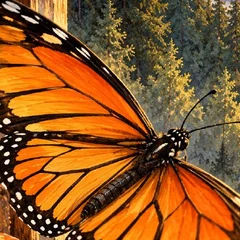
Illustrated portrait of ÁMBAR

The 80 cards of ÁMBAR, the monarch butterfly

Territory: Oyamel fir forest · Michoacán.

At the table they come up one at a time and are read aloud. Here is the whole deck, to read at your own pace.

Read them in

“Available” does not always mean “reviewed by specialists”: we explain this in Behind every card.

On this page

Trivia · 20 cards

ÁMBAR Trivia

A question with three answers, at three levels of difficulty. Everyone thinks it through together.

TRI-AMB-01 · THE GENERATIONS OF THE JOURNEY

Beginner

Does one single monarch make the whole round trip every year?

  1. No: several generations share it
  2. Yes, the same butterfly always goes and comes back
  3. Yes, but only if the winter is warm
See the answer

A. No: several generations share it

The journey isn't made by one butterfly: across the year several generations take turns, and none knows the whole route.

Intermediate

Heading north, several generations of a few weeks take turns. What sets apart the one that travels south in autumn?

  1. It's smaller and flies faster than the rest
  2. It lives several months and reaches Mexico
  3. It's born in Mexico and never travels
See the answer

B. It lives several months and reaches Mexico

The autumn migratory generation lives months, not weeks, and is the one that reaches the wintering forests. The spring and summer ones, heading north, live briefly and relay.

Advanced

Why isn't it exact to say 'it takes four or five generations to reach the north' as a fixed rule?

  1. Because it's always exactly one single generation
  2. Because monarchs don't reproduce during the migration
  3. Because the number of relays varies between years and regions
See the answer

C. Because the number of relays varies between years and regions

The yearly cycle chains several relays northward, but how many changes. What's stable isn't the number, but the pattern: short generations rising and one long-lived one coming down.

★ No single monarch makes the whole journey: the path is handed down across generations, relay after relay.

TRI-AMB-02 · WHAT THE CATERPILLAR EATS AND WHAT THE BUTTERFLY DOES

Beginner

What does a monarch caterpillar eat?

  1. Nectar from many different flowers
  2. Milkweed leaves
  3. Small garden insects
See the answer

B. Milkweed leaves

The caterpillar eats milkweed leaves, its host plant. Without it, there is no caterpillar.

Intermediate

The caterpillar eats milkweed leaves. The adult butterfly — what does it feed on?

  1. The same milkweed leaves it ate as a caterpillar
  2. It eats nothing; it lives on reserves it stored as a caterpillar
  3. Nectar from many flowers, including milkweed
See the answer

C. Nectar from many flowers, including milkweed

The caterpillar eats leaves; the adult drinks nectar from many flowers. Milkweed, besides leaves for the caterpillar, also offers flowers with nectar.

Advanced

'Milkweed' isn't a single plant. What does that mean for a garden that wants to help monarchs?

  1. Plant milkweed native to the region
  2. The species doesn't matter as long as it's called milkweed
  3. It's better to plant only nectar flowers and no milkweed
See the answer

A. Plant milkweed native to the region

There are several milkweed species; to truly help, you choose the ones native to the area, which fit the local cycle and don't throw off the migration.

★ The caterpillar eats only milkweed; the butterfly drinks nectar from many flowers. Two diets, one journey.

TRI-AMB-03 · WHY ALMOST NO BIRD EATS IT

Beginner

The monarch is orange and showy. Why do many birds leave it alone?

  1. It flies so high and fast that birds can't catch it
  2. It's so small that almost no bird finds it worth hunting
  3. It tastes bad: it stores bitter substances from milkweed
See the answer

C. It tastes bad: it stores bitter substances from milkweed

As a caterpillar it ate milkweed and kept its bitter substances. Many birds find it unpleasant, and learn to avoid that orange.

Intermediate

Where does the monarch get that defense that puts predators off?

  1. It takes it from the milkweed it ate as a caterpillar
  2. It makes it itself as soon as it becomes an adult butterfly
  3. It gets it from the sun that warms its wings on the journey
See the answer

A. It takes it from the milkweed it ate as a caterpillar

It doesn't invent it: it inherits it from its food. The milkweed substances it ate as a caterpillar stay with it as an adult.

Advanced

Why does the monarch's orange work as a warning and not as decoration?

  1. Because no bird can tell colors apart
  2. It's a signal of bad taste that many learn to avoid
  3. Because all orange butterflies are equally poisonous
See the answer

B. It's a signal of bad taste that many learn to avoid

The color warns: 'I tried something like this and it made me sick.' It's not universal immunity nor does everyone react the same, but it puts many off.

★ The monarch's orange isn't vanity: it's a warning many learn to respect.

TRI-AMB-04 · THE GENERATION THAT LIVES LONGER

Beginner

Almost all monarchs live a few weeks. Is there one that lives much longer?

  1. The generation that migrates south lives several months
  2. No, they all live the same
  3. Yes, but only the ones born in Mexico
See the answer

A. The generation that migrates south lives several months

Most live weeks. The autumn migratory generation is the exception: it can live several months to make the journey and spend the winter.

Intermediate

Why does it suit that migratory generation to live so many months?

  1. To lay far more eggs than any other generation
  2. To reach the winter forest and wait for spring
  3. To grow much bigger and stronger than its own parents
See the answer

B. To reach the winter forest and wait for spring

That generation doesn't reproduce yet: it saves energy, travels far and endures the winter until, in spring, the return begins.

Advanced

Why is it better to say 'the migratory generation lives months' and not 'monarchs live eight months'?

  1. Because eight months is the normal age of absolutely any monarch
  2. Because in fact no monarch ever lives past a month
  3. Only that migratory generation lives months; the rest, weeks
See the answer

C. Only that migratory generation lives months; the rest, weeks

Mixing the two confuses. The long lifespan belongs to the migratory generation, not to every monarch.

★ One generation a year lives longer: the one that carries the journey and the winter on its wings.

TRI-AMB-05 · HOW IT KNOWS WHICH WAY TO FLY

Beginner

A monarch that has never made the journey — how does it know which way to go?

  1. It follows an older butterfly that has already gone
  2. It uses the sun and inner signals, with no one teaching it
  3. It memorizes its parents' route
See the answer

B. It uses the sun and inner signals, with no one teaching it

No one teaches it: it orients by the sun and by inner mechanisms. The course comes 'built in,' not from following another.

Intermediate

To use the sun as a guide during the day, what else does the monarch need?

  1. To always fly at exactly the same height above the ground
  2. To wait for the sun to be right overhead, at exactly noon
  3. An internal clock that corrects the sun's position
See the answer

C. An internal clock that corrects the sun's position

The sun moves across the sky during the day; an internal clock helps it correct and hold its course. It's not one magic compass.

Advanced

Why is it better to say the monarch uses 'several signals' and not a single compass?

  1. It combines the sun, an internal clock and other clues
  2. Because it doesn't actually orient and flies at random
  3. Because it only uses the magnetic field and nothing else
See the answer

A. It combines the sun, an internal clock and other clues

Orientation brings together several clues. Reducing it to 'one compass' oversimplifies something still being studied.

★ No one gave it the map, and still it knows the way back: the course comes from within.

TRI-AMB-06 · THE WINTER TREE

Beginner

The millions of monarchs that winter in Mexico — in what kind of tree do they gather?

  1. In coastal palm trees
  2. In desert cactus
  3. In mountain oyamel firs
See the answer

C. In mountain oyamel firs

They hang on oyamel firs, tall mountain trees. There, packed together, they spend the winter.

Intermediate

Why do they choose the oyamel fir forests and not just any forest?

  1. Their height and density hold a mild climate
  2. Because the fir bears fruit that monarchs eat in winter
  3. Because in those forests there's no predator to threaten them
See the answer

A. Their height and density hold a mild climate

The oyamel, tall and dense, keeps a microclimate: not so cold it kills them nor so dry they dehydrate.

Advanced

This answer holds for the monarchs that winter in Mexico. Why can't it be extended to 'all the monarchs in the world'?

  1. Because all the world's monarchs, without exception, go to Mexico
  2. Because not all populations winter in oyamel firs
  3. Because the oyamel grows equally all over the planet
See the answer

B. Because not all populations winter in oyamel firs

The eastern population winters in Mexico's oyamel firs. Other populations have other sites; it's not a single rule for the species.

★ Millions of wings hanging from the same tree: the oyamel fir is the winter blanket.

TRI-AMB-07 · WHY THE DENSE FOREST PROTECTS

Beginner

What good is it to the monarchs that the oyamel forest is very dense?

  1. To hold warmth and break the wind, like a blanket
  2. To hide from the rain only
  3. To find more flowers among the trees
See the answer

A. To hold warmth and break the wind, like a blanket

The trees together act as umbrella and blanket: they trap some warmth and slow the icy wind.

Intermediate

If a large clearing opens in that forest, what happens to the monarchs at the edge?

  1. Nothing: the whole forest stays just as protected
  2. They're left more exposed to wind and cold
  3. They find more sun and get through the winter better
See the answer

B. They're left more exposed to wind and cold

A clearing is like a broken window: the cold wind comes in through it. Those hanging near the edge are left more exposed.

Advanced

Why is it more precise to say a clearing 'protects less' instead of 'no longer protects'?

  1. Because a single clearing leaves the whole forest unprotected
  2. Because clearings change nothing
  3. The hole raises the risk in its area, not in the whole forest
See the answer

C. The hole raises the risk in its area, not in the whole forest

The harm is local: the clearing's edge is left more exposed, but the dense forest around it still does its job.

★ Together, the firs break the wind. A hole in the blanket is felt right at the edge.

TRI-AMB-08 · HOW LONG THE JOURNEY IS

Beginner

A monarch's journey to the forests of Mexico is, roughly…

  1. A few hundred meters
  2. Thousands of kilometers
  3. A few kilometers
See the answer

B. Thousands of kilometers

It can be a journey of thousands of kilometers: an enormous distance for such a light insect.

Intermediate

It's said some travel close to 4,000 km. How should that figure be understood?

  1. As the exact distance any monarch flies
  2. As the minimum distance for all of them, always
  3. An approximate distance from certain points
See the answer

C. An approximate distance from certain points

Four thousand kilometers is a possible order of magnitude from faraway places; not all set out from the same point or cover the same.

Advanced

Why is it wrong to say 'all monarchs leave Canada and fly 4,000 km'?

  1. They set out from many places and the distance changes
  2. Because no monarch ever covers such a great distance
  3. Because they all leave punctually from the same tree in Canada every year
See the answer

A. They set out from many places and the distance changes

The migratory population occupies a wide area; each monarch starts from where it was born, so the distance varies.

★ For something lighter than a paper clip, thousands of kilometers are almost an engineering miracle.

TRI-AMB-09 · FLYING FAR WITHOUT WEARING OUT

Beginner

How do monarchs manage to fly so far without tiring so much?

  1. They beat their wings nonstop, day and night
  2. They float on rivers, pushed by the water
  3. They ride warm air currents to glide
See the answer

C. They ride warm air currents to glide

When the sun warms the ground, the air rises; the monarch lets itself be lifted and glides, spending less.

Intermediate

What do monarchs do when night falls during the journey?

  1. They settle to rest, clustered together, until the next day
  2. They keep flying in the dark all night, never stopping
  3. They go down to the water and stay drinking all night
See the answer

A. They settle to rest, clustered together, until the next day

At night they rest, often together in a tree. The journey is made by day and in stretches, not in one go.

Advanced

Why does 'gliding on air currents' not mean it flies 'spending almost nothing'?

  1. Because the monarch never actually glides at all on the journey
  2. Gliding saves energy, but flying and orienting still cost
  3. Because it's the wind that does the work of flying entirely
See the answer

B. Gliding saves energy, but flying and orienting still cost

Gliding saves, it doesn't erase the cost. That's why it also needs nectar along the way to refuel.

★ The monarch doesn't fight the air: it uses it as a stairway. But even so, it needs to eat to arrive.

TRI-AMB-10 · THEY ARRIVE FOR A DATE

Beginner

When the monarchs reach Michoacán, which Mexican date do they usually coincide with?

  1. With New Year's
  2. With the Day of the Dead, between October and November
  3. With spring, in March
See the answer

B. With the Day of the Dead, between October and November

They usually arrive between late October and November, near the Day of the Dead. That's why many communities tie them to those dates.

Intermediate

In several communities it's said the monarchs 'are the souls returning.' How to describe it well?

  1. A biological fact that science has already fully proven
  2. The true, proven cause of why they set out on the journey
  3. A cultural tradition, not a scientific explanation
See the answer

C. A cultural tradition, not a scientific explanation

It's a beautiful cultural interpretation, belonging to specific communities. Biology explains the journey; tradition gives it meaning.

Advanced

Why isn't it exact to say 'they arrive right on November 1st because of the souls'?

  1. They arrive over a season, not on a fixed day
  2. Because monarchs never appear during the month of November
  3. Because it's the souls who decide and control the migration
See the answer

A. They arrive over a season, not on a fixed day

The arrival happens over a range of days and depends on the weather. Coinciding with the date is tradition; the date doesn't command the journey.

★ They arrive when the town is waiting. Science explains the when; culture, why it moves us.

TRI-AMB-11 · A COLD STORM

Beginner

What happens to a monarch colony if a storm hits with cold and water?

  1. It can be very dangerous: it may kill many
  2. Nothing: water doesn't affect them
  3. It helps them fly faster the next day
See the answer

A. It can be very dangerous: it may kill many

Cold with damp is one of the most dangerous things for them: wet and frozen, many can fall.

Intermediate

Why does the oyamel forest help, but doesn't guarantee that all survive a frost?

  1. Because the forest keeps them completely warm and dry at night
  2. It reduces the cold, but a strong storm still causes losses
  3. Because inside the forest no cold at all gets in
See the answer

B. It reduces the cold, but a strong storm still causes losses

The forest cushions the cold, but it's no total shield: an intense storm can still cause deaths, especially at the edges.

Advanced

Why is it better not to say 'a storm kills them all alike'?

  1. Because no storm ever actually affects the monarchs
  2. Because no matter what, all of them always survive
  3. Mortality changes depending on the storm and the site
See the answer

C. Mortality changes depending on the storm and the site

It's not identical in each case: a well-sheltered colony loses fewer than an exposed one. The risk is real, but not uniform.

★ Wet cold is their greatest winter enemy; the forest helps, but it's no promise.

TRI-AMB-12 · WHY IT WAITS TO HAVE YOUNG

Beginner

The migratory generation travels south without reproducing on the way. Why?

  1. Because it can never lay eggs
  2. Because it already laid all its eggs before leaving
  3. It postpones reproduction to save energy
See the answer

C. It postpones reproduction to save energy

It guards its energy: instead of reproducing, it uses it to travel and survive until spring, when it does reproduce.

Intermediate

That pause in reproducing helps it live more months. How to describe it well?

  1. A bodily state tied to the season, not a choice
  2. As a conscious decision by the butterfly
  3. As a punishment for traveling far
See the answer

A. A bodily state tied to the season, not a choice

It's not that it 'decides' to wait: its body responds to the season's signals. That state lets it last as long as the journey and the winter.

Advanced

Why isn't it enough to say 'it lives months because it doesn't reproduce'?

  1. Because reproducing has nothing to do with how long it lives
  2. Longevity depends on several factors, not one
  3. Because it actually does reproduce on the journey
See the answer

B. Longevity depends on several factors, not one

Postponing reproduction helps, but it's not the only reason: temperature, reserves and forest conditions also play a part.

★ The one that travels guards its energy like treasure: it spends it on arriving, not on breeding.

TRI-AMB-13 · HOW MONARCHS ARE COUNTED

Beginner

How do scientists work out how many monarchs arrive each winter?

  1. They count every single one, one by one
  2. They measure the area of forest they occupy
  3. They ask the sanctuary's visitors
See the answer

B. They measure the area of forest they occupy

They aren't counted one by one: you measure how many hectares of forest they occupy hanging there. That area serves to estimate how many there are.

Intermediate

Why is the occupied area used instead of counting individuals?

  1. Because monarchs let themselves be counted easily
  2. Because the area gives the exact number
  3. There are too many, too packed, to count one by one
See the answer

C. There are too many, too packed, to count one by one

There are millions, packed on the branches. Measuring the area they cover is a practical way to estimate their abundance.

Advanced

Why is the occupied area an estimate and not an exact count?

  1. Monarchs per hectare vary; it shows a trend, not a figure
  2. Because each hectare always holds exactly the same number
  3. Because counting the area gives the exact number of living butterflies
See the answer

A. Monarchs per hectare vary; it shows a trend, not a figure

Density changes between sites and years. That's why the area shows whether they rise or fall, but doesn't give an exact figure of individuals.

★ They aren't counted one by one: you measure the forest they dress in orange. It's an estimate, not a perfect census.

TRI-AMB-14 · THE TAG ON THE WING

Beginner

Sometimes a tiny tag is placed on a monarch's wing. What is it for?

  1. To identify it if it turns up far away and study the migration
  2. To make the wing heavier so it always flies in a straight line
  3. To make it glow in the dark so it's easy to see at night
See the answer

A. To identify it if it turns up far away and study the migration

The tag carries a piece of data. If someone finds it thousands of kilometers away, you can link where it was marked and where it appeared.

Intermediate

If a monarch tagged in the north shows up in Mexico, what does that tag let us know?

  1. The exact route, meter by meter, that it flew
  2. That it traveled between those two points
  3. The exact day it was born
See the answer

B. That it traveled between those two points

It connects two points — where it was marked and where it was found — it doesn't reconstruct every stretch of that individual's flight.

Advanced

Who does this tagging and why does it matter to say so?

  1. Anyone, catching them any way they can
  2. Only automatic machines
  3. Trained participants in community science
See the answer

C. Trained participants in community science

It's done by people trained in community science programs, with technique so as not to hurt the insect. It's not catching them for fun.

★ A tiny tag and a continent in between: that's how two strangers draw a piece of the path.

TRI-AMB-15 · WHAT WIPED OUT THE MILKWEED

Beginner

In many fields along the route the milkweed vanished. What had the most to do with it?

  1. That cattle and livestock ate all the milkweed
  2. That it stopped raining completely, forever, on that route
  3. Herbicides that wipe out the weeds between crops
See the answer

C. Herbicides that wipe out the weeds between crops

In farming areas, the herbicides that clear everything that isn't the crop also took the milkweed that grew between the furrows.

Intermediate

Why does losing the milkweed along the route hit the monarchs so hard?

  1. It's the only plant where the caterpillars eat and grow
  2. Because it's the only place where they sleep
  3. Because without it they can't find water
See the answer

A. It's the only plant where the caterpillars eat and grow

Without milkweed there's nowhere to lay eggs nor anything for the caterpillars to eat. A key link in the journey breaks.

Advanced

Why isn't it exact to say 'a poison wiped out all the milkweed along the whole route'?

  1. Because the milkweed never decreased
  2. The loss was large but uneven, depending on the region
  3. Because it was only lost in one field
See the answer

B. The loss was large but uneven, depending on the region

The impact is serious, but neither uniform nor total: there are areas with more loss and others where milkweed holds on or is replanted.

★ The caterpillar lost its table where the fields were cleared of everything that isn't sold.

TRI-AMB-16 · THE CHRYSALIS

Beginner

Before becoming a butterfly, the monarch caterpillar forms a chrysalis. What does it look like?

  1. A brown silk cocoon hung from the branch, like a nest
  2. A green capsule with little golden dots
  3. A little gray ball made of tangled cobweb among the leaves
See the answer

B. A green capsule with little golden dots

The monarch's chrysalis is a green capsule with a line of golden dots. It's not a silk cocoon.

Intermediate

What happens inside that green chrysalis?

  1. The caterpillar sleeps without changing
  2. The caterpillar stores food for the winter
  3. The caterpillar transforms inside into a butterfly
See the answer

C. The caterpillar transforms inside into a butterfly

Inside, metamorphosis happens: the caterpillar's body reorganizes until it emerges turned into a butterfly.

Advanced

Why is it better to say 'chrysalis' and not 'cocoon' when talking about the monarch?

  1. 'Cocoon' suggests silk; the chrysalis goes bare
  2. Because they're exactly the same
  3. Because the monarch makes no chrysalis
See the answer

A. 'Cocoon' suggests silk; the chrysalis goes bare

The silk cocoon belongs to other species (like some moths). The monarch forms a chrysalis without silk: best not to confuse them.

★ Green with dots of gold: the monarch's chrysalis looks like a jewel hung from a leaf.

TRI-AMB-17 · THE WESTERN MONARCHS

Beginner

Not all monarchs go to Michoacán. The ones from the western United States — where do they usually go?

  1. Mostly to the California coast
  2. To the same forests in Mexico
  3. To the desert, to hide under the sand
See the answer

A. Mostly to the California coast

There's a tendency: many western monarchs spend the winter on the California coast, not in Mexico's oyamel firs.

Intermediate

How is it best to describe the difference between eastern and western monarchs?

  1. As two completely isolated groups that never mix
  2. Wintering tendencies, with some exchange
  3. As the same route for all of them
See the answer

B. Wintering tendencies, with some exchange

They're tendencies, not walls: most of the east winters in Mexico and the west in California, but they're not perfectly separate populations.

Advanced

Why isn't it exact to say 'east = Mexico, west = California' as a rigid rule?

  1. Because they all go to California
  2. Because there are no monarchs in the west
  3. There's variation and exchange; it's not an absolute divide
See the answer

C. There's variation and exchange; it's not an absolute divide

Nature is rarely so clear-cut: the patterns describe the majority, but there are always monarchs that break the mold.

★ Not all take the same road: some seek the firs; others, the coast. The migration has more than one story.

TRI-AMB-18 · HOW MUCH A MONARCH WEIGHS

Beginner

How much does a monarch butterfly weigh, roughly?

  1. Like a large coin
  2. Like a little mouse
  3. Less than a gram
See the answer

C. Less than a gram

It weighs less than a gram: it's so light the wind lifts it. That's why gliding suits it so well.

Intermediate

Why does such a light butterfly make so much use of air currents?

  1. It weighs so little that warm air lifts it
  2. Because its wings are made of metal
  3. Because it doesn't need to eat
See the answer

A. It weighs so little that warm air lifts it

Weighing almost nothing, a rising air current holds it up and pushes it. Its lightness is part of its travel strategy.

Advanced

It's said it 'weighs like a petal.' How to take that phrase?

  1. As the monarch's official scientific weight
  2. A comparison to picture its lightness, not a measurement
  3. As meaning the monarch is a petal
See the answer

B. A comparison to picture its lightness, not a measurement

It's an image to get the idea, not a reading off a scale. It helps you feel how light it is, not to measure it.

★ Less than a gram of butterfly crossing a continent: the longest journey is made by the lightest traveler.

TRI-AMB-19 · THE FOREST THAT MUST BE CARED FOR

Beginner

The forest where the monarchs winter — what care does it most need?

  1. That it be well logged so more sun reaches the ground
  2. That all the old trees be removed and the new ones left
  3. That it stay standing and dense, to give shelter
See the answer

C. That it stay standing and dense, to give shelter

What helps most is keeping it dense and standing: that way it holds the microclimate that protects them from the cold.

Intermediate

Why does protecting that forest help the monarchs even though they're only there in winter?

  1. Without that winter refuge, the whole population is in danger
  2. Because the monarchs live there all year
  3. Because the forest feeds them in winter
See the answer

A. Without that winter refuge, the whole population is in danger

They spend the most delicate time of year there. If that refuge is missing, the whole population is in danger, even if the rest of the year they're far away.

Advanced

Why isn't it enough to say 'the forest is always worth more standing than logged'?

  1. Because logging is always the better business
  2. It depends on the context and on support for those who care for it
  3. Because the forest has no value at all
See the answer

B. It depends on the context and on support for those who care for it

Keeping it standing can give tourism, water and climate, but it requires that those who live off the mountain get part of that benefit. It isn't automatic.

★ The winter refuge holds up the whole journey: caring for the fir is caring for every generation to come.

TRI-AMB-20 · CAN IT RECOVER?

Beginner

After a bad winter with few monarchs, can their number rise again?

  1. Yes, if it finds forest and flowers in the following years
  2. No: once their number drops, it never rises again
  3. Only if they're raised by hand in a lab and then released
See the answer

A. Yes, if it finds forest and flowers in the following years

It can: if there's healthy forest and flowers along the way, the population can rebound from one year to the next.

Intermediate

What does it depend on whether a monarch population recovers after a lean year?

  1. On it raining less each year
  2. On there being milkweed, flowers and a healthy winter forest
  3. On them giving up migrating
See the answer

B. On there being milkweed, flowers and a healthy winter forest

Recovery needs the full set of pieces: plants for the caterpillars, nectar along the way and a winter forest that shelters them.

Advanced

Why can't it be promised that 'with forest and flowers, each season will bring more monarchs'?

  1. Because the number never changes
  2. Because they always rise no matter what
  3. Climate and other factors make the result vary
See the answer

C. Climate and other factors make the result vary

Forest and flowers are necessary, not a guarantee: a frost or a drought can stall a good year. Recovery is possible, not certain.

★ A bad year isn't the end: with forest and flowers, the orange can win back ground. Can, not always.

Pulse · 20 cards

ÁMBAR Pulse

News from the territory. Sometimes good, sometimes bad. It moves the score in favor of the Guardians or the Villains.

PUL-AMB-01

A monarch born in the north doesn't know the way, but something drives it south. It carries some stored fat, and even so it needs to drink nectar on the way. If a long stretch has no flowers, many don't make it.

At the table: Damage 2

PUL-AMB-02

November comes and the town wakes up waiting. The sun touches the mountain and the forest lets loose in an orange river running down the slope. “They're the souls returning,” they say here. And no one, watching it, argues.

At the table: Restore 2

PUL-AMB-03

In the fields along the way, kilometers of a single crop. Before, milkweed grew between the furrows; a herbicide that clears everything that isn't the crop took it away. The caterpillar, which eats only that plant, was left with no table on those plots.

At the table: Damage 1

PUL-AMB-04

By the side of a highway, someone planted a narrow strip: milkweed and purple flowers, on purpose. It's not a whole field. It's an edge. But an edge with flowers raises the chances that a hungry monarch reaches the next one.

At the table: Reserve +1

PUL-AMB-05

A year too dry and hot brought on and withered the roadside flowers early. When the monarchs passed looking for nectar, many flowers were already gone. The journey was made with the tank almost empty.

At the table: Reserve −1

PUL-AMB-06

Mid-morning, when the sun warms the ground, the air rises like an invisible hand. The monarchs let themselves be lifted and glide without beating their wings, spending far less. The sky, when it wants to, pushes toward home too.

At the table: Restore 1

PUL-AMB-07

On the slope, where there was once closed forest, a bare clearing was left: stumps and direct sun. Through that hole, on the cold night, the wind comes in as through a broken window. The monarchs hanging near the edge are left more exposed.

At the table: Damage 1

PUL-AMB-08

The communities that own the forest climb up almost daily, not with axes, but to keep watch. They have agreements, knowledge of the mountain and reasons to care for it: a standing forest, full of butterflies, sustains their livelihood year after year.

At the table: Restore 2

PUL-AMB-09

A storm came out of season: icy water at night over the colony. Where the forest was whole, many held on, packed under the branches. Where there were clearings, the cold hit harder and dawn came up orange on the ground.

At the table: Damage 1

PUL-AMB-10

In a northern garden, a trained person placed a numbered tag on a wing. Months later, thousands of kilometers away, another person found it and reported the number. Between the two, a piece of the road was marked.

At the table: Reserve +1

PUL-AMB-11

Word goes around that the monarchs are already gone, that there's no point planting or caring. It's not true, but when something is given up for lost, it stops being helped: fewer hands planting, fewer strips of flowers along the way.

At the table: Damage 1

PUL-AMB-12

On their journey, the monarchs drink from many flowers and, in passing, carry pollen from one to another. They don't cross the sky alone: they help pollinate some of the flowers they visit, though not all of them equally.

At the table: Restore 1

PUL-AMB-13

At night, far from any eyes, a chainsaw sounds in the reserve. An old fir, one of those that give good shelter, is worth money as timber. That tree, nearly a century in the growing, falls in minutes. And with it, the roof of thousands.

At the table: Damage 1

PUL-AMB-14

That winter's count was done. The colonies covered more hectares of forest than the year before. The occupied area serves to estimate how many there are: it rose, and that encourages, though it's not yet a sure recovery.

At the table: Reserve +2

PUL-AMB-15

Summer monarchs live weeks; the generation that migrates south lives months and makes the return. If that generation gets few flowers and much heat, it arrives weak at the forest. That year, the journey hangs on it.

At the table: Reserve −1

PUL-AMB-16

In a schoolyard, some children planted milkweed in old pots. It will take a while to grow. Maybe no monarch will pass this year. But the year one does pass, hungry, and finds that plant, it won't ask who planted it.

At the table: Restore 1

PUL-AMB-17

Sometimes the little milkweed that's left is sprayed with insecticide. The caterpillar eats the leaf it gets, as always. On that exposed plant, many don't finish growing. It's not the poison of a fairy tale: it's a specific leaf, in a specific field.

At the table: Damage 1

PUL-AMB-18

People come to see the miracle, and it's good that they come. But when someone leaves the trail, shouts or shakes a branch to make them fly “for the photo,” they force them to spend at once the energy they were saving for the cold.

At the table: Damage 1

PUL-AMB-19

On those hills, some find more profit in turning the forest into orchards than in leaving it standing. Where yesterday there were firs, today there are rows of fruit trees. The gain of a few doesn't count the water, the climate or the refuge that are lost.

At the table: Damage 1

PUL-AMB-20

For years they'd been saying goodbye to them. And one November morning, once again, the forest woke up orange. There weren't as many as before, but there they were: they had crossed a continent, generation after generation, to hang from these firs.

At the table: Reserve +2

Encounter · 20 cards

ÁMBAR Encounters

A scene with someone who cares: a fisherwoman, a biologist, a neighbor. It almost always brings hope.

ENC-AMB-01

Every year her grandmother tells her the same, pointing at the forest: “When the sky turns orange, those are the ones that came back.” This year it's the girl who tells it to her little brother. That's how they tell it in her family.

“The path is handed down. So is the story.”

At the table: Reserve +1

ENC-AMB-02

He's spent twenty years climbing the mountain to count, not to cut. He knows which tree fills first, which slope holds against the wind. “This forest feeds us,” he says, “precisely by being left standing.”

“The same mountain. Another trade.”

At the table: Restore 1

ENC-AMB-03

The owner didn't sell his old fir, the one that gathers the most butterflies. He can leave it like that and trust, or join a community watch so no one logs it in secret.

“Leaving it standing is easy. Guarding it together, better.”

  • A. Leaves it and trusts Restore 1
  • B. Joins the community watch Reserve +2

ENC-AMB-04

In a northern garden, a biologist from a tagging program holds a monarch and sticks a numbered tag on its wing. “If it turns up in Mexico,” she says, “we'll know it passed through here.” She lets it go.

“A tiny number, and a continent ahead.”

At the table: Reserve +1

ENC-AMB-05

The guide can take three groups up a day, fast, or take just one, slowly and in silence, asking that no one shout or touch. In a hurry, the colony burns too much energy; in calm, it rests.

“Three groups in a hurry, or one in silence.”

  • A. Takes three groups up, fast Restore 1 · Reserve −1
  • B. Takes one up, in silence Reserve +2

ENC-AMB-06

In class, the teacher says the same butterfly goes and comes back from Mexico. A boy corrects him: “No: several generations take turns; the one that returns in spring comes from the ones that wintered.” The teacher suggests they look into it together.

“Sometimes the one who corrects the story is ten years old.”

At the table: Restore 1

ENC-AMB-07

She has seeds and a roadside strip. She can plant only showy nectar flowers, or also plant native milkweed, less striking, which is where the caterpillars feed. The space is enough to choose.

“Nectar for the adult; milkweed for the caterpillar.”

  • A. Only nectar flowers Restore 1
  • B. Native milkweed too Reserve +2

ENC-AMB-08

His family had a sawmill. Today he has an inn for those who come to see butterflies. “We used to live off felling the forest,” he says. “Now, off its staying up.” For them, it worked.

“The same forest. Charging the other way around.”

At the table: Restore 2

ENC-AMB-09

The neighbor complains that he doesn't clear his lot, that it has ugly weeds. He doesn't pull them: among those weeds he identified milkweed. “It's not neglect,” he says. “I left the caterpillars' plant on purpose.”

“What one calls a weed, another calls a table.”

At the table: Restore 1

ENC-AMB-10

Tomorrow he decides: open more trails to visitors, who leave money for the town today, or keep the deep part of the forest closed, where the colonies hang with no one to disturb them.

“Today's money, or the colony's calm.”

  • A. Opens more trails Restore 1 · Reserve −1
  • B. Keeps the heart of the forest closed Reserve +2

ENC-AMB-11

In the bare clearing, a girl and her father plant, from a nursery, small oyamel firs of the species that belongs there. “We won't see them grown,” he says. “They're for the butterflies of the butterflies of the butterflies.”

“You plant a blanket you won't get to use.”

At the table: Reserve +1

ENC-AMB-12

She comes down from the sanctuary with a bag of trash she picked up along the trail: wrappers, a bottle. A visitor comes over and starts helping her. “If we come to see the miracle,” she says, “we leave it as we found it.”

“The miracle is cared for with a bag in hand too.”

At the table: Restore 1

ENC-AMB-13

The field feeds them if they plant all of it. If they leave an uncultivated strip, with milkweed and flowers, they lose that piece of harvest; in exchange, the passing monarchs gain somewhere to feed and lay eggs.

“One strip less of harvest. One strip more of life.”

  • A. They plant the whole field Restore 1
  • B. They leave a wild strip Reserve +2

ENC-AMB-14

The farmer agreed with the one next door not to spray herbicide on the edges of their fields. It's more work. But between the two plots a strip of flowers was left, where the monarchs pass with less risk.

“Two edges without poison make a road.”

At the table: Reserve +1

ENC-AMB-15

“As a boy, the sound of the wings could be heard from the town,” the old man says, and falls silent. “I don't know how many there were; there were many. Now you have to climb up and pay attention. But they still come.”

“The one who remembers tends to their return.”

At the table: Restore 1

ENC-AMB-16

Tomorrow she announces the count: it rose from last year, but is still well below before. She can open by saying it rose or that it's still low. Both are true, and in both it's worth inviting people to take part.

“It rose. And it's still low. Say it in full.”

  • A. Opens with "it rose" and invites people to take part Restore 1
  • B. Opens with "it is still low" and invites people to take part Reserve +1

ENC-AMB-17

Every monarch she sees along the way she logs in an app: where, when, how many. A single record already contributes; and with many people logging, and people who check the data, the map of the migration takes shape.

“One record adds. Many, well checked, draw the map.”

At the table: Reserve +1

ENC-AMB-18

The teacher takes her group up to the sanctuary. Before going in, a rule and a mission: “Walk the trail in silence, and watch for the moment a cluster opens its wings.” The children go in looking upward.

“Silence is learned when there's something worth hearing.”

At the table: Restore 1

ENC-AMB-19

She finds a monarch caterpillar on the milkweed in the garden. She can stay to watch it on the plant, day after day, or notify an authorized project if she thinks it's at risk. She doesn't take it.

“Watch up close, without tearing it from its plant.”

  • A. Watches it on its plant Restore 1
  • B. Notifies an authorized project Reserve +1

ENC-AMB-20

In San Miguel, the town throws a party when they arrive: music, food, visitors coming down the permitted trails. What used to be logging season is, here, butterfly season, and for this community it paid off.

“Here, the ones that return bring more than the sawmill.”

At the table: Restore 2

Challenge · 20 cards

ÁMBAR Challenges

A real-life commitment. Each player answers “I already do it,” “I'll try it” or passes.

RET-AMB-01

What flowering plant could you plant or help tend so the insects can feed? If there's no garden, tending a pot or looking up a flower native to your area counts.

  • “I already do it” At home you already plant or tend flowers for pollinators, and you know which. Restore 2
  • “I'll try it” You choose a possible native plant and who would tend it Restore 1
  • “Pass” No effect

A flower planted today is a table for a year from now.

RET-AMB-02

With the help of a guide or a photo, how would you recognize a plant where a monarch caterpillar could feed? Look at the leaves and the sap.

  • “I already do it” You can already recognize milkweed or another host plant of your region. Restore 1
  • “I'll try it” You look up an image of local milkweed together to learn to spot it Restore 1
  • “Pass” No effect

To know the plant is to know who lives off it.

RET-AMB-03

In a garden or yard, what flowering weed could you let grow in a corner, without filling everything with weeds?

  • “I already do it” At home you already avoid needless poisons and leave some wildflowers. Restore 2
  • “I'll try it” You choose a corner to let useful flowers grow Restore 1
  • “Pass” No effect

Not everything that grows on its own is a nuisance.

RET-AMB-04

On a map or drawing, trace the monarchs' journey: who goes down south and who begins the return north in spring?

  • “I already do it” You can already tell that several generations make the journey, not one. Restore 1
  • “I'll try it” You draw the cycle with one relay going and one coming back Restore 1
  • “Pass” No effect

The journey isn't made by one; it's handed down by a family.

RET-AMB-05

If you find a caterpillar or a chrysalis, how do you observe it without touching it or taking it? You can look closely or photograph without moving it.

  • “I already do it” You already observe caterpillars or chrysalises without picking them up. Restore 1
  • “I'll try it” You agree to look without touching the next time you see one Restore 1
  • “Pass” No effect

Looking closely is not taking.

RET-AMB-06

In a park or street, what safe trash could you pick up with an adult and gloves? Nothing dangerous.

  • “I already do it” You already pick up safe litter when you go out, carefully. Restore 2
  • “I'll try it” You plan to take a bag and gloves on the next outing Restore 1
  • “Pass” No effect

A clean park starts with what you don't leave behind.

RET-AMB-07

If someone says 'the monarchs aren't going to come back,' how would you check that claim before believing or repeating it?

  • “I already do it” You already check where a piece of news comes from before taking it as true. Restore 1
  • “I'll try it” You look up together who published a monarch figure, and when Restore 1
  • “Pass” No effect

A good year doesn't erase the risk; nor does it confirm it.

RET-AMB-08

Faced with a photo or news item about monarchs, what two things do you check before sharing it? Think about the date and who made it.

  • “I already do it” You already check the date and author of what you share. Restore 1
  • “I'll try it” You pick a monarch news item and verify its date Restore 1
  • “Pass” No effect

Before sharing, it helps to know how old it is.

RET-AMB-09

With an adult, how would you find who to notify if you see an injured wild animal in your area?

  • “I already do it” You already know which official wildlife contact to turn to. Restore 2
  • “I'll try it” You locate together a phone or site to report wildlife Restore 1
  • “Pass” No effect

Knowing who to call is already helping.

RET-AMB-10

The monarch crosses several countries. Can you locate a place where it breeds and another where it spends the winter?

  • “I already do it” You can already locate one breeding site and one wintering site. Restore 1
  • “I'll try it” You point out on a map the northern breeding and the winter forest Restore 1
  • “Pass” No effect

The monarch isn't only from here: it belongs to the whole road.

RET-AMB-11

If you visit a sanctuary, how do you behave so as not to disturb the butterflies? And if you've never been, what rule would you apply in another natural place?

  • “I already do it” You already go quietly, on the trail and without touching, in natural places. Restore 2
  • “I'll try it” You agree on three rules of respect for the next outing Restore 1
  • “Pass” No effect

In someone else's house, you lower your voice.

RET-AMB-12

Explore on a map, roughly, where the monarchs pass between Canada and Mexico. No exact line is expected.

  • “I already do it” You already know, broadly, the migration route. Restore 1
  • “I'll try it” You trace together an approximate route with two rest stops Restore 1
  • “Pass” No effect

The road has many variants, not a single line.

RET-AMB-13

What native plant could you tend at home, or help tend elsewhere, for the local insects?

  • “I already do it” You already tend native plants and can name which. Restore 2
  • “I'll try it” You choose a possible local native plant to get or tend Restore 1
  • “Pass” No effect

A native pot is already a piece of habitat.

RET-AMB-14

If a harmless insect gets into the house, how do you get it out without squashing it? You can ask for help or open it a way out.

  • “I already do it” You already get harmless insects out without killing them. Restore 2
  • “I'll try it” You agree on a method for next time: a glass, a window, or asking for help Restore 1
  • “Pass” No effect

An insect in the house doesn't always need hands.

RET-AMB-15

What one thing about monarchs could you tell someone else so it's clear to them?

  • “I already do it” You've already explained something about monarchs to someone. Restore 2
  • “I'll try it” You pick a fact and who you'll tell it to this week Restore 1
  • “Pass” No effect

What you explain, you understand twice.

RET-AMB-16

The monarch's orange is a warning. What other 'caution' signals do animals use? Compare them in images.

  • “I already do it” You already know the monarch's orange warns, and that not all orange is alike. Restore 1
  • “I'll try it” You look up two examples of warning colors in animals Restore 1
  • “Pass” No effect

Color is a language too.

RET-AMB-17

When walking in a forest or reserve, why does staying on the trail protect plants and colonies we can't see?

  • “I already do it” You already stay on the marked trails. Restore 2
  • “I'll try it” You agree not to leave the trail on the next walk Restore 1
  • “Pass” No effect

The trail guards what isn't seen.

RET-AMB-18

Spend a while outdoors watching insects or flowers. A camera or a guide can help you observe without disturbing.

  • “I already do it” You already spend time observing nature attentively. Restore 2
  • “I'll try it” You plan ten minutes of observation this week Restore 1
  • “Pass” No effect

Watching closely is also a way of caring.

RET-AMB-19

In an accessible spot with trees, do you notice differences in shade, wind or humidity between the dense and the open?

  • “I already do it” You already observe how trees together change the surroundings. Restore 1
  • “I'll try it” You compare a shaded spot and an open one on your next outing Restore 1
  • “Pass” No effect

The dense forest is felt, not just explained.

RET-AMB-20

Outdoors, stay still for a minute and count how many different kinds of insect you can spot. You don't need to know their names.

  • “I already do it” You already pause to observe insects without chasing them. Restore 1
  • “I'll try it” You do the minute of observation and share what you saw Restore 1
  • “Pass” No effect

A still minute changes what you see.