La Fábrica
Inventiva
Join usES

FAUNA Guardianes / Cards / BRAMOR

The full deck · 80 cards

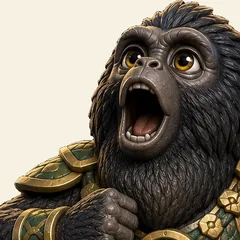
Illustrated portrait of BRAMOR

The 80 cards of BRAMOR, the black howler monkey

Territory: Tall rainforest.

At the table they come up one at a time and are read aloud. Here is the whole deck, to read at your own pace.

Read them in

“Available” does not always mean “reviewed by specialists”: we explain this in Behind every card.

On this page

Trivia · 20 cards

BRAMOR Trivia

A question with three answers, at three levels of difficulty. Everyone thinks it through together.

TRI-SAR-01 · THE LOUDEST ANIMAL

Beginner

What is the howler monkey famous for?

  1. For being among the loudest land animals
  2. For being the biggest monkey in the Americas
  3. For living longer than any other monkey
See the answer

A. For being among the loudest land animals

Its fame is its howl: it's among the loudest land animals.

Intermediate

What in its throat helps it howl so loudly?

  1. A special bone that amplifies the sound
  2. Enormous lungs that push the air
  3. A very long, strong, and flexible tongue
See the answer

A. A special bone that amplifies the sound

An enlarged bone in its throat works like a resonating chamber.

Advanced

What good is a howl heard for kilometers?

  1. To call females from the neighboring troops
  2. To frighten off its predators at night
  3. So troops can divide territory without fighting
See the answer

C. So troops can divide territory without fighting

The howl spaces the troops out and avoids fights over food and territory.

★ It howls loud so it won't have to fight.

TRI-SAR-02 · IT DOESN'T ATTACK, IT ANNOUNCES

Beginner

When the howler monkey howls, what is it doing?

  1. Calling the rain with its voice
  2. Letting the others know where it is
  3. Getting ready to attack someone
See the answer

B. Letting the others know where it is

The howl is a territorial notice, not a threat to attack.

Intermediate

Is the howler monkey dangerous to people?

  1. Yes: it attacks anyone near its territory
  2. No: it's calm and eats mostly leaves
  3. Only its howl is dangerous: it deafens
See the answer

B. No: it's calm and eats mostly leaves

It's a calm leaf-eater; its howl is impressive, but harmless.

Advanced

Why can fear of its howl harm it?

  1. Fear actually protects it, since no one comes near
  2. Fear only makes it better known and more often visited by people
  3. It can lead people to kill it, thinking it a dangerous beast
See the answer

C. It can lead people to kill it, thinking it a dangerous beast

Groundless fear can end in its death or removal.

★ That mighty voice belongs to a leaf-eater.

TRI-SAR-03 · THE ROAD OF THE TREETOPS

Beginner

Where does the howler monkey normally travel?

  1. Through the treetops
  2. Along the forest floor
  3. Swimming through rivers
See the answer

A. Through the treetops

It lives up high and travels branch to branch, almost never coming down.

Intermediate

What happens if a strip of trees is cut through the middle of the forest?

  1. They find another way by walking along the forest floor
  2. They swim across the big river without any fear
  3. The troop is stranded on one side, unable to cross
See the answer

C. The troop is stranded on one side, unable to cross

Without a continuous canopy, their road is broken.

Advanced

What solution helps them cross a road that split the forest?

  1. Tunnels under the road so they cross at ground level
  2. Traffic signs warning cars of their crossing
  3. Rope or canopy bridges, treetop to treetop
See the answer

C. Rope or canopy bridges, treetop to treetop

Canopy crossings let them cross without coming down to the ground.

★ Its highway is the branches overhead.

TRI-SAR-04 · THE JUNGLE GARDENER

Beginner

What does the howler monkey do as it eats fruit and moves about?

  1. It spreads seeds all through the forest
  2. It prunes the branches and helps the tree grow
  3. It marks the fruit trees as its own
See the answer

A. It spreads seeds all through the forest

It swallows fruit and scatters the seeds far from the mother tree.

Intermediate

Why does that help the forest?

  1. It concentrates all the new trees under one single tree
  2. New trees grow in places where there would be none
  3. It makes the seeds sprout much faster than usual
See the answer

B. New trees grow in places where there would be none

By scattering far, trees spring up where the parent never could.

Advanced

What does the forest lose if the howler monkey disappears?

  1. A predator that kept insect pests in check
  2. A key sower: many trees lose their seed-spreader
  3. A pruner that kept the trees healthy
See the answer

B. A key sower: many trees lose their seed-spreader

It's a seed disperser; without it those trees lose the one that spreads them.

★ It eats fruit and sows forest as it goes.

TRI-SAR-05 · LAZY, OR THRIFTY?

Beginner

The howler monkey rests for many hours a day. Why?

  1. Because the jungle heat forces it to avoid the sun
  2. Because it spends the day guarding its territory, still
  3. Because digesting leaves yields little energy, which it must save
See the answer

C. Because digesting leaves yields little energy, which it must save

Its leaf diet yields little energy; resting conserves it.

Intermediate

What does the howler monkey eat above all?

  1. Forest insects
  2. Leaves and fruit
  3. Roots and stems
See the answer

B. Leaves and fruit

It's a herbivore: mostly leaves, and fruit when there is any.

Advanced

Why does it pay to eat leaves almost no one else uses?

  1. Because they taste especially sweet and good to it
  2. It's better off competing for ripe fruit
  3. There are plenty, and it barely competes for them
See the answer

C. There are plenty, and it barely competes for them

Living on leaves gives it abundant food and little competition.

★ It isn't lazy: it manages the little energy its diet provides.

TRI-SAR-06 · THE TAIL THAT GRIPS

Beginner

What can the howler monkey do with its tail?

  1. Grip branches like an extra hand
  2. Swat insects away like a whip
  3. Swim in the river, using it as an oar
See the answer

A. Grip branches like an extra hand

Its tail is prehensile: it grips branches like another hand.

Intermediate

What is that strong tail for?

  1. For running fast along the forest floor
  2. For digging holes and burrows in the earth
  3. For hanging and reaching fruit without falling
See the answer

C. For hanging and reaching fruit without falling

It hangs and stretches to feed, with the tail as an anchor.

Advanced

What advantage is an almost 'fifth hand' up high?

  1. Carrying its young with the tail while climbing
  2. Moving and feeding safely up high, without coming down
  3. Defending itself by lashing with the tail
See the answer

B. Moving and feeding safely up high, without coming down

The prehensile tail gives it extra grip to move and feed without falling.

★ Its tail is nearly a fifth hand.

TRI-SAR-07 · FAMILIES THAT HEAR EACH OTHER

Beginner

Do howler monkeys live alone?

  1. They live in pairs for life, male and female
  2. They live alone for their whole lives
  3. No: they live in troops, or families
See the answer

C. No: they live in troops, or families

They form troops of several individuals.

Intermediate

How do two troops know where each is?

  1. By the dawn howl, which carries far
  2. They tell each other up close, quietly
  3. They search, climbing tree by tree
See the answer

A. By the dawn howl, which carries far

The dawn chorus divides the territory among families.

Advanced

What happens to that division if the forest fills with machine noise?

  1. The troops move closer so they can hear one another
  2. They stop howling and switch to another way of marking territory
  3. The howl goes unheard and the families get in each other's way
See the answer

C. The howl goes unheard and the families get in each other's way

Noise drowns the howl; the troops can no longer locate one another and clash over space.

★ They divide the forest by howl alone.

TRI-SAR-08 · THE DANGER OF COMING DOWN

Beginner

Why is coming down to the ground dangerous for the howler monkey?

  1. There dogs, cars, and other dangers can reach it
  2. On the ground it can't find the leaves it feeds on
  3. The damp ground sickens its feet, made for trees
See the answer

A. There dogs, cars, and other dangers can reach it

Out of the canopy it's exposed to dogs, traffic, and hunters.

Intermediate

What forces it down, if it almost never comes down?

  1. Thirst, when the leaves no longer give it water
  2. The urge to explore new ground below
  3. Trees being cut, leaving it nowhere to cross
See the answer

C. Trees being cut, leaving it nowhere to cross

A break in the canopy forces it down to cross.

Advanced

How do you keep it from having to risk the ground?

  1. By keeping the canopy joined or adding canopy bridges
  2. By placing water troughs on the ground so it won't seek water
  3. By leaving food up high so it won't want to come down
See the answer

A. By keeping the canopy joined or adding canopy bridges

A continuous canopy (or canopy crossings) keeps it from coming down.

★ Its safe place is up in the heights.

TRI-SAR-09 · THE WIRE THAT KILLS

Beginner

What danger appears when trees are cut and power lines are run through?

  1. They go blind from the glare of the town's lights
  2. The monkeys electrocute themselves crossing on the wires
  3. The hum of the wires drives them from the forest
See the answer

B. The monkeys electrocute themselves crossing on the wires

With no branches, they cross on the wires and are electrocuted.

Intermediate

Why do they cross on the wires?

  1. Because the branches they used were taken away
  2. They're roaming there looking for water to drink
  3. They're fleeing in fright from a rival troop
See the answer

A. Because the branches they used were taken away

With no canopy, they seek any high crossing, however dangerous.

Advanced

How is that problem solved?

  1. By cutting the wires' current during the day
  2. By driving the monkeys out of the town with loud noise
  3. By insulating the wires and leaving tree crossings
See the answer

C. By insulating the wires and leaving tree crossings

Insulating the wires and keeping tree crossings prevents electrocutions.

★ A bare wire is no branch.

TRI-SAR-10 · THE BABY THAT'S NOT FOR SALE

Beginner

To keep a baby howler monkey as a pet, what usually happens to the mother?

  1. She moves off alone to a far tree
  2. She's killed to get the baby down
  3. She's adopted along with the baby
See the answer

B. She's killed to get the baby down

Almost always the mother is killed to snatch her baby.

Intermediate

Does that baby do well as a pet?

  1. Yes, if it's given milk and a big, roomy cage
  2. No: it rarely survives away from its troop
  3. Yes, as long as it has another pet close by
See the answer

B. No: it rarely survives away from its troop

Without its troop and its diet, it rarely survives; captivity sickens it.

Advanced

Why can buying a 'rescued' monkey do harm?

  1. Rescued monkeys usually spread diseases to people
  2. Its price rises and then no one buys them anymore
  3. It encourages taking more babies from the forest
See the answer

C. It encourages taking more babies from the forest

Buying one, even a 'rescued' one, creates demand and more capture.

★ A pet like that leaves two monkeys lost.

TRI-SAR-11 · THE BROKEN FOREST

Beginner

What does it mean to 'fragment' a forest?

  1. To replant it all again from scratch with trees
  2. To split it into pieces divided by roads or pasture
  3. To water it well throughout the whole dry season
See the answer

B. To split it into pieces divided by roads or pasture

It's breaking it into chunks left isolated from one another.

Intermediate

What happens to a troop trapped in one fragment?

  1. It breeds among the same few and weakens
  2. It splits into small troops that get along
  3. It stays the same if there's food in the patch
See the answer

A. It breeds among the same few and weakens

Isolation forces inbreeding and wears the troop down.

Advanced

Why does joining the fragments with tree corridors help so much?

  1. It lets troops move and mix
  2. It shuts them in even more
  3. It helps just one troop only
See the answer

A. It lets troops move and mix

Corridors restore the passage and renew the families.

★ A forest in pieces isolates its families.

TRI-SAR-12 · SILENCE AS A SIGNAL

Beginner

If a forest that once howled at dawn falls silent, what might it mean?

  1. That the day dawned cloudy and rainy
  2. That the monkeys moved to the forest's center
  3. That the troops have left or vanished
See the answer

C. That the troops have left or vanished

Silence at dawn usually signals the loss or departure of the troops.

Intermediate

Why does the howl help us know how the forest is doing?

  1. It only helps them not get lost in the forest
  2. It only helps tell roughly what time it is
  3. Many howls mean many troops and a healthy forest
See the answer

C. Many howls mean many troops and a healthy forest

A full chorus speaks of a living forest; an empty one, of a forest in trouble.

Advanced

Why is it worth 'listening' to a forest to protect it?

  1. Sound warns of problems before they can be seen
  2. It's enough to count the trees still left
  3. Sound almost always ends up fooling us
See the answer

A. Sound warns of problems before they can be seen

Hearing the forest is an early way to tell if something's wrong.

★ A forest that falls silent is asking for help.

TRI-SAR-13 · THE BLACK ONE OF THE JUNGLE

Beginner

What color are the adult howler monkeys of this jungle?

  1. White
  2. Black
  3. Gray
See the answer

B. Black

The adults have black fur.

Intermediate

How do they change color as they grow?

  1. The young are born paler and darken with age
  2. They gradually lighten over the years
  3. They change color only at the tip of the tail
See the answer

A. The young are born paler and darken with age

The dark color comes in with the years.

Advanced

Beyond color, what sets the howler monkey apart from other monkeys?

  1. That it uses tools to crack open the hardest fruit
  2. Its powerful howl and its quiet, leaf-eating life
  3. That it's the fastest monkey leaping between branches
See the answer

B. Its powerful howl and its quiet, leaf-eating life

The howl and its leaf-based diet set it apart.

★ Black, calm, and huge of voice.

TRI-SAR-14 · THE JOURNEY OF THE YOUNG

Beginner

As they grow, what do many young howler monkeys do?

  1. They seek another troop to start a family
  2. They stay and inherit leadership of their own troop
  3. They form new troops made only of siblings
See the answer

A. They seek another troop to start a family

Many young disperse to other troops and avoid inbreeding.

Intermediate

Why is that move to another troop important?

  1. It only changes which leader runs the troop
  2. It keeps the family from breeding only with itself
  3. It just makes them a little louder than before
See the answer

B. It keeps the family from breeding only with itself

Mixing with other troops keeps the families healthy.

Advanced

What happens if the broken forest doesn't allow that journey?

  1. The young spread out better within the same fragment
  2. The young don't disperse and the troops become isolated
  3. The troops merge into a single very large troop
See the answer

B. The young don't disperse and the troops become isolated

With no journey there's no exchange between troops: they isolate and grow poorer.

★ With no road, the young find no family.

TRI-SAR-15 · THE TREES THAT MATTER

Beginner

What does the howler monkey's food depend on most?

  1. On the leaves and fruit of certain trees
  2. On the trash it finds lying around
  3. On the fish it catches in the nearby river
See the answer

A. On the leaves and fruit of certain trees

It lives on the leaves and fruit of forest trees.

Intermediate

What happens if the forest's fruit trees are the ones cut down?

  1. The troop loses food in the hard seasons
  2. It starts looking for fruit on the ground
  3. It switches and starts eating insects
See the answer

A. The troop loses food in the hard seasons

Without those key trees, its food runs short when it needs it most.

Advanced

Why does leaving a few key trees standing help so much?

  1. It helps only for a year or two, no more
  2. They sustain the troop even when the rest changes
  3. They draw dangerous pests to the whole forest
See the answer

B. They sustain the troop even when the rest changes

A few good trees can keep a family alive.

★ Not every tree counts the same to the troop.

TRI-SAR-16 · THE FOREST THAT CROSSES BORDERS

Beginner

The jungle where the howler monkey lives, does it stay on one side?

  1. Yes: each jungle is an island that touches no other
  2. Yes: it fits whole inside a single protected area
  3. No: it stretches across regions and borders
See the answer

C. No: it stretches across regions and borders

Its jungle is continuous and cross-border; it doesn't fit on one plot.

Intermediate

Why does that matter for protecting the monkey?

  1. That only matters to tourists who come from outside
  2. Because it really lives inside the city, not the forest
  3. Its forest and troops cross boundaries; care is shared
See the answer

C. Its forest and troops cross boundaries; care is shared

Since the forest recognizes no borders, protecting it is a job for many.

Advanced

What happens if one side keeps the forest and the other cuts it down?

  1. The monkeys split evenly between the two sides
  2. The troops on the cleared side are isolated or lost
  3. The side that keeps its forest ends up losing too
See the answer

B. The troops on the cleared side are isolated or lost

It's little use protecting one side if the neighbor cuts the passage.

★ The forest sees no borders; neither do the troops.

TRI-SAR-17 · THE FOREST TEAM

Beginner

Does the howler monkey live apart from the rest of the forest?

  1. Yes: a single tree is all it ever needs to live
  2. No: it depends on the trees, and the trees on it
  3. Yes: it could live just as well in a grassy pasture
See the answer

B. No: it depends on the trees, and the trees on it

It's interwoven with the forest: food and seed dispersal.

Intermediate

What is its relationship with the fruit trees?

  1. It eats their fruit and scatters their seeds
  2. It only gives them a little shade in the summer heat
  3. It just eats their leaves, never the fruit
See the answer

A. It eats their fruit and scatters their seeds

It's both a diner at those trees and their sower.

Advanced

What does this teach about protecting a single species?

  1. That protecting one species is more than enough
  2. That the whole surrounding forest must be cared for
  3. That protecting just one of them is useless
See the answer

B. That the whole surrounding forest must be cared for

Saving the monkey is saving the forest that holds it up, and vice versa.

★ To care for the monkey is to care for its whole forest.

TRI-SAR-18 · THE DAWN CHORUS

Beginner

When do howler monkeys usually howl most?

  1. At midnight
  2. Almost never
  3. At daybreak
See the answer

C. At daybreak

The great chorus usually comes with the first light.

Intermediate

Why do they all howl at roughly the same time?

  1. To wake one another and set out together
  2. To announce the weather for the day
  3. To mark territory as the day begins
See the answer

C. To mark territory as the day begins

The dawn chorus locates and spaces out the troops.

Advanced

What does a powerful dawn chorus say about a forest?

  1. That too many monkeys are fighting
  2. That it has many troops and is healthy
  3. That the forest is completely empty
See the answer

B. That it has many troops and is healthy

A dawn full of howls speaks of a living forest.

★ As long as there's a chorus, the forest is alive.

TRI-SAR-19 · REJOINING THE FOREST

Beginner

Can a broken forest be helped to recover?

  1. No, nothing can be done for it ever again
  2. Yes: by joining its pieces with tree corridors
  3. Only by fencing it off a while to rest
See the answer

B. Yes: by joining its pieces with tree corridors

Reconnecting the fragments gives wildlife back its passage.

Intermediate

What does it take for a corridor to work?

  1. Trees that grow until they touch, forming a canopy
  2. A row of tall posts, spaced far apart from each other
  3. A cleared strip of grass between the two pieces
See the answer

A. Trees that grow until they touch, forming a canopy

A corridor works when the crowns touch; posts or grass give no passage.

Advanced

Why is it better to protect the forest than to have to stitch it back together?

  1. Stitching takes years; caring keeps it from being split at all
  2. Stitching it back together is much cheaper than caring
  3. Caring and stitching cost exactly the same in the end
See the answer

A. Stitching takes years; caring keeps it from being split at all

It's easier not to break the forest than to rebuild its roads.

★ Better not to split it than to stitch it later.

TRI-SAR-20 · THE OWNER OF THE VOICE

Beginner

What does the howler monkey's howl mean for its jungle?

  1. Nothing but a very annoying noise for people
  2. Only a sign that heavy rain is coming soon
  3. The sign that the forest is alive and inhabited
See the answer

C. The sign that the forest is alive and inhabited

Its voice is the mark of a jungle with families inside.

Intermediate

Why would losing that howl mean losing more than a sound?

  1. The clock people told the time by is lost
  2. The song that drew rain to the forest is lost
  3. A voice that gave the forest life goes quiet
See the answer

C. A voice that gave the forest life goes quiet

Losing the howl signals losing the troops and their role in the forest.

Advanced

If one day it's heard on no hillside, what should we understand?

  1. That the forest lost what sustained it; we must act
  2. That the troops learned to howl more softly
  3. That they moved their chorus to the night hours
See the answer

A. That the forest lost what sustained it; we must act

Total silence signals a real loss of troops, not a change of habit.

★ When the howler monkey falls silent, the jungle falls silent.

Pulse · 20 cards

BRAMOR Pulse

News from the territory. Sometimes good, sometimes bad. It moves the score in favor of the Guardians or the Villains.

PUL-SAR-01 · THE CHORUS THAT FADES

Every dawn, the howler monkeys answer one another from hill to hill with a howl heard for kilometers. Once many voices replied; now, each year, fewer answer. It isn't that they howl more softly: it's that fewer throats remain. The forest's chorus fades little by little, one voice at a time.

At the table: Damage 1

PUL-SAR-02 · THE CANOPY CUT

Howler monkeys travel through the treetops without touching the ground: the canopy is their road. They open a track and cut a strip of trees. On one side, a family is left that can no longer cross to the other. The forest is still there, but its highway of branches has been broken in two.

At the table: Damage 1

PUL-SAR-03 · THE BARE WIRE

Where they felled the trees, they ran power lines through the gap. A howler monkey tries to cross on them, as it would on a branch. The bare wire shows no mercy. What was a treetop crossing became a trap no one set on purpose, but that kills all the same.

At the table: Damage 1

PUL-SAR-04 · DOWN TO THE GROUND

With no trees to cross by, the family comes down to the ground, where it almost never goes. Below are the dogs, the road, the people. A monkey on the ground is a monkey in danger. No one drove them from the tree: they took away the tree they traveled by.

At the table: Damage 1

PUL-SAR-05 · THE TREES THAT FEED

Before clearing his plot, a farmer marks the trees whose fruit the monkeys eat and leaves them standing. When the troop passes, it finds the table set and moves on, at ease.

At the table: Reserve +2

PUL-SAR-06 · THE BABY THAT CAME BACK

They were going to sell a baby monkey as a pet, but the family has second thoughts: without its troop, it won't survive. They hand it to someone who knows how to return it to the forest. Two monkeys, not one, go on with their lives.

At the table: Reserve +2

PUL-SAR-07 · THE ISLAND OF TREES

The pasture surrounded the last patch of jungle and left it a green island in a sea of grass. The troop living there can no longer reach any other. The same ones keep pairing, generation after generation. An isolated forest fades away even while it stands.

At the table: Damage 1

PUL-SAR-08 · THE HOWL AGAINST THE ENGINE

The howler monkey marks its territory with its voice: it carries far, and that's how families divide the forest without fighting. But chainsaws and machines arrive that roar louder all day long. Amid so much noise, its call no longer reaches. They drowned out the only way it has to say 'here I am'.

At the table: Damage 1

PUL-SAR-09 · THE VOICE OF THE FOREST

A newcomer hears the howl for the first time and, instead of taking fright, asks. They tell him that's how they share the forest without fighting. Now he waits for it each dawn as one waits for a bell.

At the table: Restore 1

PUL-SAR-10 · THE ADVANCING PASTURE

The grass gains ground on the forest, edge by edge. Each season, the jungle where the troop lives is a little smaller. The monkeys crowd into what's left. There was no great felling all at once: it was the pasture eating the forest one bite a year.

At the table: Damage 1

PUL-SAR-11 · THE BURN

They set fire to the plot to clear it and the wind pushes it toward the forest. Smoke fills the treetops where the troop rests. The howler monkeys flee as best they can toward where there's still green. The fire that opened a field ate, along the way, a family's roof.

At the table: Damage 1

PUL-SAR-12 · THE SILENCE OF DAWN

One dawn, the forest doesn't howl. Not one voice answers from the hills. The troop that lived there is gone: it left, scattered, or was lost. The silence doesn't arrive with a crash; it arrives like any ordinary morning on which, suddenly, no one calls.

At the table: Reserve −1

PUL-SAR-13 · THE GARDENER WITHOUT A GARDEN

The howler monkey eats fruit and, as it moves, unwittingly sows the seeds all through the forest: it's the jungle's gardener. But it has less and less jungle left to sow. The one that plants the forest runs out of forest to plant. Without it, many trees stop traveling.

At the table: Damage 1

PUL-SAR-14 · THE ONES WHO DON'T CROSS

Young howler monkeys must leave their family and seek another troop so as not to breed among kin. They make that journey through the treetops. When the canopy is broken, there's nowhere to go. They stay where they were born, unable to mix. The family closes in on itself.

At the table: Damage 1

PUL-SAR-15 · THE ROPE BRIDGE

Over the road that split the forest, some neighbors strung a rope bridge from crown to crown. At first the troop was wary. One day, the first howler monkey crossed it and reached the other side. The road was still there, but the monkeys' path was joined again.

At the table: Restore 2

PUL-SAR-16 · THE FULL CHORUS

It's before daybreak and the forest thunders with voices: one troop calls, another answers from the hill across, and another beyond. The whole valley replies to itself. When the chorus comes out complete, with no gaps, it's a sign the jungle is still full of families.

At the table: Restore 1

PUL-SAR-17 · THE INSULATED WIRE

After several monkeys were electrocuted, people asked for the wires on that stretch to be insulated. They covered them and put in safe crossings. Since then, the howler monkeys cross again without falling. Sometimes protecting life is just putting a sleeve on what was taking it.

At the table: Restore 2

PUL-SAR-18 · THE TREE LEFT STANDING

When he cleared his plot, a farmer left the big fruit trees standing, and a few more as a living fence. The howler monkeys still pass through and feed there. He didn't hold back the field: he only kept a few key trees. Sometimes it's enough not to fell what feeds everyone.

At the table: Reserve +1

PUL-SAR-19 · THE INVISIBLE SOWER

Where the troop passed eating fruit, months later new saplings sprout: the seeds they dropped took root. No one planted them by hand. The forest is reseeding itself, with the help of some monkeys who don't even know the garden they leave behind.

At the table: Reserve +1

PUL-SAR-20 · THE ONES WHO COME TO LISTEN

Visitors begin to arrive before daybreak just to hear the dawn howl. They pay for a guide, stay in town, ask about the troops. Suddenly the monkey that used to frighten is worth more alive and howling. The one it used to bother now finds it pays to keep it singing.

At the table: Restore 1

Encounter · 20 cards

BRAMOR Encounters

A scene with someone who cares: a fisherwoman, a biologist, a neighbor. It almost always brings hope.

ENC-SAR-01 · THE ONE WHO TEACHES YOU TO LISTEN

Rubén · ecotourism guide · forest trail

I bring people from far away just to hear the dawn howl. I tell them: don't fear it, it's a calm monkey announcing where it is. When fewer voices answer one year, I know the forest is missing something.

The forest speaks too; you have to know how to listen.

At the table: Reserve +1

Someone who hears the howl for the first time and gets scared, do they have reason? How do you take away the fear without scolding them?

ENC-SAR-02 · COFFEE IN THE SHADE

Doña Fina · coffee grower · mountainside

My coffee grows under the big trees, not in full sun. That's why the howler monkeys pass through my plot. Whoever clears everything to plant in neat rows ends up with no forest and no shade for the bean.

Under the same shade there's room for the bean and the monkey.

At the table: Reserve +1

Shade coffee yields less than full sun. Is it fair to ask others to earn less for the forest's sake?

ENC-SAR-03 · THE CHORUS OF BEFORE

Don Elías · elder farmer · mountain town

When I was young, dawn was a thunder of howls across every hill. Today they answer in dribs and drabs. No one silenced them all at once; they left along with the trees. You miss the noise once the silence arrives.

You miss the racket when only silence is left.

At the table: Restore 1

If everyone cleared 'just a little patch', who answers for the silence of the hills?

ENC-SAR-04 · THE ONE WHO COUNTS BY VOICE

Sofía, primatologist · researcher · jungle field camp

I count the troops by their dawn howl; each family has its corner. When a hill stops answering, I know no one is left there. A healthy jungle sounds full; a sick one falls silent.

A forest that goes quiet is a forest going out.

At the table: Reserve +1

When a hill stops howling, something happened. And the one who opened it to pasture, what did he gain?

ENC-SAR-05 · THE ONE WITH THE ROPE BRIDGE

Marcos · conservation technician · forest road

I strung ropes from crown to crown over the road that split the jungle. They took a while to trust it, but now they cross. A rope bridge rejoined two pieces of forest that a road had pulled apart.

Sometimes bringing two worlds together costs one rope.

At the table: Restore 1

The rope bridges cost money and took time to be used. Is the effort worth it? Who should pay for it?

ENC-SAR-06 · THE GIRL AND THE HOWL

Kena · mountain girl · forest school

The first time I heard it at night I hid under the blanket: I thought it was a monster. My grandma took me to see it by day. It was a monkey eating leaves. Now I howl back at it and it answers me.

What frightens you stops being scary once you know it.

At the table: Restore 1

Kena's fear was real. How do you turn fear into respect without saying 'don't be a scaredy-cat'?

ENC-SAR-07 · THE ONE WHO INSULATED THE WIRES

Tomás · electrician · forest power line

The monkeys were getting electrocuted on my stretch of wire. I asked permission and insulated them, put in crossings. Not one has dropped since. It wasn't my job, but someone had to take the edge off that trap.

Sometimes saving a life is covering a wire.

At the table: Reserve +1

Tomás insulated his wires. Why don't others do it: cost, time, or that they don't care?

ENC-SAR-08 · THE ONE WHO SOLD BABIES

Genaro · once a trafficker, now a guardian · jungle ejido

I used to bring babies down to sell as pets; I'd kill the mother without a thought. One day I watched a baby die alone in a cage. Never again. Now I look after them in the forest. Alive and free, they're worth what no one ever paid me.

Some trades you quit so you can sleep.

At the table: Restore 1

What made Genaro sell babies? What stopped him? What would someone else need in order to stop sooner?

ENC-SAR-09 · THE ONE WHO LEFT THE SEED TREES

Don Chente · milpa farmer · edge of the jungle

When I cleared my milpa I left the big fruit trees standing. They told me they were in the way. The howler monkeys still pass through there to feed. I lost no harvest; I gained forest and monkeys for neighbors.

Leaving a few trees standing isn't losing; it's keeping company.

At the table: Reserve +1

They told Don Chente the fruit trees 'were in the way'. Did they have a point? What did he lose by leaving them?

ENC-SAR-10 · INTO THE FOREST AT DAWN

Chú · trail guide · jungle entrance

We set out in the dark, before the first howl. We walk quiet and slow to the heart of the forest. At that hour the jungle wakes up shouting. The good of this place is earned by rising early and keeping silent.

You have to fall silent to hear the jungle wake.

At the table: Restore 1

And the visitor who wants noise and a photo right now? How do you protect the monkey without scaring off the tourist?

ENC-SAR-11 · THE ONE WHO RECORDS THE DAWN

Iván · acoustic monitor · jungle field camp

I leave microphones on the hills and record the dawn chorus. With that I count troops without disturbing them. The forest tells me its health every morning; you just have to start listening.

The jungle keeps its own census, out loud.

At the table: Reserve +1

Iván counts without disturbing. And the one who barges in to 'see them up close', what is he after?

ENC-SAR-12 · THE ONE WHO THOUGHT IT WAS A BEAST

Rigo · cattle rancher · hillside ranch

I wanted to finish off that beast that howled in my woods at night. They took me to see it: a black monkey eating leaves, more scared than I was. Out of shame I became its guardian. The fear was mine, not its.

I nearly wiped out what only scared me because I didn't know it.

At the table: Restore 1

Rigo wanted to kill 'the beast' out of fear. How much harm is born of ill-informed fear?

ENC-SAR-13 · THE ENGINEER'S TRACK

Engineer Sosa · road builder · mountain forest

Opening the track by cutting straight through is fast and the road comes out clean for everyone. Leaving tall trees that touch takes more work, but the monkeys keep crossing. Each one sees their own part of the problem.

A broken canopy can't be stitched with machines.

  • A. Cut straight through (quick, clean road) Reserve +1 · Damage 1
  • B. Leave a canopy crossing Restore 1 · Reserve −1

What does the town lose if the work is delayed? What does the forest lose if the canopy is cut?

ENC-SAR-14 · THE EJIDO ASSEMBLY

Commissioner Onésimo · ejido authority · mountain assembly

Opening the strip that joins two jungles to pasture brings income to families who need it today. Leaving it as a corridor keeps the troops alive, but without that income. Two honest futures: one for the people, one for the forest.

Cutting the passage today isolates families for years.

  • A. Open to pasture (income for the families) Reserve +2 · Damage 1
  • B. Leave the corridor Restore 2 · Reserve −1

Can the families be given income without cutting the troops' passage? Who decides, and who bears the cost?

ENC-SAR-15 · THE DAWN TEACHER

Teacher Rocío · primary school · mountain town

I take the class out before daybreak to hear the howler monkeys' chorus. Let them know that howl belongs to home, not to fear. You don't care for what you don't know, or defend what you believe is a monster.

What you know as a child, you don't fear as an adult.

At the table: Reserve +1

Is that howl 'home' for everyone, or just a nuisance to whoever just moved in?

ENC-SAR-16 · THE CORRIDOR WATCHMAN

Tacho · guards the corridor · strip of trees

I make sure no one cuts the strip of trees joining the two forests. The troops cross there so they don't end up alone. Cut that thread of treetops and you lock a family in forever.

A thread of trees can hold up a whole family.

At the table: Restore 1

The owner of that strip could rent it out as pasture. What does he gain by protecting it?

ENC-SAR-17 · THE WOMAN AT THE FOREST NURSERY

Rosa · reforestation nursery keeper · mountainside

I raise saplings of the species the howler monkey eats, and we plant them in the bare strip. They don't give shade yet, but one day they'll join the two forests. I'm planting the bridge that doesn't exist yet.

Today you plant tomorrow's road.

At the table: Reserve +1

'They don't give shade yet.' Is it worth planting for a forest you'll see years from now?

ENC-SAR-18 · THE REPORTER AND THE CAGES

Emilio · local reporter · mountain office

I tracked down the one selling baby howler monkeys as pets. I have photos of the cages. I'm going to publish it. Sometimes showing what happens in secret is enough to make it stop.

What's brought to light is harder to keep doing.

At the table: Restore 1

What if the one selling babies does it out of poverty? Do you report him just the same? What else would it take?

ENC-SAR-19 · THE TROOP'S COFFEE

Damián · café owner · mountain town

I sell shade-grown coffee from these hills and tell my customers that howler monkeys live under those trees. It sells better with a story. Buying this coffee is keeping the forest standing.

A cup can hold a piece of forest too.

At the table: Reserve +1

Damián sells better 'with roots'. Does caring for business count as much as caring for love of the forest?

ENC-SAR-20 · EVERYONE'S CORRIDOR

The Dosel collective · neighbors · strip between forests

We're neighbors, not biologists. One Sunday a month we plant trees in the strip that separates two jungles, to join them again. We don't reforest everything; we join one stretch. The next stretch, the neighbor joins.

Tree by tree, a forest is stitched back together.

At the table: Restore 1

One Sunday a month against machines that clear in a day: does the small effort do any good?

Challenge · 20 cards

BRAMOR Challenges

A real-life commitment. Each player answers “I already do it,” “I'll try it” or passes.

RET-SAR-01

I don't take photos or selfies with wild animals used as an attraction.

  • “I already do it” Restore 1
  • “I'll try it” Reserve +1
  • “Pass” No effect

RET-SAR-02

I don't buy wild animals as pets, or accept them as gifts.

  • “I already do it” Restore 1
  • “I'll try it” Reserve +1
  • “Pass” No effect

RET-SAR-03

I prefer shade-grown coffee or cacao, grown under trees.

  • “I already do it” Restore 2
  • “I'll try it” Reserve +1
  • “Pass” No effect

RET-SAR-04

I don't buy furniture or crafts made of wood of unknown origin.

  • “I already do it” Restore 2
  • “I'll try it” Reserve +1
  • “Pass” No effect

RET-SAR-05

I use both sides of the paper and cut down on what I print.

  • “I already do it” Restore 1
  • “I'll try it” Reserve +1
  • “Pass” No effect

RET-SAR-06

If I see baby animals or wildlife for sale, I don't buy and I report it.

  • “I already do it” Restore 2
  • “I'll try it” Reserve +1
  • “Pass” No effect

RET-SAR-07

I avoid loud noise (speakers, engines) when I'm in a natural area.

  • “I already do it” Restore 1
  • “I'll try it” Reserve +1
  • “Pass” No effect

RET-SAR-08

I cut down on beef of unknown origin, which often comes from cleared forest.

  • “I already do it” Restore 2
  • “I'll try it” Reserve +1
  • “Pass” No effect

RET-SAR-09

I borrow or swap tools and things instead of buying them.

  • “I already do it” Restore 2
  • “I'll try it” Reserve +1
  • “Pass” No effect

RET-SAR-10

I switch off and unplug the appliances I'm not using.

  • “I already do it” Restore 1
  • “I'll try it” Reserve +1
  • “Pass” No effect

RET-SAR-11

I don't leave the car or motorbike idling for more than a minute.

  • “I already do it” Restore 1
  • “I'll try it” Reserve +1
  • “Pass” No effect

RET-SAR-12

I carpool so we don't make two trips for the same thing.

  • “I already do it” Restore 2
  • “I'll try it” Reserve +1
  • “Pass” No effect

RET-SAR-13

I take public transport instead of the car when I can.

  • “I already do it” Restore 2
  • “I'll try it” Reserve +1
  • “Pass” No effect

RET-SAR-14

I turn the water heater down a little.

  • “I already do it” Restore 1
  • “I'll try it” Reserve +1
  • “Pass” No effect

RET-SAR-15

I use cloth napkins and rags instead of paper.

  • “I already do it” Restore 2
  • “I'll try it” Reserve +1
  • “Pass” No effect

RET-SAR-16

I mend clothes (a button, a tear) instead of throwing them away.

  • “I already do it” Restore 2
  • “I'll try it” Reserve +1
  • “Pass” No effect

RET-SAR-17

I set out a dish of water for wildlife in the dry season.

  • “I already do it” Restore 1
  • “I'll try it” Reserve +1
  • “Pass” No effect

RET-SAR-18

I avoid styrofoam: I ask not to be given it and bring my own container.

  • “I already do it” Restore 1
  • “I'll try it” Reserve +1
  • “Pass” No effect

RET-SAR-19

Before buying something, I wait a few days to avoid impulse purchases.

  • “I already do it” Restore 2
  • “I'll try it” Reserve +1
  • “Pass” No effect

RET-SAR-20

I walk trips of under a kilometer instead of taking the car.

  • “I already do it” Restore 2
  • “I'll try it” Reserve +1
  • “Pass” No effect