La Fábrica
Inventiva
Join usES

FAUNA Guardianes / Cards / BALAM

The full deck · 80 cards

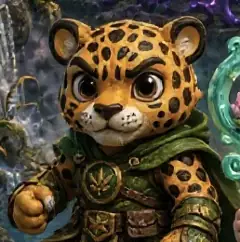
Illustrated portrait of BALAM

The 80 cards of BALAM, the jaguar

Territory: Maya Forest.

At the table they come up one at a time and are read aloud. Here is the whole deck, to read at your own pace.

Read them in

“Available” does not always mean “reviewed by specialists”: we explain this in Behind every card.

On this page

Trivia · 20 cards

BALAM Trivia

A question with three answers, at three levels of difficulty. Everyone thinks it through together.

TRI-BAL-01

Beginner

Why does a jaguar need a large territory?

  1. Because it is a very aggressive animal that attacks any other jaguar that sets foot on its land
  2. Because it seeks water, shelter and enough prey, which aren't together in one spot
  3. Because it runs long distances every day and needs open space to hunt at full speed
See the answer

B. Because it seeks water, shelter and enough prey, which aren't together in one spot

Territory size changes with place, sex and prey abundance. The key idea is that a small fragment rarely suffices to sustain it.

Intermediate

If there are still jaguars in a region, what clue does that offer?

  1. That the forest in that region is intact, because the jaguar is the first to leave as soon as anything changes
  2. That the area is dangerous for people, because jaguars only stay where food is scarce
  3. That there are still areas with prey, cover and connections, though the landscape may also have threats
See the answer

C. That there are still areas with prey, cover and connections, though the landscape may also have threats

The jaguar needs many parts of the ecosystem, so its presence is a good sign. It's no certificate of perfection: it can also survive in landscapes under pressure.

Advanced

Why is it worrying that roads and clearings isolate jaguar populations?

  1. Because they cut the exchange of individuals and genes, and raise vulnerability over time
  2. Because jaguars become more aggressive when they feel hemmed in and attack the neighboring villages
  3. Because the hot asphalt burns their paws and they can no longer hunt at night as they usually do
See the answer

A. Because they cut the exchange of individuals and genes, and raise vulnerability over time

Without connectivity, each group has fewer options for reproduction and movement. Genetic loss happens little by little, but can make a population fragile.

★ The jaguar doesn't need a fenced garden. It needs a landscape with living roads between forests.

TRI-BAL-02

Beginner

The jaguar swims very well. Why does that give it an edge in the Maya Forest?

  1. Nothing really: like all cats it avoids water and only crosses a river if a fire forces it to
  2. It bathes several times a day to get rid of ticks, which are far more abundant in the humid jungle
  3. Rivers and lagoons are part of its territory and a source of prey: fish, turtles and caimans
See the answer

C. Rivers and lagoons are part of its territory and a source of prey: fish, turtles and caimans

The jaguar is an excellent swimmer: rivers and lagoons are part of its hunting. It fishes, catches turtles and even caimans, something almost no big cat does.

Intermediate

Each jaguar has a completely unique spot pattern. What good is that to scientists?

  1. It lets us know its exact age, because each year of life adds a new spot to its coat
  2. It lets each individual be identified in camera-trap photos — like a fingerprint
  3. It lets us tell males from females at a glance, since females have smaller spots
See the answer

B. It lets each individual be identified in camera-trap photos — like a fingerprint

Each jaguar has a unique spot pattern, like a fingerprint. Camera traps let each individual be identified by its rosettes and counted without touching them.

Advanced

Some jaguars are completely black due to a mutation — they aren't a different species. What paradox does that present?

  1. Their spots are still there — just not visible to the naked eye; they're jaguars with a hidden pattern, not without one
  2. That they are actually panthers, a separate species that came from Africa and bred with the local jaguar
  3. That they are born black from living in dark caves and lighten with age if they hunt by day in the sun
See the answer

A. Their spots are still there — just not visible to the naked eye; they're jaguars with a hidden pattern, not without one

The black jaguar isn't another species nor missing spots: it has them, just hidden under the dark pigment. It's a jaguar with its pattern hidden in plain sight.

★ Rosettes let a jaguar be recognized without touching it. A camera and a unique pattern can tell the story of a whole population.

TRI-BAL-03

Beginner

What should you do if someone offers a jaguar's skin, fang or cub?

  1. Don't buy it and tell an adult or the proper authority
  2. Buy it so it doesn't end up with a hunter, and keep it at home
  3. Ask for a certificate and buy it only if it comes from a farm
See the answer

A. Don't buy it and tell an adult or the proper authority

Buying feeds the demand and can put more animals at risk. The safe thing is not to take part and to report without confronting the seller.

Intermediate

Why can jaguar-parts trafficking continue even though it's banned?

  1. Because there's a demand offering money for skins, teeth or other products
  2. Because the ban only applies in cities, and the law does not reach the jungle
  3. Because the hunters are poor families and the authorities prefer not to bother them
See the answer

A. Because there's a demand offering money for skins, teeth or other products

Illegal trade needs buyers. Reducing demand, improving surveillance and working with communities attack different parts of the problem.

Advanced

Why is it unwise to mix wildlife trafficking and cattle conflict as if they were the same?

  1. Because livestock conflict is legal and trafficking is not
  2. Because in livestock conflict the jaguar is always the guilty one
  3. Because they have different causes and need different responses
See the answer

C. Because they have different causes and need different responses

A sold skin and a cattle attack can both end with a dead jaguar, but they don't come from the same conflict. The solution must respond to the real cause.

★ A jaguar piece on a wall isn't a souvenir of the forest: it's an absence someone paid for.

TRI-BAL-04

Beginner

What makes Calakmul special?

  1. It brings together a great ancient Maya city and a huge stretch of Maya Forest
  2. That it is the only place in Mexico where jaguars still live in the wild
  3. That its jungle is artificial: the Maya planted it to hide the city
See the answer

A. It brings together a great ancient Maya city and a huge stretch of Maya Forest

At Calakmul, cultural heritage and biodiversity share the same landscape. The ruins aren't outside nature: they've been inside it for centuries.

Intermediate

Why does protecting the landscape around the ruins also help the jaguar?

  1. Because it keeps cover, water and prey over a wide area
  2. Because the jaguars live inside the abandoned pyramids
  3. Because the ruins draw tourists and they scare the hunters away
See the answer

A. Because it keeps cover, water and prey over a wide area

The jaguar uses no borders between archaeology and biology. Protecting a big forest around the site keeps part of the territory it needs.

Advanced

What does a place where Maya remains and today's wildlife coexist teach?

  1. That the jungle swallowed the city and must be cut down soon
  2. That the Maya vanished because they protected wildlife too much
  3. That culture and nature can be protected as a single landscape
See the answer

C. That culture and nature can be protected as a single landscape

The human history of the Maya Forest and its wildlife are intertwined. Separating them can make the full meaning of the place get lost.

★ At Calakmul, a pyramid rises among trees where the jaguar still walks. Two histories are still alive on the same site.

TRI-BAL-05

Beginner

Where does part of the rain that falls on the forest come from?

  1. From the Caribbean Sea: the wind brings all the rain from the coast
  2. From the cenotes: groundwater rises and forms the clouds
  3. From the forest itself: the trees release vapor that forms clouds
See the answer

C. From the forest itself: the trees release vapor that forms clouds

Trees take water from the soil and return part to the atmosphere as vapor. In large forests, that recycling helps sustain humidity and can influence rainfall.

Intermediate

If much of that forest were felled, what would happen to the rain?

  1. It would rain more, because without trees there is no one to drink the water
  2. It could rain a good deal less and local temperature could rise
  3. Nothing would change: rain depends only on the clouds from the sea
See the answer

B. It could rain a good deal less and local temperature could rise

Losing trees changes the humidity returning to the air and usually raises local heat. The effect on rain depends on the landscape and scale.

Advanced

What does a tourist beach have to do with the forest inland?

  1. Nothing: the beach lives off the sea and the forest off its trees; they are two separate worlds
  2. Part of the humid climate and rains that sustain the coast are born in that forest
  3. The beach sand forms from the soil the river drags down from that forest
See the answer

B. Part of the humid climate and rains that sustain the coast are born in that forest

Forest, rivers and coast form a system connected by water, sediment and climate. What happens inland can be felt much farther down.

★ A tree doesn't make rain alone. Millions of trees do help keep the landscape's water moving.

TRI-BAL-06

Beginner

What transformation has driven much forest loss in Mesoamerica?

  1. Hurricanes, which flatten thousands of hectares each year
  2. Turning forest areas into pastures and farmland
  3. Building hotels and highways for beach tourism
See the answer

B. Turning forest areas into pastures and farmland

Agricultural expansion, including ranching, has replaced large forest areas. The pressure changes by region and has no single cause.

Intermediate

Compared with many plant proteins, how does the climate footprint of beef usually compare?

  1. It's usually much larger due to land use, feed and cattle emissions
  2. About the same, because cows eat grass and grass is a plant too
  3. Smaller, because a single animal feeds many people for months
See the answer

A. It's usually much larger due to land use, feed and cattle emissions

On average, beef is among the foods with the largest climate footprint per unit of protein. The production system matters too.

Advanced

What option reduces pressure on land without asking everyone to eat the same?

  1. Banning beef completely, because any other measure is insufficient
  2. Wasting less food and more often choosing lower-impact foods
  3. Buying everything at the supermarket, where products come from certified farms
See the answer

B. Wasting less food and more often choosing lower-impact foods

There's no single diet for everyone. Wasting less, diversifying and cutting high-footprint products can ease the demand for land.

★ The plate also has a landscape. Choosing better doesn't save a forest by itself, but it does change how much land we ask of it.

TRI-BAL-07

Beginner

When a road cuts the forest in two, what happens to the forest near the cut?

  1. Nothing: the edge trees grow faster with the light from the road and soon close the gap
  2. Only the strip of asphalt is lost; one meter from the edge the jungle stays exactly the same
  3. The damage penetrates hundreds of meters in: more heat, more wind, more invasive plants
See the answer

C. The damage penetrates hundreds of meters in: more heat, more wind, more invasive plants

A road's harm doesn't stay at the edge: it penetrates hundreds of meters, carrying more heat, more wind and invasive plants to the heart of the forest.

Intermediate

What does a biological corridor need for the jaguar to actually use it?

  1. A tall fence on each side, so the jaguar doesn't stray from the path and walks straight to the other forest
  2. Native vegetation with enough cover and width — a narrow corridor gives no real shelter or food
  3. Meat feeders every so often, because without that incentive the jaguar will never cross open ground
See the answer

B. Native vegetation with enough cover and width — a narrow corridor gives no real shelter or food

A corridor only works if it has wide, dense native vegetation. A narrow strip gives no shelter or food: the jaguar won't cross it, it stays an empty hallway.

Advanced

Why can a fragment look big on the map and still lose species?

  1. Because the large animals move to bigger fragments and never come back
  2. Because maps exaggerate the size of forests to attract tourists
  3. Because much of it stays near hotter, drier, more exposed edges
See the answer

C. Because much of it stays near hotter, drier, more exposed edges

Total area isn't the same as protected interior. In small or narrow fragments, almost everything falls under edge effects.

★ A split forest keeps its trees, but loses its depth. And many species live precisely in that cool, continuous heart.

TRI-BAL-08

Beginner

What role can Maya communities play in conserving the Maya Forest?

  1. None directly: the jungle is better preserved without people, so the ideal is to relocate communities out of it
  2. They can bring local knowledge, land management and watch, and also face outside pressures
  3. Only as tour guides, since managing the forest is a job exclusively for biologists and the authorities
See the answer

B. They can bring local knowledge, land management and watch, and also face outside pressures

Communities aren't an identical block. Many hold useful practices, agreements and knowledge, and also need fair conditions to conserve.

Intermediate

What does the historic landscape of cornfields, orchards and forest show?

  1. That the Maya lived only from hunting and never touched the jungle until the Spanish arrived
  2. That today's jungle is recent: it grew a hundred years ago over fields the Maya left empty
  3. That people have transformed and managed the forest in different ways for centuries
See the answer

C. That people have transformed and managed the forest in different ways for centuries

The Maya Forest is also a cultural landscape. There were impacts and changes, but it doesn't fit the simple story of 'people against nature.'

Advanced

Why can clear rights over the territory favor conservation?

  1. Because they let people decide, watch and receive benefits from keeping the forest
  2. Because with a property title nobody can come in to hunt without permission anymore
  3. Because the law requires owners to reforest every hectare they cut or burn
See the answer

A. Because they let people decide, watch and receive benefits from keeping the forest

Rights alone don't guarantee the outcome, but they strengthen the capacity to plan, defend and use the territory over the long term.

★ The forest isn't cared for by leaving out those who live in it. It's cared for better when they can also decide its future.

TRI-BAL-09

Beginner

What happens to the carbon a big tree stores when it's felled?

  1. Most returns to the air as CO₂ when the wood burns or rots
  2. It stays in the wood forever; that's why furniture helps the climate
  3. It goes into the soil as fertilizer; that's why cleared land yields so much
See the answer

A. Most returns to the air as CO₂ when the wood burns or rots

When a tree is felled, most of its carbon returns to the air as CO₂ as the wood burns or rots. The tree stored carbon; cutting it releases it.

Intermediate

The Maya Forest stores enormous amounts of carbon. Why does that make it a global climate asset?

  1. Because losing that forest would release carbon accumulated over centuries — in a few years
  2. Because its trees produce the oxygen the whole continent breathes, and without them air would run short
  3. Because it is the only forest in the world that absorbs CO₂; the others stopped working long ago
See the answer

A. Because losing that forest would release carbon accumulated over centuries — in a few years

Losing the Maya Forest would suddenly release carbon accumulated over centuries. It's not just ceasing to absorb: it's uncorking an enormous store in a few years.

Advanced

Tropical forests' ability to absorb CO₂ has dropped since the nineties. What paradox does that produce?

  1. The more CO₂ there is in the air, the faster trees grow, so the forest ends up absorbing more and more and the problem fixes itself
  2. Forests absorb less because they are already full of carbon, like a soaked sponge; planting new forests to replace them is enough
  3. The more CO₂ humanity produces, the less nature can absorb it — the natural cushion shrinks just when it's most needed
See the answer

C. The more CO₂ humanity produces, the less nature can absorb it — the natural cushion shrinks just when it's most needed

The more CO₂ humanity emits, the less degraded nature can absorb it. The natural cushion shrinks just when we need it most: a trap that closes on its own.

★ A big tree can store carbon for decades. Felling it takes minutes; recovering its function takes far longer.

TRI-BAL-10

Beginner

Is planting thousands of trees the same as restoring a forest?

  1. Yes — a jungle is a collection of trees, so planting enough of any species brings back everything that was there within a few years
  2. No — planting is the first step, but restoring means returning species diversity, soil fungi and all the natural processes
  3. Yes, and it's even better: planted trees grow in neat rows, faster, and without the pests and weeds of a wild jungle
See the answer

B. No — planting is the first step, but restoring means returning species diversity, soil fungi and all the natural processes

Planting trees is only the first step. Restoring is returning species diversity, soil fungi and all living processes: a forest isn't a warehouse of trunks.

Intermediate

Why can a single-species plantation be worse than planting nothing in some cases?

  1. Because single-species trees all get sick at once and have to be sprayed from a plane
  2. Because a plantation attracts animals that later invade towns looking for food and water
  3. Because it can replace valuable native ecosystems and has very little real biodiversity
See the answer

C. Because it can replace valuable native ecosystems and has very little real biodiversity

A single-species plantation can replace a valuable native ecosystem with something holding very little life. Sometimes planting badly is worse than not planting.

Advanced

Why doesn't a single-species plantation replace a mature forest?

  1. Because it offers fewer kinds of food, shelter and microhabitats than a diverse forest
  2. Because its trees are foreign and Mexican wildlife doesn't recognize their fruits or leaves
  3. Because it grows too fast and its roots drain the soil's water within a few years
See the answer

A. Because it offers fewer kinds of food, shelter and microhabitats than a diverse forest

A plantation can produce wood or help with certain projects, but it doesn't reproduce the structure, variety and relationships of a forest.

★ A thousand trees can make a plantation. To make a forest you need relationships, ages, shade, fungi, animals and time.

TRI-BAL-11

Beginner

What does climate change have to do with fires in the Maya Forest?

  1. Nothing: jungle fires are always started by people, with or without climate change
  2. With more heat there are more storms, and it's the lightning that sets the humid jungle alight
  3. Droughts get longer and vegetation dries more — the forest becomes more flammable
See the answer

C. Droughts get longer and vegetation dries more — the forest becomes more flammable

Climate lengthens droughts and dries out vegetation, so the forest, normally humid, becomes flammable. The heat turns the forest into tinder.

Intermediate

Why are fires harder to control when the forest is fragmented?

  1. Isolated fragments are farther from rivers, and firefighters can't find anywhere to draw water to put out the fire
  2. In a fragmented jungle the wind runs free between the pieces and pushes the flames faster than anyone can run
  3. Continuous forest keeps humidity that slows fire; fragmented edges are drier and pile up more dead matter
See the answer

C. Continuous forest keeps humidity that slows fire; fragmented edges are drier and pile up more dead matter

Continuous forest holds humidity that slows fire; fragmented edges are drier and pile up dead matter. Splitting the forest makes it more burnable.

Advanced

During an intense drought, which part of a fragmented forest tends to catch fire more easily?

  1. The dry edges and degraded areas, where more sun enters and fuel piles up
  2. The heart of the fragment, where the jungle is densest and the trees touch each other
  3. The riverbanks, because water evaporated by the heat forms a flammable cloud
See the answer

A. The dry edges and degraded areas, where more sun enters and fuel piles up

The edges get more heat and wind and tend to dry out first. Keeping continuity and preventing burns reduces the risk of fire advancing.

★ A humid forest can burn when drought, edges and a spark meet. The fire begins before the first flame.

TRI-BAL-12

Beginner

What happens at the border where the forest ends and the pasture begins?

  1. The jungle advances over the pasture within months and reclaims it, because wild vegetation always wins
  2. The forest loses humidity, becomes more flammable — and the jaguar is exposed to conflict with the rancher
  3. Nothing special: pasture and jungle coexist peacefully, and the jaguar prefers grass because it sees its prey better
See the answer

B. The forest loses humidity, becomes more flammable — and the jaguar is exposed to conflict with the rancher

At the forest-pasture border, the forest loses humidity and becomes flammable, and the jaguar is exposed to the clash with the rancher. The edge is a conflict zone.

Intermediate

Why do some jaguars die after attacking cattle?

  1. Because beef disagrees with them and they die poisoned by it
  2. Because there can be reprisals when the producer loses animals
  3. Because cows defend themselves as a herd and kick the jaguar to death
See the answer

B. Because there can be reprisals when the producer loses animals

Cattle loss can provoke an immediate response against the cat. Preventing attacks protects both the producer's income and the jaguar.

Advanced

What combination best helps reduce conflict with cattle?

  1. Hunting the responsible jaguar as soon as it attacks, because a cat that has tasted cattle never eats anything else again
  2. Putting electric fences across the whole jungle and moving every jaguar to zoos where they can live safely
  3. Protecting vulnerable animals, improving corrals and watch, responding fast and supporting verified losses
See the answer

C. Protecting vulnerable animals, improving corrals and watch, responding fast and supporting verified losses

There's no single tool. Herd management, night protection, technical support and support mechanisms work best as a package.

★ The conflict isn't solved by choosing between the jaguar and the one who raises cattle. It's solved by making the attack harder and coexistence less costly.

TRI-BAL-13

Beginner

Can a standing forest bring income without cutting a single tree?

  1. No: a standing jungle produces nothing sellable; income arrives when it becomes pasture
  2. Only by charging tourists admission, which is the only way a forest makes money
  3. Yes: it can sustain tourism, honey, fruit, water and other benefits without clearing the whole forest
See the answer

C. Yes: it can sustain tourism, honey, fruit, water and other benefits without clearing the whole forest

A standing forest can sustain products, jobs and ecosystem services. For it to last, those who care for it need to receive a real share of those benefits.

Intermediate

Why is it often more expensive to destroy the forest than to conserve it?

  1. Because the government charges such high fines for logging that no business can afford them
  2. Because jungle timber sells cheap and the cutters charge a lot for their work
  3. Because replacing with works the water, soil and climate it gave for free costs a fortune
See the answer

C. Because replacing with works the water, soil and climate it gave for free costs a fortune

Standing, the forest regulates water and soil for free. Felled, you must replace those services with dams, plants and costly walls that rarely match what the forest did alone.

Advanced

Why is it so hard to convince people to pay for something nature gives us for free?

  1. Because nobody can charge for rain or for air, and without an owner there is no price
  2. Because what arrives without a bill isn't counted as wealth until it's missing
  3. Because in Mexico nature is state property and cannot have a price
See the answer

B. Because what arrives without a bill isn't counted as wealth until it's missing

Water, fertile soil and climate regulation rarely appear in full in the accounts. Valuing those services helps, but not everything can be reduced to a price.

★ The forest works without a bill. The challenge is that those who keep it standing aren't the only ones who pay the cost.

TRI-BAL-14

Beginner

What are mangroves good for on the Maya Forest coast?

  1. Not much: they are mosquito-ridden swamps that get in the way of tourism and coastal fishing
  2. They protect coasts from hurricanes, are a nursery for fish and shrimp, and store carbon
  3. They produce the white beach sand and stop the sargassum before it reaches the shore
See the answer

B. They protect coasts from hurricanes, are a nursery for fish and shrimp, and store carbon

The mangrove is a living shield: it slows hurricanes, raises fish and shrimp, and holds carbon. It's wall, nursery and carbon warehouse at once.

Intermediate

Mangroves are a nursery for many commercial fish and shrimp species. What's the consequence of losing an important part of them?

  1. More fishing, because the fish that hid among the roots come out to open sea and are easier to catch
  2. None: commercial fish are born in the open sea and only visit the mangrove at high tide
  3. Less fish and shrimp breeding in the area — offshore fishing loses its reproductive base
See the answer

C. Less fish and shrimp breeding in the area — offshore fishing loses its reproductive base

Many commercial fish and shrimp are born in the mangrove. Losing it empties the nursery, and offshore fishing is left without its reproductive base.

Advanced

Why does the soil of many mangroves store carbon for so long?

  1. Because sea salt preserves it like salted meat, and nothing decomposes
  2. Because the mangrove roots squeeze it so tightly that the carbon has no way to escape
  3. Because it stays wet and low in oxygen, which makes decomposition slow
See the answer

C. Because it stays wet and low in oxygen, which makes decomposition slow

In saturated, oxygen-poor soils, organic matter can break down slowly. That's why mangroves are important carbon reserves.

★ The mangrove slows water, raises fish and stores carbon. Its defense isn't a wall: it's a net of living roots.

TRI-BAL-15

Beginner

How can you know a remote forest is being felled without going there?

  1. With images that satellites take from space
  2. With drones that fly over the whole country every week
  3. From the smoke of the burns, visible from the city
See the answer

A. With images that satellites take from space

Satellites in orbit photograph the forest again and again and detect where trees disappear. Watching no longer depends on someone traveling to the site.

Intermediate

What can satellite surveillance systems detect today?

  1. Every felled tree and the plate of the truck carrying it, live from orbit
  2. Changes in cover and new clearings often enough to generate alerts
  3. Only cloudless jungle: it rains so much that satellites rarely see the ground
See the answer

B. Changes in cover and new clearings often enough to generate alerts

Resolution and frequency vary among satellites, but combining images lets recent changes be flagged and ground checks directed.

Advanced

Why does it change things that anyone can see those images?

  1. Because anyone can fine the logger just by sending the photo
  2. Because hiding an illegal felling becomes much harder
  3. Because satellites only focus on the places people ask to see
See the answer

B. Because hiding an illegal felling becomes much harder

Alerts make change more visible, but you still need to verify it and act. A map doesn't stop a felling by itself.

★ The satellite can raise the alarm. Protecting the forest still takes eyes, decisions and action on the ground.

TRI-BAL-16

Beginner

The gum you chew, where did it originally come from?

  1. From the sap of a forest tree, the chicozapote
  2. From the resin of the pine trees of northern Mexico
  3. From native bee honey, boiled until it hardens
See the answer

A. From the sap of a forest tree, the chicozapote

Gum was born from the sap of the chicozapote, a Maya Forest tree. Whoever taps it carefully lives off the tree without felling it: the standing forest also gives sustenance.

Intermediate

What relationship can there be between a crop and the neighboring forest?

  1. Nothing good: the neighboring forest sends pests, shade and animals that eat the harvest
  2. The forest can provide pollinators, pest controllers, water and soil protection
  3. The crop gives the forest water through irrigation, and the forest gives back firewood and timber
See the answer

B. The forest can provide pollinators, pest controllers, water and soil protection

Dependence varies between crops and places, but many fields receive services from nearby vegetation. Conserving it can be part of a more resilient production.

Advanced

Why is it hard to recognize the value of a forest that always gave us things?

  1. Because what comes free isn't counted until it's lost
  2. Because the jungle already gave all it had and has nothing left
  3. Because the things the jungle gives can be made in a laboratory
See the answer

A. Because what comes free isn't counted until it's lost

Gum, fruits, medicine, water, climate: these are ecosystem services we receive without a bill, so we rarely count them. We only find out their worth when they disappear.

★ Your gum, many fruits and even medicine began in a forest.

TRI-BAL-17

Beginner

When the climate becomes too hot or dry, where can some species try to move?

  1. South, because all species in the Americas migrate toward the equator when it gets hot
  2. Toward cooler, higher areas or with better refuges, if a connected route exists
  3. Nowhere: wild animals do not leave their territory even if the climate changes
See the answer

B. Toward cooler, higher areas or with better refuges, if a connected route exists

The direction depends on the landscape: it can be toward higher altitude, another latitude or a local refuge. Without connection, the right place can be out of reach.

Intermediate

What is an "extinction debt"?

  1. When a country destroys so much forest that it must pay the others compensation for every species it loses
  2. When a species disappeared long ago and scientists still haven't removed it from the lists
  3. When a population still exists, but the habitat left is no longer enough to sustain it long term
See the answer

C. When a population still exists, but the habitat left is no longer enough to sustain it long term

Disappearance can take years after fragmentation. Seeing individuals today doesn't always mean the population has a secure future.

Advanced

Why does climate change make corridors more urgent?

  1. Because in the heat animals run more and need long paths to burn off energy
  2. Because they make it easier for some species to follow areas with suitable climate and resources
  3. Because inside a corridor the shade of the trees lowers the temperature by several degrees
See the answer

B. Because they make it easier for some species to follow areas with suitable climate and resources

Corridors don't guarantee all species can move, but they increase options and connect climatic refuges. They should complement, not replace, well-protected habitats.

★ When the climate moves the house, wildlife needs an open door and a road that still exists.

TRI-BAL-18

Beginner

What can an independent forest certification like FSC indicate?

  1. That the management was evaluated against a set of criteria; not that the product is perfect
  2. That the product comes from no felled tree, but from recycled wood or fallen trees
  3. That the wood is from a plantation and not from the jungle, so buying it has no impact at all
See the answer

A. That the management was evaluated against a set of criteria; not that the product is perfect

A serious certification adds rules and outside auditing. It reduces risks and lets origin be traced, but it doesn't turn any system into zero impact.

Intermediate

Why can certification be hard for a small community?

  1. Because certification is only granted to foreign companies
  2. Because of costs, paperwork, technical capacity and market access
  3. Because communities have no forest of their own to certify
See the answer

B. Because of costs, paperwork, technical capacity and market access

Auditing and documenting costs time and money. Accompaniment and organization can make the standard accessible and not just another barrier.

Advanced

What sets apart many community forest management projects in Mexico?

  1. They forbid cutting any tree and live exclusively on donations and ecotourism
  2. They are run by the federal government, which decides each year how much to cut in each ejido
  3. They seek to combine standing forest, local decisions, jobs and regulated use
See the answer

C. They seek to combine standing forest, local decisions, jobs and regulated use

When communities govern and receive benefits from the management, they can join conservation and local economy. Results vary and require strong institutions.

★ A label helps you ask where the wood came from. The full answer also includes who decided, who worked and who cared for the forest.

TRI-BAL-19

Beginner

Is primary tropical forest still being lost each year?

  1. No: since the Paris agreements, logging of primary forests has stopped throughout the tropics
  2. Yes, but it is more than compensated, because every year more forest is planted than is lost
  3. Yes: loss continues over large areas, though it changes from year to year and region to region
See the answer

C. Yes: loss continues over large areas, though it changes from year to year and region to region

Annual data change, but the loss of primary forest remains a major problem. A 'football fields per second' clock can impress and go stale very fast.

Intermediate

Tropical deforestation is an important part of global emissions. Why does that percentage matter more than it seems?

  1. Because it turns forests from carbon sinks into CO₂ sources — the double climate impact
  2. Because chainsaws and logging trucks burn more gasoline than all the cars in the world
  3. Because without trees the sun heats the ground directly, and that hot ground is what emits the CO₂
See the answer

A. Because it turns forests from carbon sinks into CO₂ sources — the double climate impact

When you clear or burn, part of the stored carbon is released and the site stops absorbing as before. That double loss amplifies the climate impact.

Advanced

Tropical forests have lost part of their ability to absorb CO₂ since the nineties. What makes that especially worrying?

  1. The natural cushion shrinks just when it's most needed — the more humanity emits, the less nature can absorb
  2. Forests have done their part and are now resting: they absorb less because the air is cleaner than thirty or forty years ago
  3. With more CO₂ trees grow more, so in a few years forests will once again absorb everything humanity emits
See the answer

A. The natural cushion shrinks just when it's most needed — the more humanity emits, the less nature can absorb

Degraded forests, droughts and heat can reduce net absorption. Protecting them avoids emissions and keeps a climate help that isn't unlimited.

★ Deforestation doesn't need a flashy counter to be serious. Each lost area takes far longer to recover than to disappear.

TRI-BAL-20

Beginner

Why does the jaguar appear in so many Mesoamerican stories and symbols?

  1. Because its strength, stealth and nocturnal life made it a powerful image of the forest
  2. Because back then jaguars attacked people and the stories served as a warning
  3. Because the Maya tamed it and used it as a war animal and temple guardian
See the answer

A. Because its strength, stealth and nocturnal life made it a powerful image of the forest

Different cultures gave it their own meanings. There's no single story of the jaguar, but its powerful presence runs through many of them.

Intermediate

If the jaguar disappeared from the forest, what would happen?

  1. Certain herbivores would increase, press on vegetation and the forest would fall into disorder
  2. Nothing serious: pumas would take its place immediately and the jungle wouldn't notice the difference
  3. The jungle would be calmer and the other species would grow once the predator disappeared
See the answer

A. Certain herbivores would increase, press on vegetation and the forest would fall into disorder

As a top predator, it influences the populations and behaviors of its prey. The exact effect depends on the ecosystem; it's not an identical automatic chain everywhere.

Advanced

What does it say about a landscape that can still sustain jaguars?

  1. That it is uninhabited: where people live there can be no jaguars, since the cat flees them
  2. That it keeps enough prey, cover and connections, plus some degree of human coexistence
  3. That urgent action is needed, because a jaguar on the loose means the landscape's balance broke
See the answer

B. That it keeps enough prey, cover and connections, plus some degree of human coexistence

The jaguar can share landscapes with people, but it needs space, food and routes. Its presence reveals conservation possibilities, not the absence of conflict.

★ The jaguar doesn't represent a forest empty of people. It represents a forest where there's still room to coexist.

Pulse · 20 cards

BALAM Pulse

News from the territory. Sometimes good, sometimes bad. It moves the score in favor of the Guardians or the Villains.

PUL-BAL-01

The forest doesn't vanish overnight: it thins from the edges, tree by tree, with no one announcing it. And the numbers always count what's already been cut — never what's already wounded.

At the table: Damage 1

PUL-BAL-02

When a road cuts through the forest, the animals on the far side are separated even though the forest is still there. A road doesn't split the land in two: it splits a population in two — and on the smaller side, one bad season can erase it.

At the table: Damage 1

PUL-BAL-03

Animals use sound to find a mate, warn of danger and get their bearings. When human noise covers those signals, they spend more energy and communicate worse. Noise doesn't just bother: it changes who can meet, eat or escape.

At the table: Reserve −1

PUL-BAL-04

A fire erases in days what took years to grow, and leaves the soil so damaged it burns more easily next time. Dry soil makes more fire, and more fire makes more dry soil: the cycle feeds itself.

At the table: Damage 2

PUL-BAL-05

For many animals, darkness is information: it tells them when to move, hunt or breed. A badly aimed light can pull in insects, confuse birds and wipe out those signals. Night isn't empty space; it's habitat too.

At the table: Damage 1

PUL-BAL-06

Sometimes a jaguar crosses a road looking for new territory, and many don't reach the other side. The ones that die are often the young, the ones setting out to begin something — and losing them leaves both sides more fragile.

At the table: Damage 1

PUL-BAL-07

In many places, where there was once forest there's now pasture for cattle — you can see the change from the air. And turning forest into grassland loses soil, carbon and life that often don't return, even if the pasture is abandoned later.

At the table: Damage 1

PUL-BAL-08

When a plant or animal arrives from somewhere else, sometimes nothing here keeps it in check: with no predators or diseases of its own, it multiplies without limit. The local ecosystem never evolved to defend against something it didn't know.

At the table: Reserve −1

PUL-BAL-09

Some rivers that once crossed the forest now carry far less water, and the animals that depended on them have to leave — if there's anywhere to go. A shrinking river dries the whole forest that lived off its moisture: less water in the river becomes more fire in the forest.

At the table: Reserve −1

PUL-BAL-10

A forest's living soil forms slowly, layer over layer. Logging, fire or heavy use can lose it far faster than it comes back. When the soil is gone, planting trees isn't enough: the base that held them is missing.

At the table: Damage 1

PUL-BAL-11

The forest feels the heat too, and many animals move toward cooler ground — but mountains have a top. The ones already highest have nowhere to climb, and when the temperature shifts, hunting, flowering and breeding stop lining up.

At the table: Damage 1

PUL-BAL-12

A forest can keep its trees and lose its big animals to hunting. Without them, many seeds no longer travel, and the forest's next generation starts to go missing.

At the table: Damage 1

PUL-BAL-13

In some places they built crossings under the roads so animals could pass safely — and the animals found them on their own. Sometimes the solution was right underneath the very road that caused the problem.

At the table: Restore 1

PUL-BAL-14

When a patch of land stops being burned, cut or grazed, the forest often begins to return on its own. Seeds, birds and shade do part of the work. Sometimes restoring doesn't mean filling with trees, but clearing the obstacle and going with the return.

At the table: Restore 1

PUL-BAL-15

When communities have clear rights and real benefits from conserving the forest, they usually have more reasons and tools to care for it. The everyday watch of those who live there can stop damage no distant guard ever sees.

At the table: Reserve +1

PUL-BAL-16

There are ways to raise cattle without cutting the forest: trees and cows on the same land, and both win. More shade, more life, more carbon held, less pressure on the forest — and some ranchers already do it.

At the table: Reserve +1

PUL-BAL-17

A camera trap caught a jaguar where none had been recorded in years. BALAM could pass because he found food, cover and some connected path. His photo doesn't prove everything is healthy, but it does prove there's still something important to protect.

At the table: Restore 1

PUL-BAL-18

Trees give water back to the air through their leaves; that moisture helps form clouds and rain. A forest doesn't just wait for water: it joins its journey. Bringing back forest can help a region keep its cycle of moisture going.

At the table: Reserve +2

PUL-BAL-19

Raising beef usually needs a lot of land, and in tropical regions part of that space comes from clearing forest. When we choose more varied meals and less beef, a small part of that pressure drops. The market pushes the forest's edges too.

At the table: Restore 1

PUL-BAL-20

Some cities are switching off the lights that didn't need to be on, and the animals living nearby notice right away. Changing the light — or simply turning off what's extra — is a simple technical choice with concrete ecological effects.

At the table: Restore 1

Encounter · 20 cards

BALAM Encounters

A scene with someone who cares: a fisherwoman, a biologist, a neighbor. It almost always brings hope.

ENC-BAL-01

After years walking the reserve, the ranger hears alarm in the calls of monkeys and birds. He doesn't see the jaguar, but he finds fresh tracks near the trail and steers the group away without chasing it. Reading the forest also means knowing when to step aside.

The forest warns you; you just have to learn its language.

At the table: Restore 1

ENC-BAL-02

A jaguar killed two calves and the rancher feels no one understands his loss. The team arrives before he decides to hunt it down. They can offset the immediate damage, or open a crossing and improve how the cattle are kept to avoid the next encounter.

Protecting the jaguar also means taking the one who lost something seriously.

  • A. They offset the loss Reserve +1
  • B. They open a crossing Restore 1

ENC-BAL-03

On the mayor's desk lie two papers: a road that splits the corridor in two, or a decree that protects it. She votes tomorrow, but today she still listens. Splitting the corridor isolates the jaguar populations; convincing her in time prevents it.

One signature can join a forest or cut it in two.

  • A. They protect today Restore 1
  • B. They gather support Reserva +2; luego -1

ENC-BAL-04

The biologist checks the camera trap and there it is: the jaguar crossing at night. But behind it, in the same photo, appears a familiar face that shouldn't be there. The camera that documents the jaguar has just documented the one stalking it too.

The same light that protects also gives you away.

  • A. They report now Restore 1
  • B. They safeguard the proof Reserve +1

ENC-BAL-05

A boy found big tracks in the mud beside the forest. The teacher photographed them and a ranger confirmed they were a jaguar's. It doesn't mean everything is safe, but it does mean the corridor still lets BALAM pass through.

A track isn't a promise; it's a chance.

At the table: Reserve +1

ENC-BAL-06

He served his sentence for poaching, and today he guides the researchers to the traps he set himself — the only ones no one else can find. His past, which harmed the forest, is now the exact map to repair it.

Whoever learned to hide them knows where they all are.

At the table: Restore 1

ENC-BAL-07

A journalist uncovers forged permits behind the clearing of the corridor. Publishing can break the silence, but it also draws pressure onto him and his community. He decides to share the evidence with a network of people so the story doesn't rest on one voice.

The truth weighs more when many help hold it up.

At the table: Restore 1

ENC-BAL-08

The assembly was about to approve the passage through the corridor, until an ejido member won over the last votes with a single question: 'what are we going to leave our grandchildren?' The answer changed the vote, and with it, the fate of that stretch of forest.

The answer was already inside the question.

At the table: Restore 1

ENC-BAL-09

He works clearing the forest edge, but when he saw the jaguar photos in the paper, he remembered he himself had seen tracks two weeks before and hadn't known whom to tell. The one who clears by day can be, without knowing it, the best witness of what still holds on.

Sometimes the fact that saves it belongs to the one you'd least imagine.

At the table: Restore 1

ENC-BAL-10

The commission biologist can sign an emergency protection for the corridor, but only with solid proof and only this week. The window is real: past the deadline, the protection expires and the clearing continues, all in order.

One week can be worth a whole corridor.

  • A. They hand over the proof Restore 2
  • B. They strengthen it Reserve +2

ENC-BAL-11

A family saw a jaguar for a few seconds from the car. The daughter filmed a blurry video, but her excitement is crystal clear. When they share it, other people discover that BALAM isn't a legend or a picture in a book: he still walks out there.

To exist in someone's gaze also helps you not disappear.

At the table: Reserve +1

ENC-BAL-12

He agreed to let the corridor cross his land, and his neighbors look at him oddly at the coffee shop. He shrugs: 'in ten years they'll thank me.' Giving up a passage today keeps alive the forest that, sooner or later, holds up his ranch too.

The first to give in is almost always the one who sees furthest.

At the table: Restore 1

ENC-BAL-13

He spent two years understanding why ranchers and conservationists never agree, and today he has the answer: nobody likes it, because it means everyone gives something up. The blockage wasn't about data, it was about pride, and that loosens when someone yields first.

The agreement begins the day someone lets go first.

  • A. They open dialogue Reserve +2
  • B. They protect the stretch Restore 1

ENC-BAL-14

He inherited the ejido at twenty-six and discovers his father never let anyone into the forest of his plot. He isn't sure why; he only knows there's something inside no one has touched in decades. That guarded silence may be the last untouched refuge in the area.

What a father kept quiet is sometimes what he protected most.

At the table: Restore 1

ENC-BAL-15

The fire didn't cross the firebreak. The corridor survived, barely. The brigade commander says so, his voice cracked with exhaustion: a strip cleared in time was the only thing between the whole forest and the ashes.

Sometimes winning is just the fire stopping one meter short.

At the table: Restore 2

ENC-BAL-16

A lawyer dusted off an old paper that says this stretch of forest can't be touched, and this week a judge listened: the chainsaws went quiet. For now. A forgotten right, well used, stops what no protest had managed to.

Sometimes the forest is saved by a paper no one had read.

At the table: Restore 1

ENC-BAL-17

In her first week of field work she finds fresh tracks near camp. Instead of following them, she stores the food, alerts the team and leaves the passage clear. Respecting a great predator isn't approaching without fear: it's knowing how to give it distance.

Calm doesn't erase the risk; it helps you act with respect.

At the table: Reserve +1

ENC-BAL-18

The meeting to protect the corridor is cancelled at the last minute. The team can wait for another date or turn what they prepared into a public letter signed by the community. The clearing keeps advancing, so staying still would also be a decision.

The human calendar runs slower than a chainsaw.

At the table: Damage 1

ENC-BAL-19

Three years ago they decided, with no one ordering it, that no hunting happens in their forest. They decided it themselves. And it worked: where the community cares out of conviction, the jaguar returns more than in many official reserves watched from afar.

If there's a jaguar, there's forest. And here there is.

At the table: Restore 1

ENC-BAL-20

Six years in the reserve taught her to read the silence: tonight the insects went quiet and she knew what was coming. She didn't switch on the flashlight. The jaguar passed four meters away, never knowing someone let him through. Knowing how to stay still also protects.

Welcome to my territory.

At the table: Reserve +1
Challenge · 20 cards

BALAM Challenges

A real-life commitment. Each player answers “I already do it,” “I'll try it” or passes.

RET-BAL-01

I don't buy skins, fangs, or parts of wild animals.

  • “I already do it” Restore 1
  • “I'll try it” Reserve +1
  • “Pass” No effect

RET-BAL-02

I don't buy crafts made from protected species (shells, coral, feathers).

  • “I already do it” Restore 1
  • “I'll try it” Reserve +1
  • “Pass” No effect

RET-BAL-03

I cut down on beef, the main driver of deforestation in the tropics.

  • “I already do it” Restore 2
  • “I'll try it” Reserve +1
  • “Pass” No effect

RET-BAL-04

I avoid products made with unsustainable palm oil.

  • “I already do it” Restore 2
  • “I'll try it” Reserve +1
  • “Pass” No effect

RET-BAL-05

I buy wood or paper with a responsible-management seal whenever I can.

  • “I already do it” Restore 2
  • “I'll try it” Reserve +1
  • “Pass” No effect

RET-BAL-06

I don't light campfires outside the permitted areas.

  • “I already do it” Restore 1
  • “I'll try it” Reserve +1
  • “Pass” No effect

RET-BAL-07

When I visit the rainforest, I stay on the marked trails.

  • “I already do it” Restore 1
  • “I'll try it” Reserve +1
  • “Pass” No effect

RET-BAL-08

I don't feed the wild animals I come across.

  • “I already do it” Restore 1
  • “I'll try it” Reserve +1
  • “Pass” No effect

RET-BAL-09

I don't buy exotic pets or live 'souvenirs'.

  • “I already do it” Restore 1
  • “I'll try it” Reserve +1
  • “Pass” No effect

RET-BAL-10

I report the hunting or illegal sale of wildlife that I witness.

  • “I already do it” Restore 2
  • “I'll try it” Reserve +1
  • “Pass” No effect

RET-BAL-11

I ask for my receipts and statements in digital form, not on paper.

  • “I already do it” Restore 1
  • “I'll try it” Reserve +1
  • “Pass” No effect

RET-BAL-12

I reuse boxes, envelopes, and wrapping paper.

  • “I already do it” Restore 1
  • “I'll try it” Reserve +1
  • “Pass” No effect

RET-BAL-13

I don't leave food or packaging that attracts wildlife and makes it sick.

  • “I already do it” Restore 1
  • “I'll try it” Reserve +1
  • “Pass” No effect

RET-BAL-14

I buy honey, allspice, or cacao from rainforest producers.

  • “I already do it” Restore 2
  • “I'll try it” Reserve +1
  • “Pass” No effect

RET-BAL-15

I cut back on air conditioning and use a fan or light clothing instead.

  • “I already do it” Restore 2
  • “I'll try it” Reserve +1
  • “Pass” No effect

RET-BAL-16

I avoid scrubs and toothpastes that contain microplastics.

  • “I already do it” Restore 1
  • “I'll try it” Reserve +1
  • “Pass” No effect

RET-BAL-17

I bring my own bags and avoid bottled water on outings.

  • “I already do it” Restore 1
  • “I'll try it” Reserve +1
  • “Pass” No effect

RET-BAL-18

I sponsor or plant a tree of a rainforest species.

  • “I already do it” Restore 2
  • “I'll try it” Reserve +1
  • “Pass” No effect

RET-BAL-19

I crush and sort aluminum cans to take them for recycling.

  • “I already do it” Restore 2
  • “I'll try it” Reserve +1
  • “Pass” No effect

RET-BAL-20

I buy firewood or charcoal from legal sources, not from freshly cleared forest.

  • “I already do it” Restore 2
  • “I'll try it” Reserve +1
  • “Pass” No effect